Mount Rainer National Park
Mount Rainer National Park
Hiking in Mount Rainier National Park: Trails, Wildflowers, and Big Mountain Views
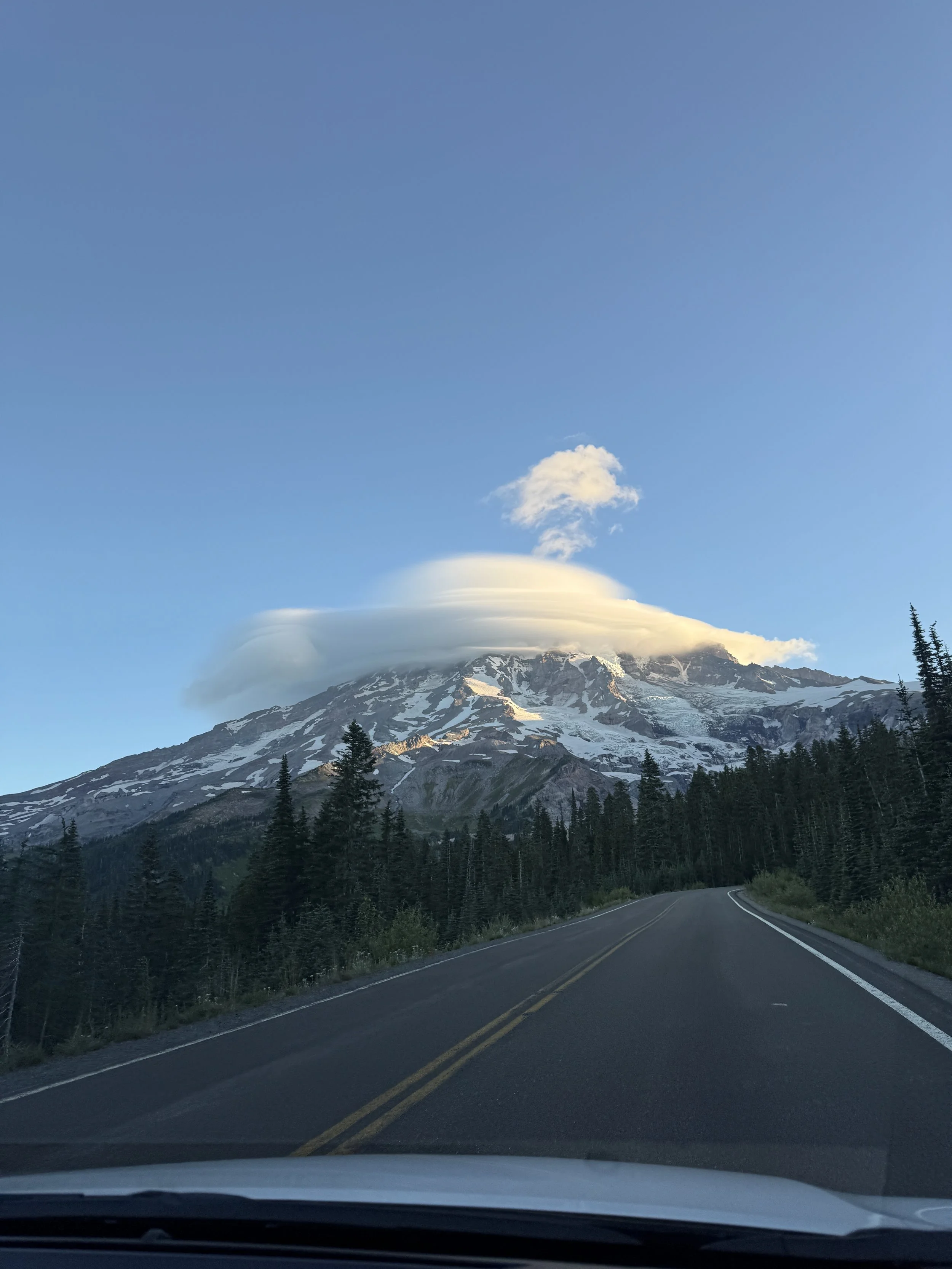
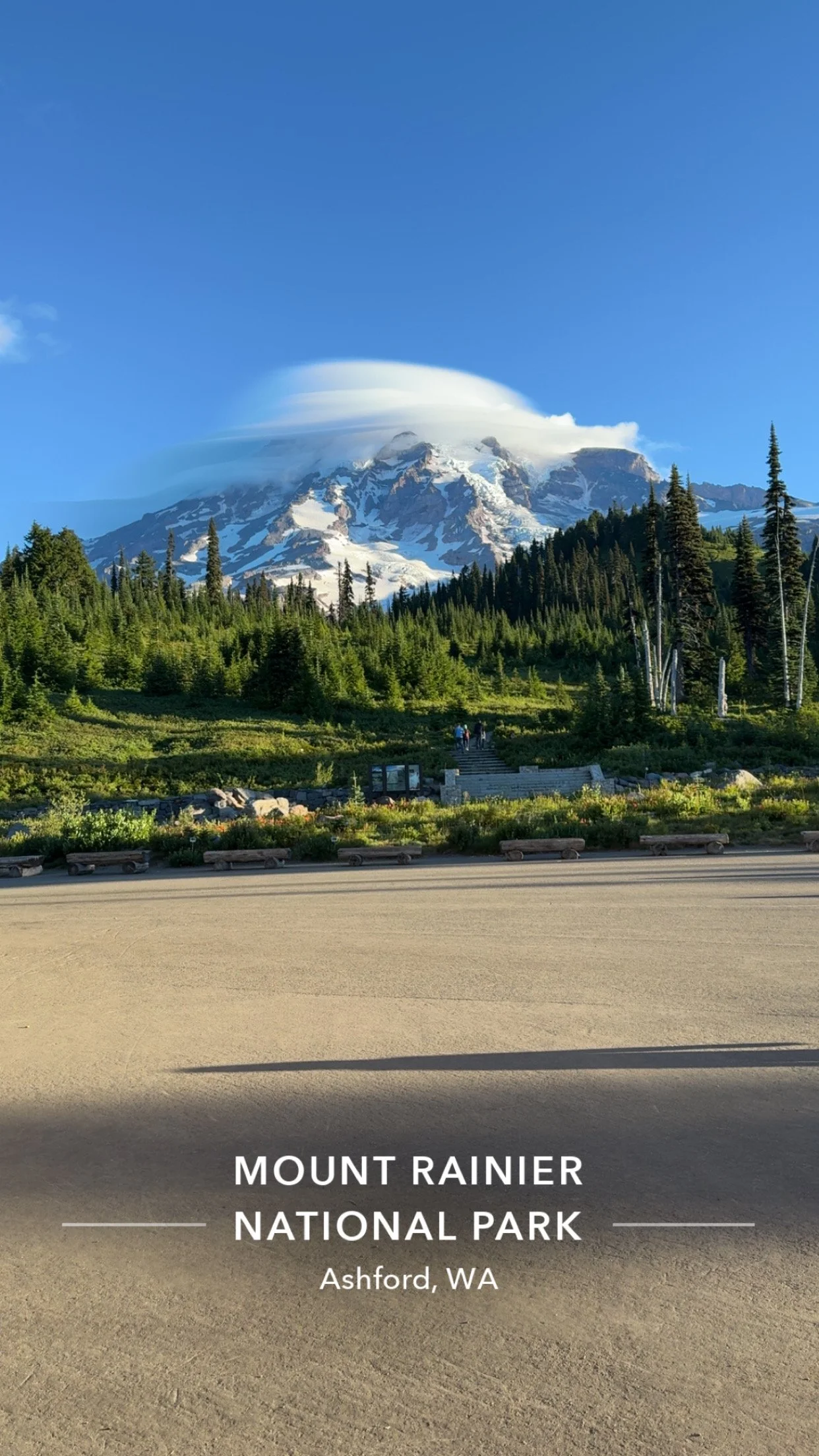
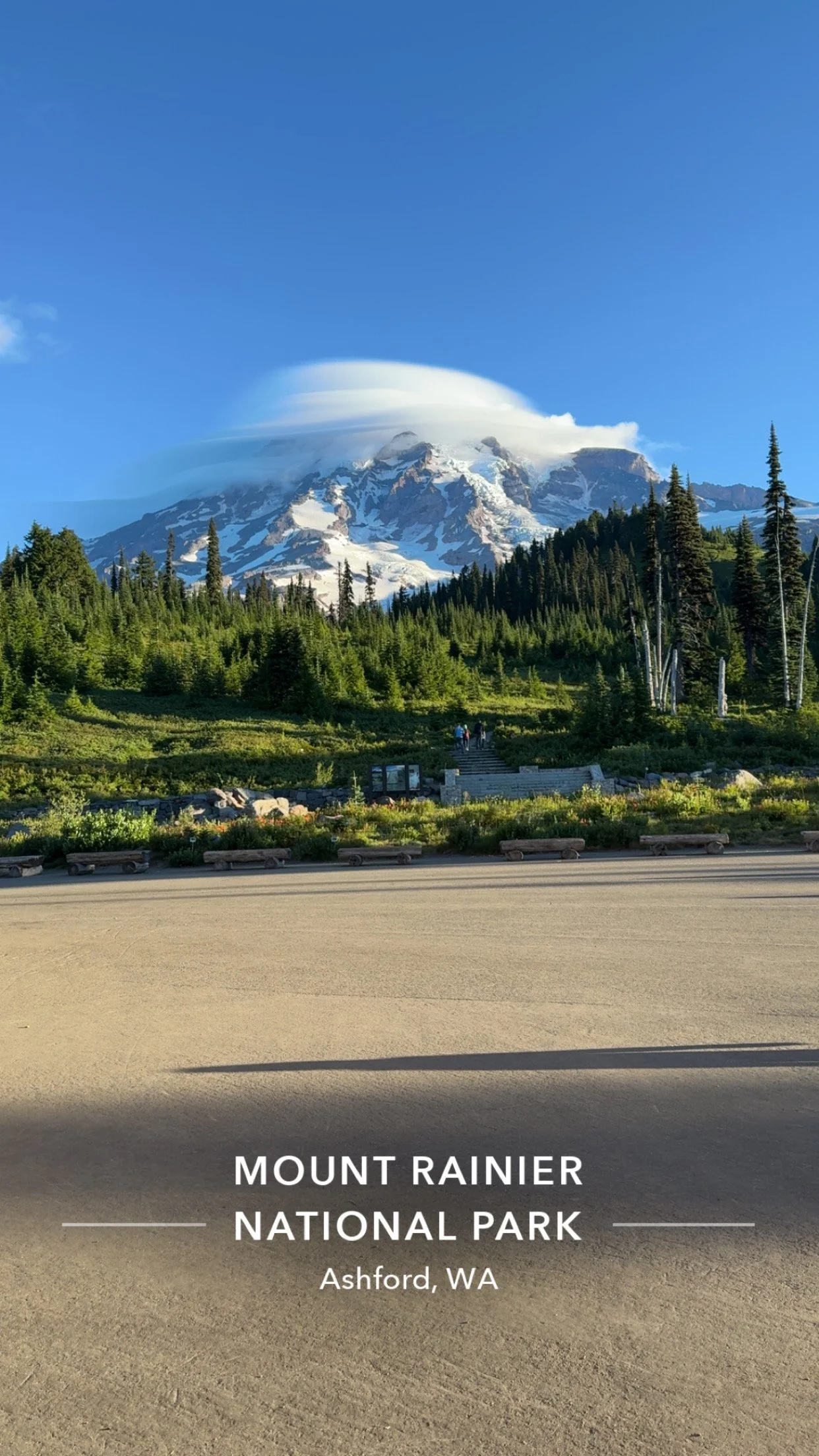
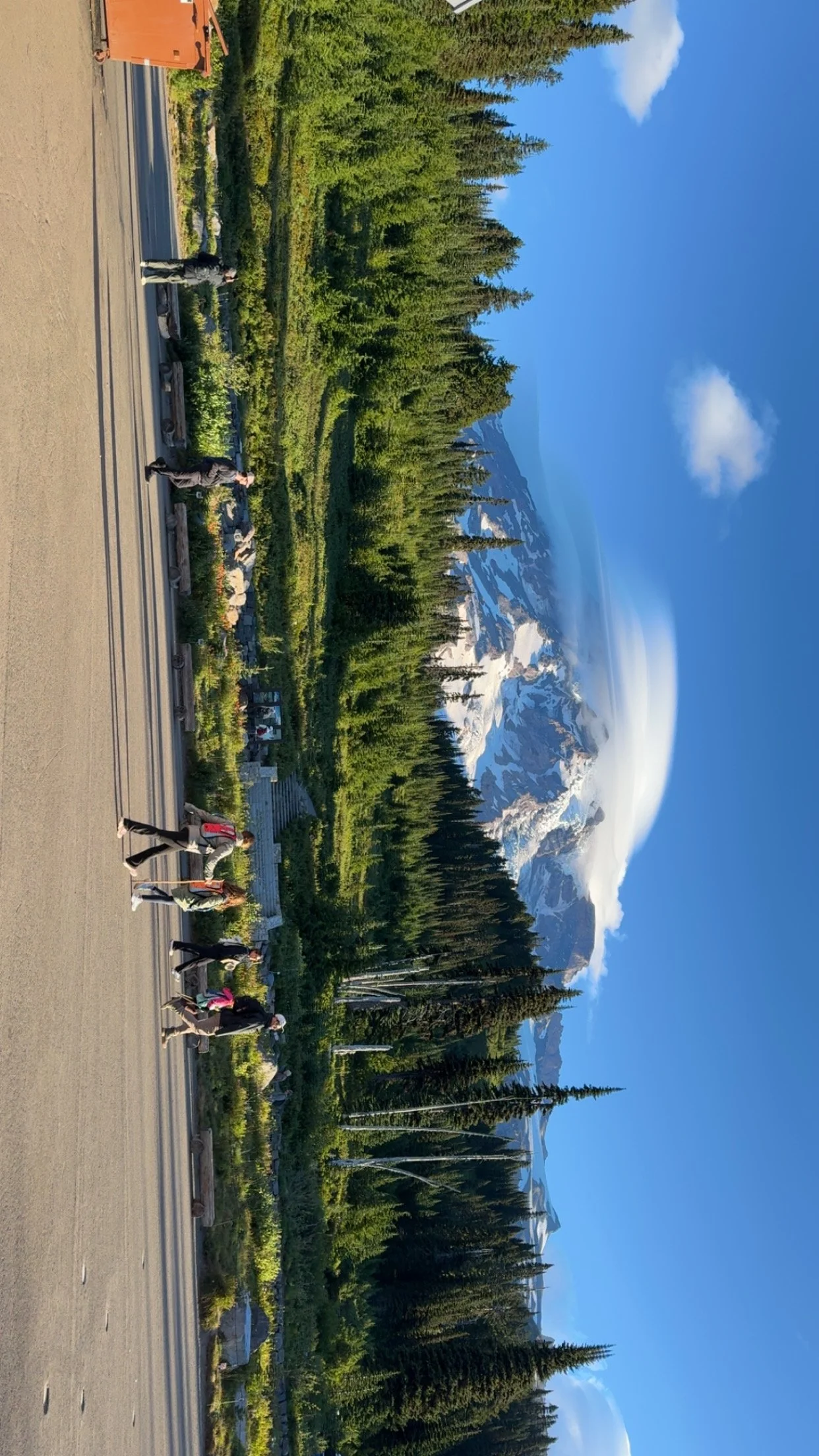
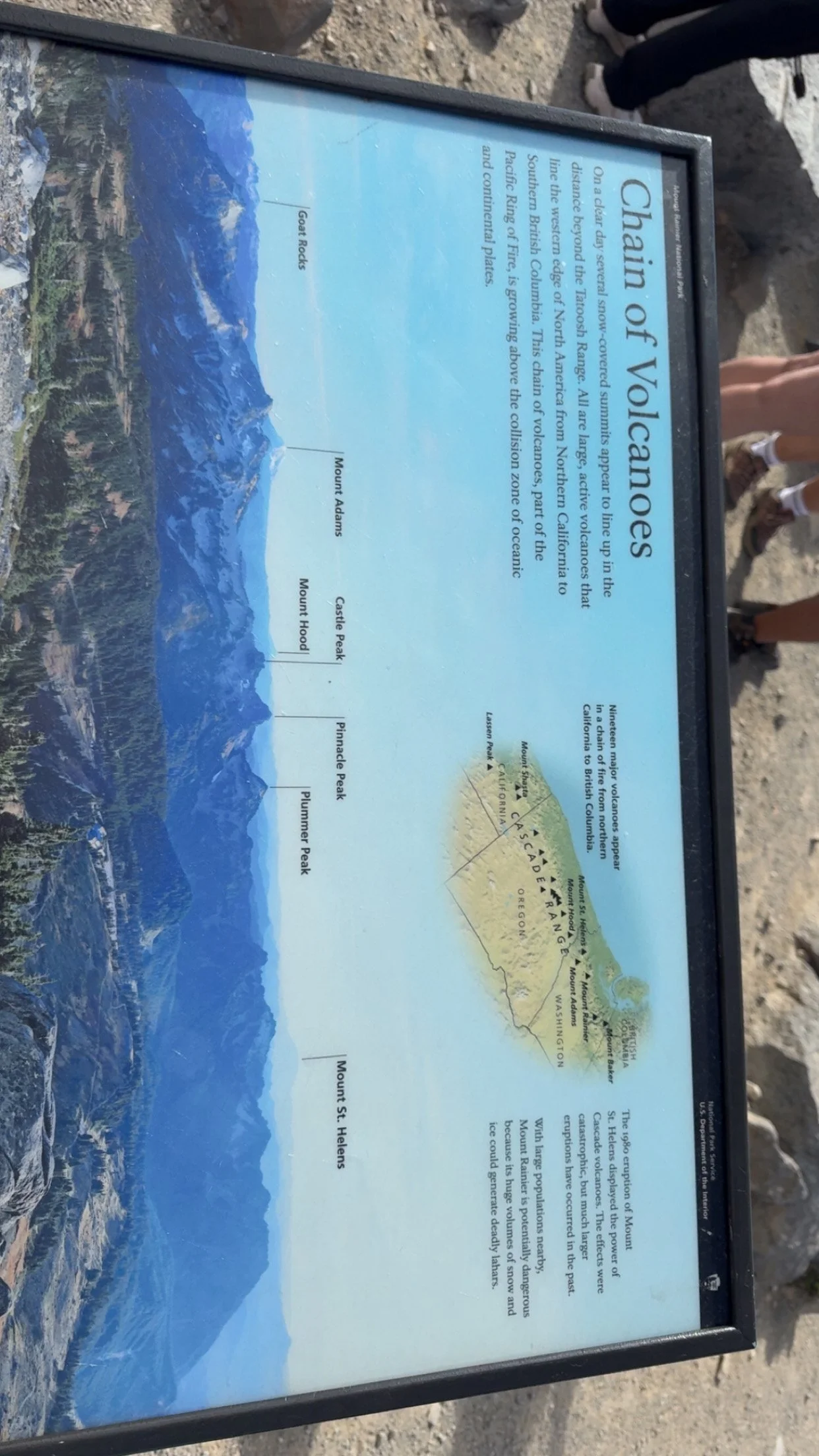
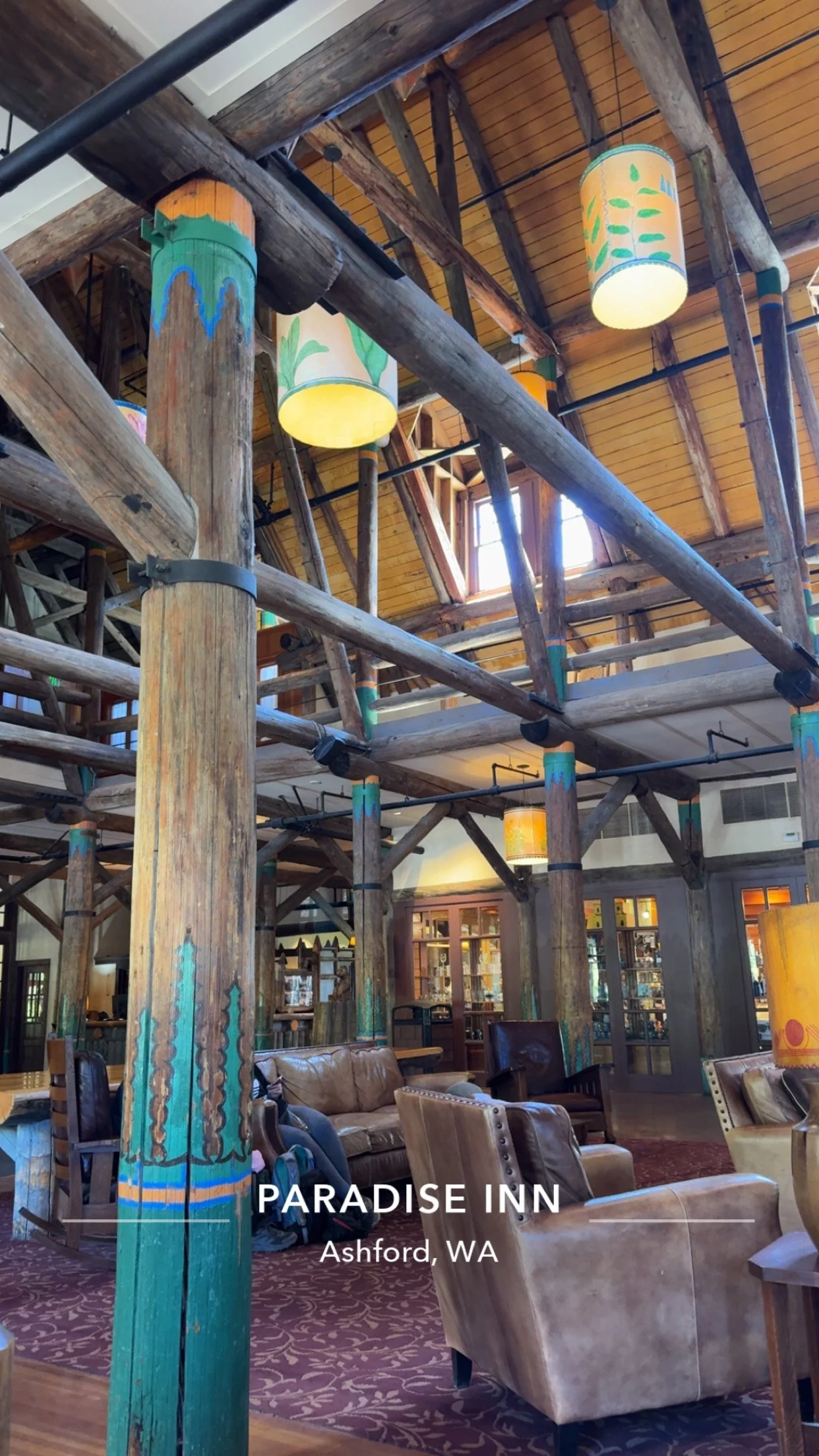
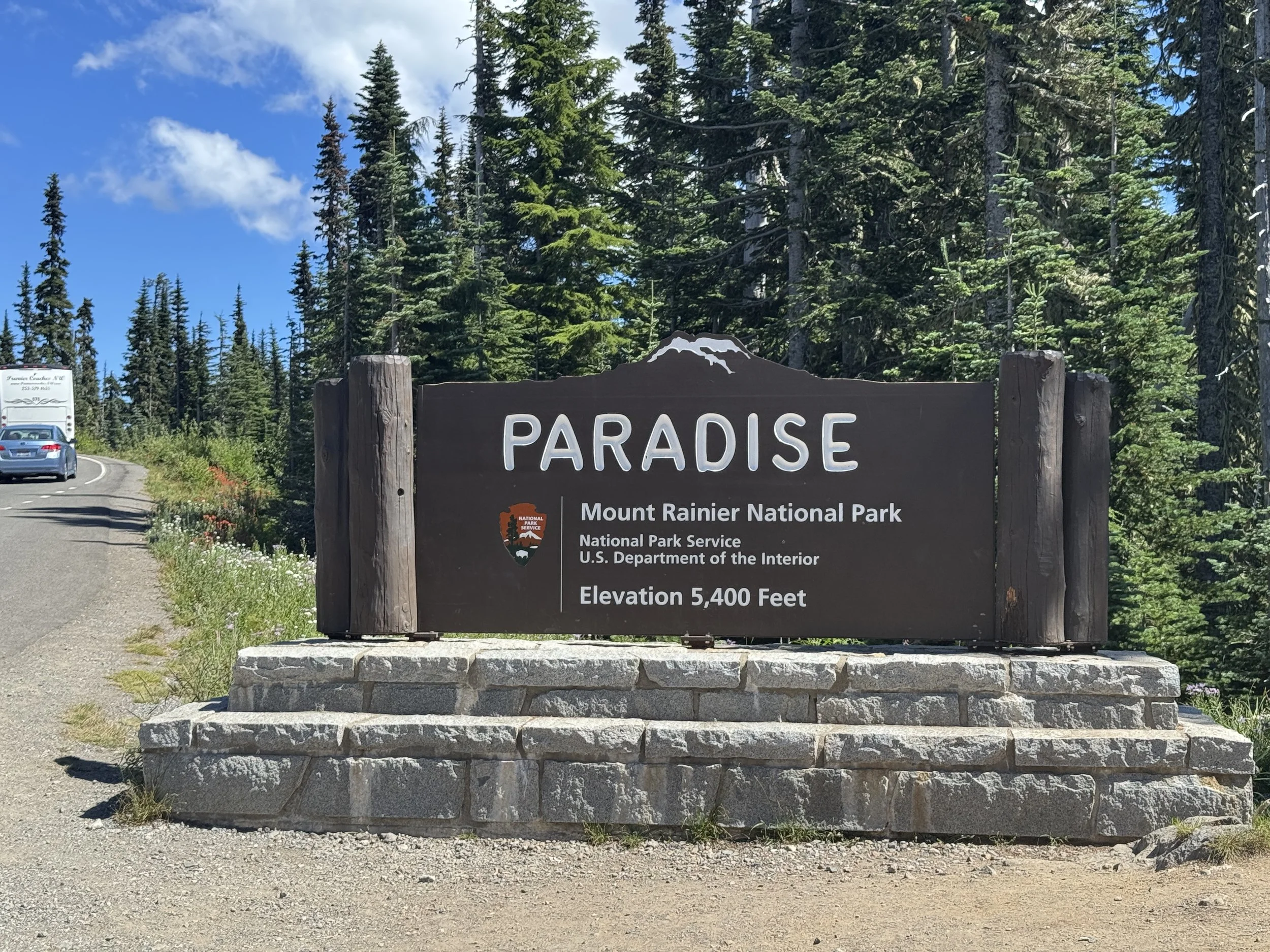
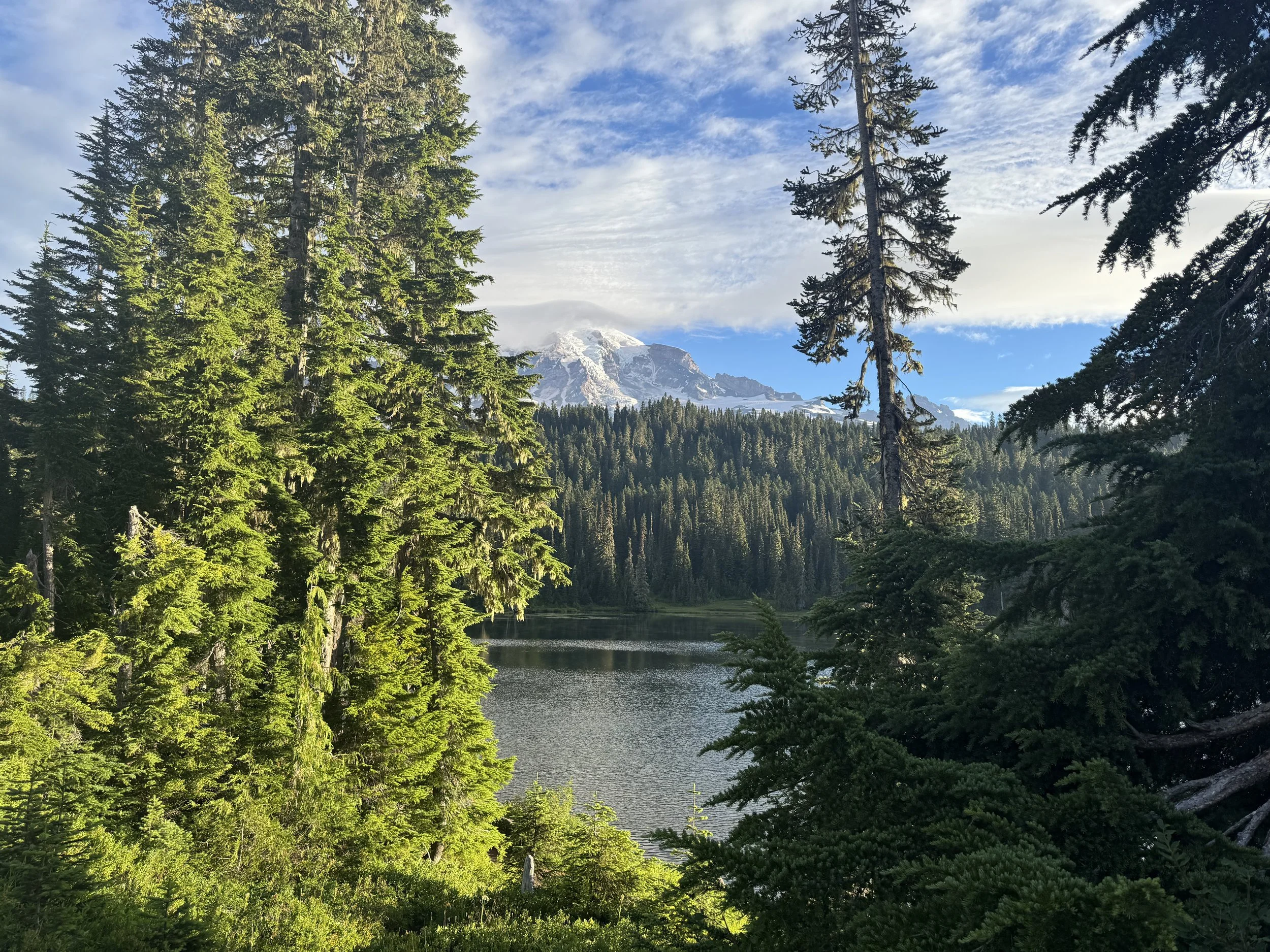
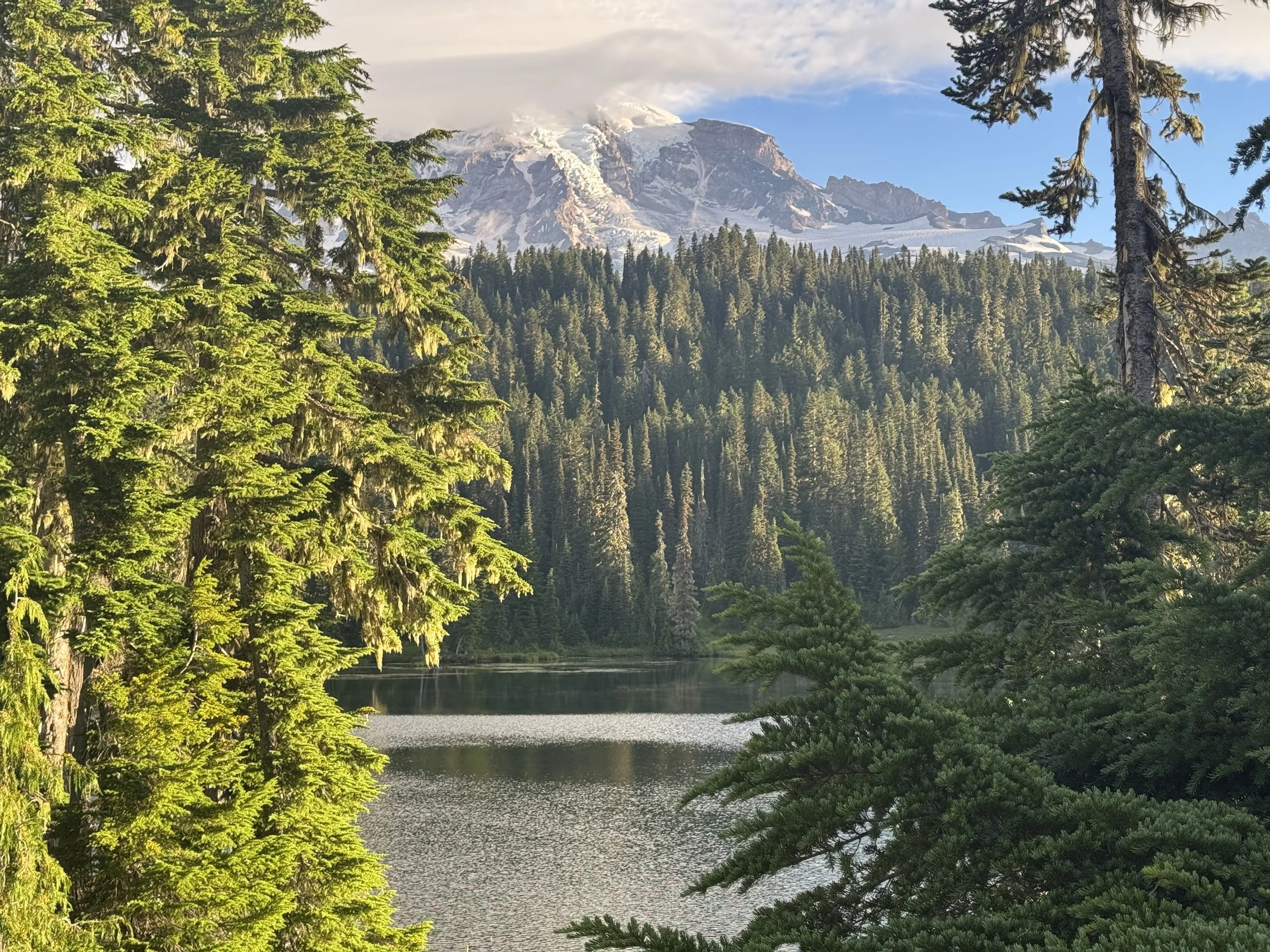
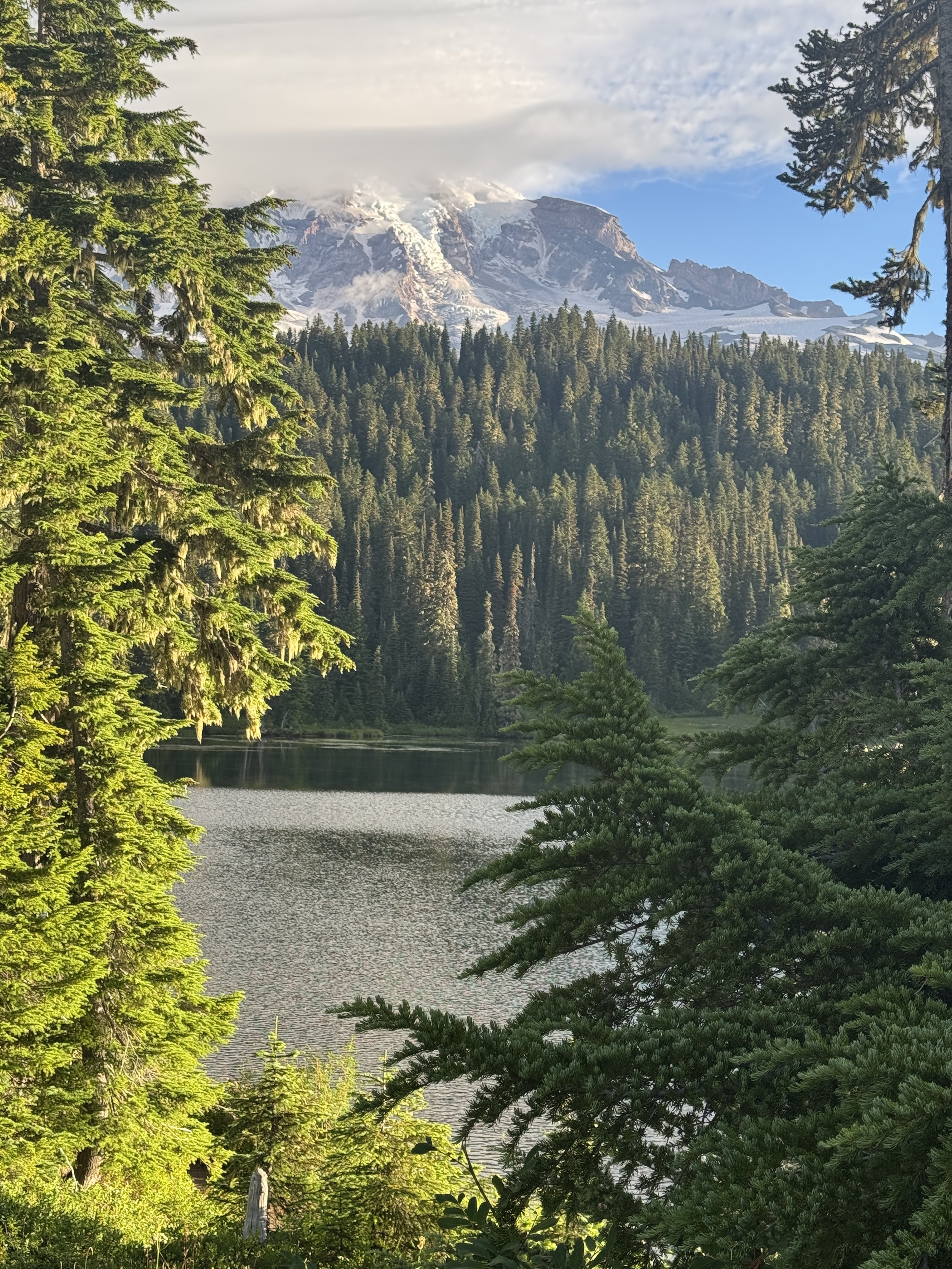
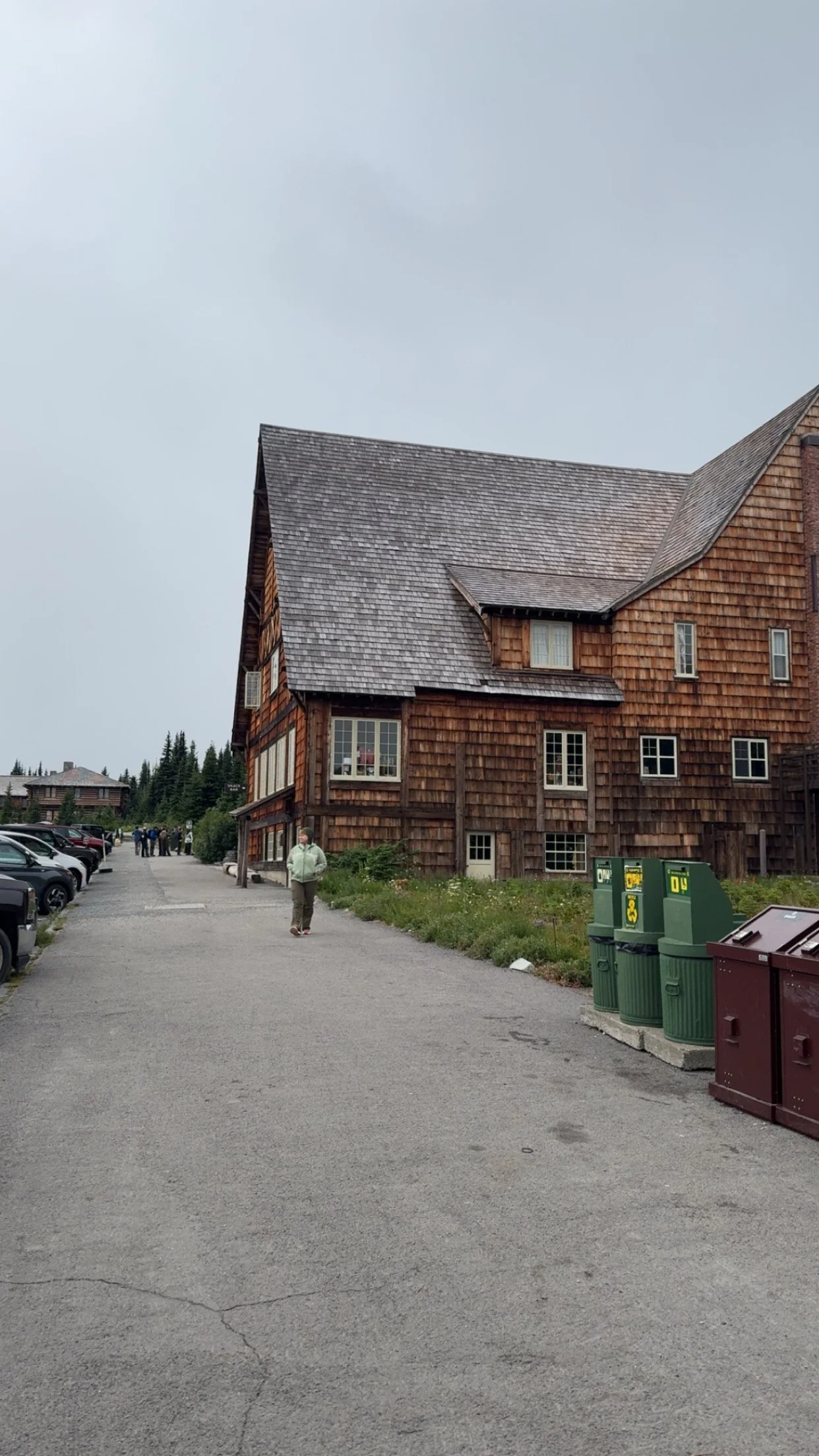
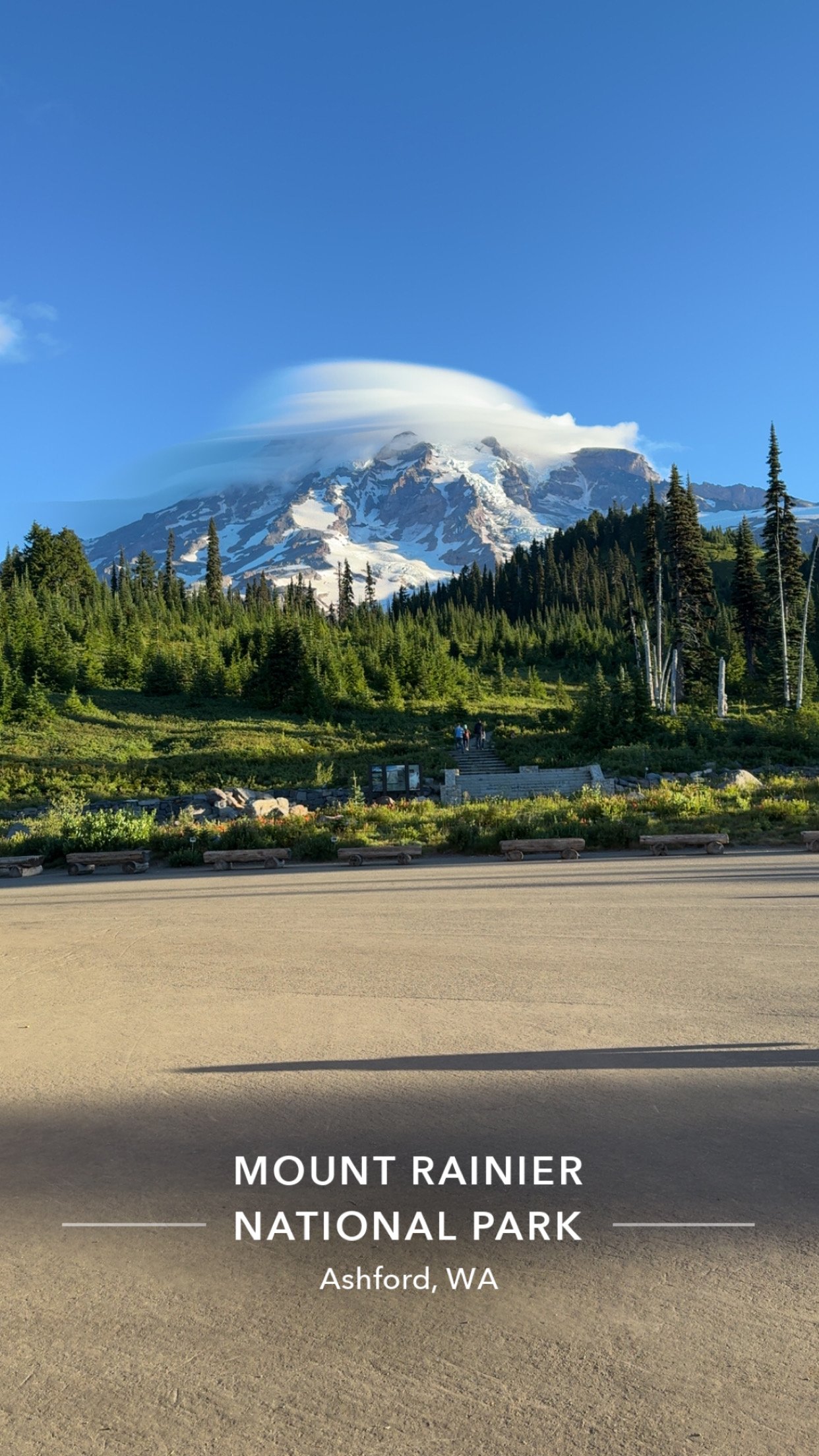
Our hike in Mount Rainier National Park began at Paradise, which felt like exactly the right name for a place where the road ends and the mountain suddenly fills the sky. Even before we stepped onto the trail, Rainier felt enormous—more like a wall of ice and rock than a distant summit. The air was cool, the light kept shifting over the snowfields, and every turn seemed to reveal another view of glaciers, meadows, and ridgelines stacked into the distance.
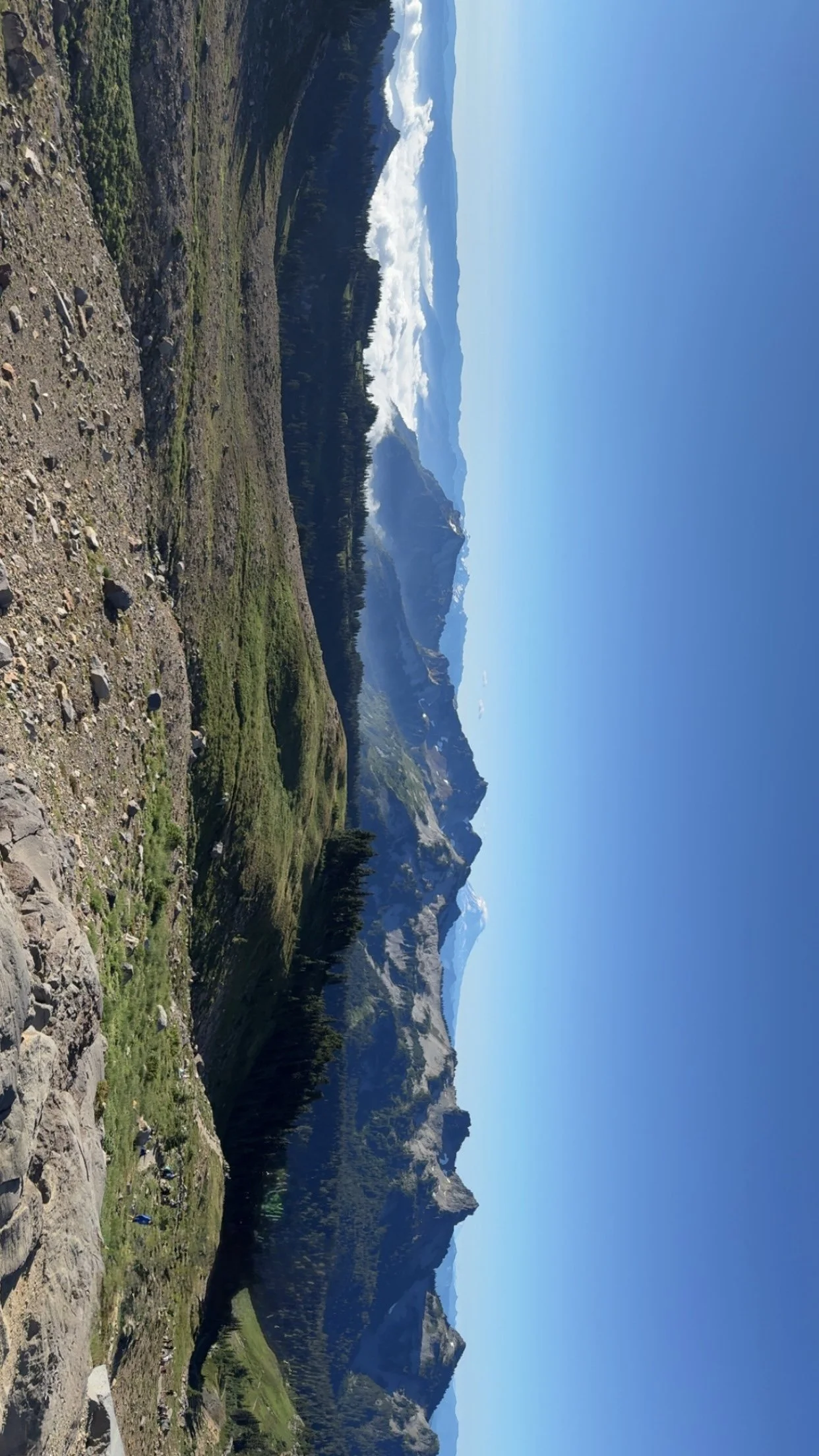
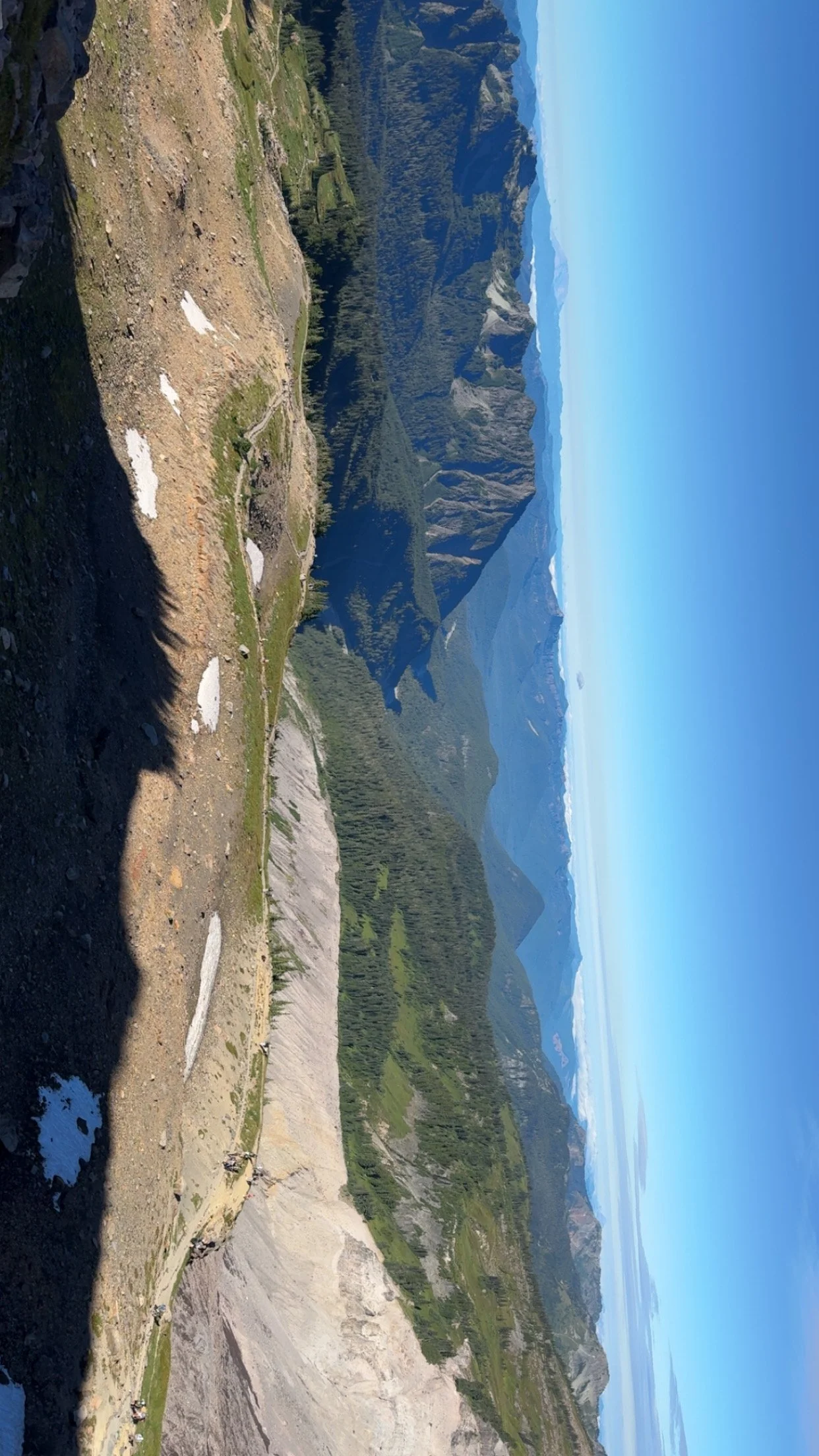
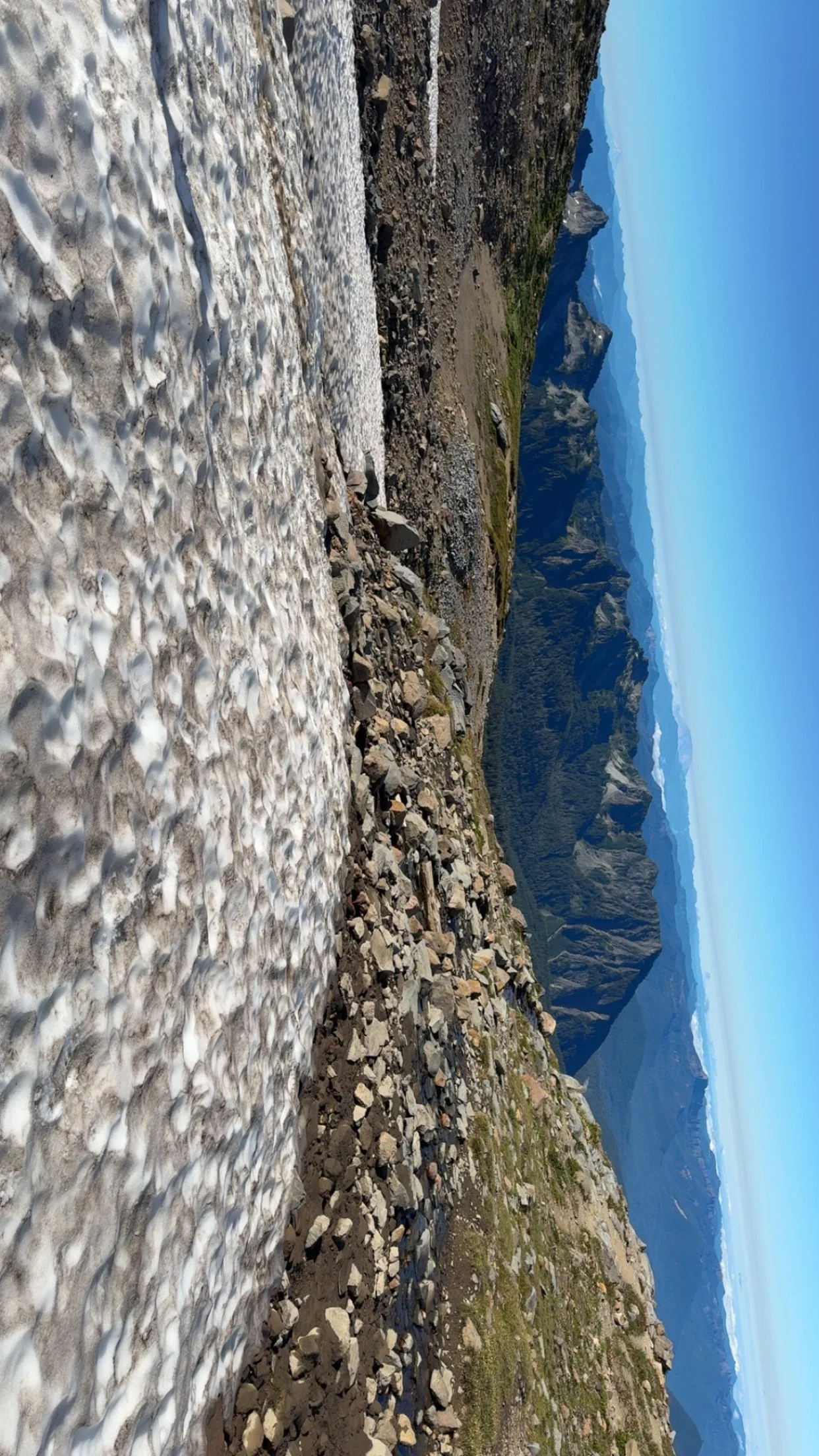
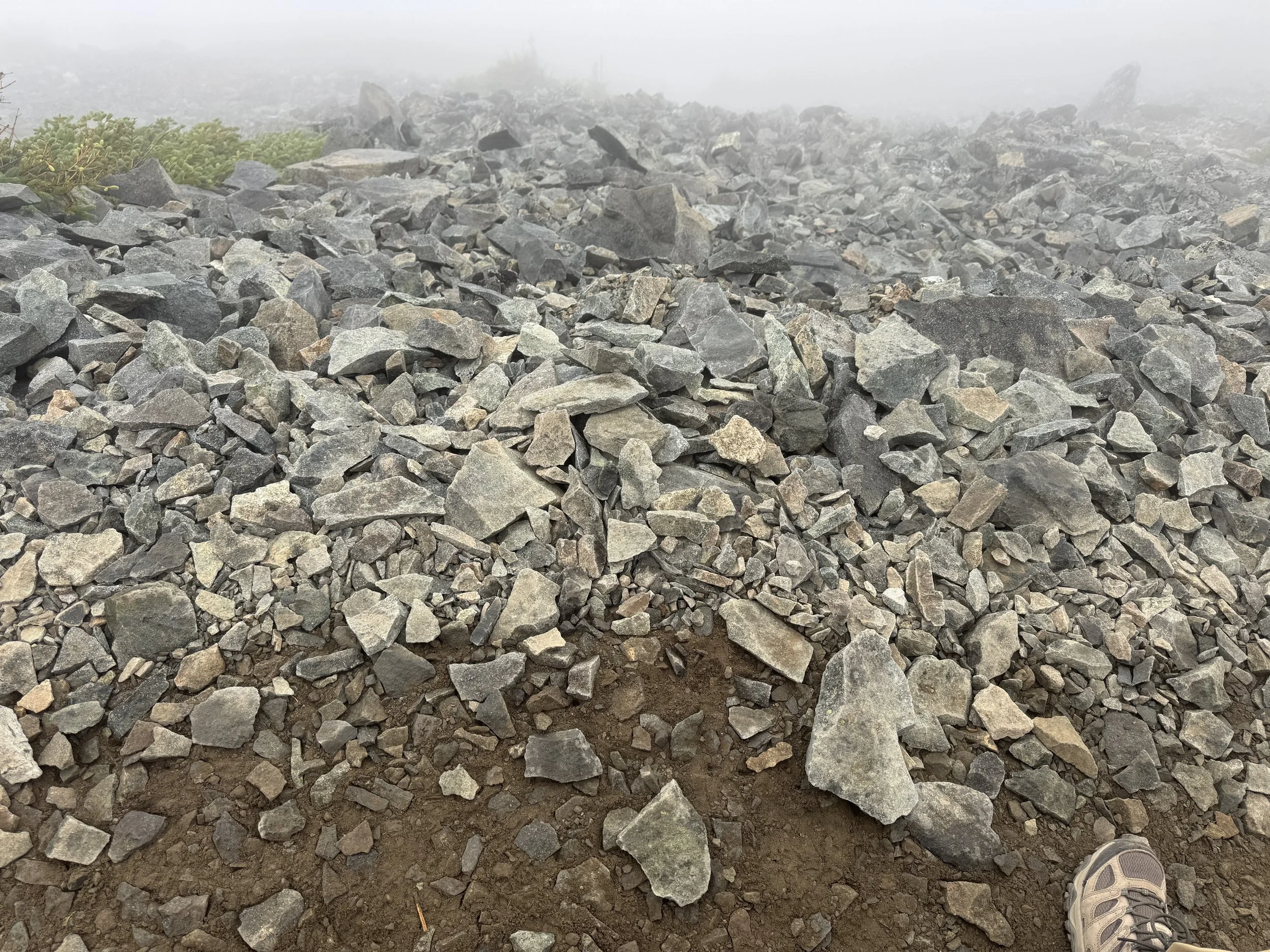
The Skyline Trail was the heart of our day. It started with steady climbing out of Paradise, trading the visitor center crowds for open views and the feeling of being pulled higher by the mountain itself. From the trail, the landscape kept changing: paved paths became rougher tread, meadows opened into snow patches, and the mountain seemed to move closer even though we knew it was still impossibly far away. It was beautiful, but it was also a reminder that Mount Rainier is not a casual backdrop—it is an active, icy, high-alpine environment.
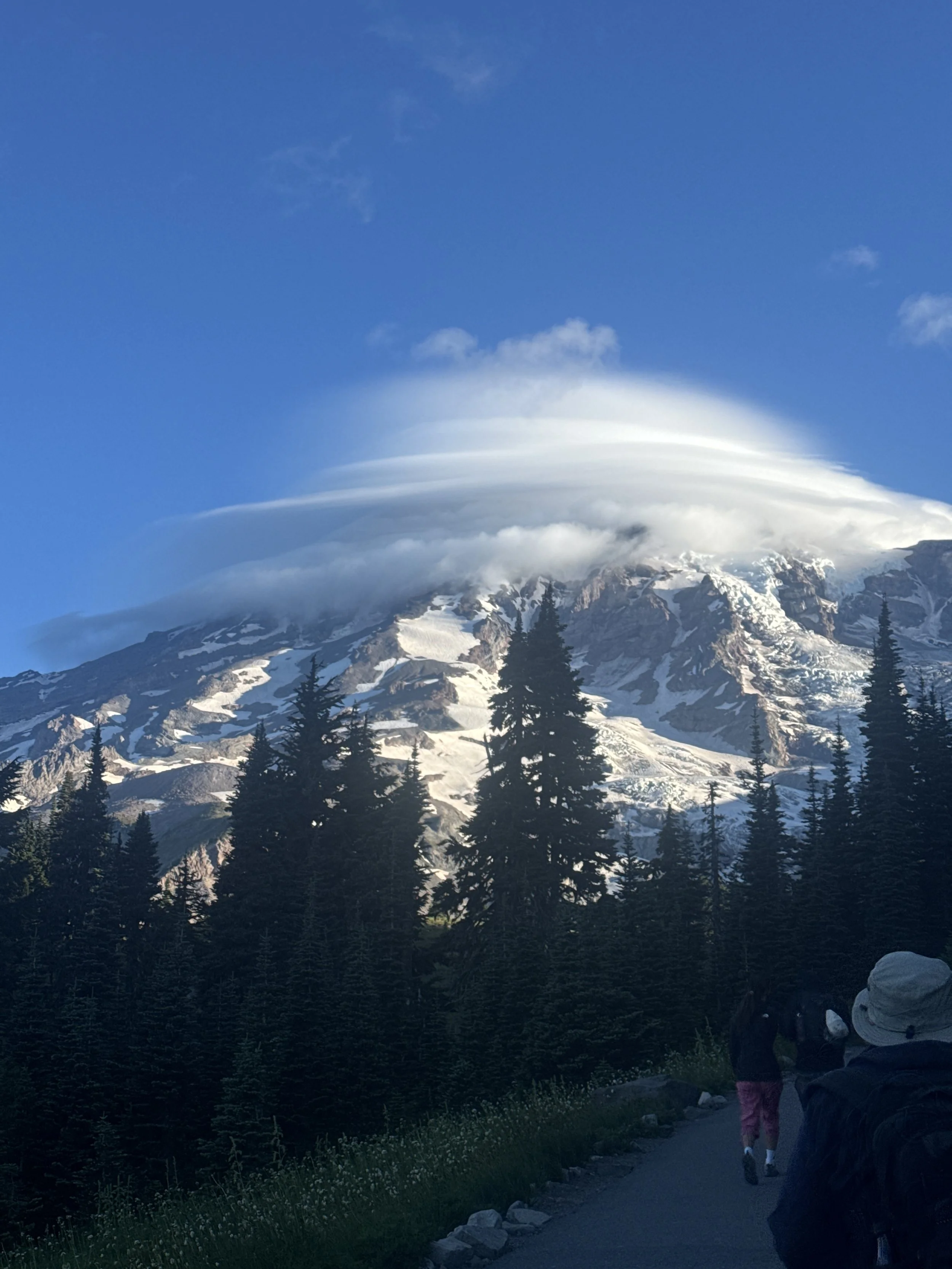
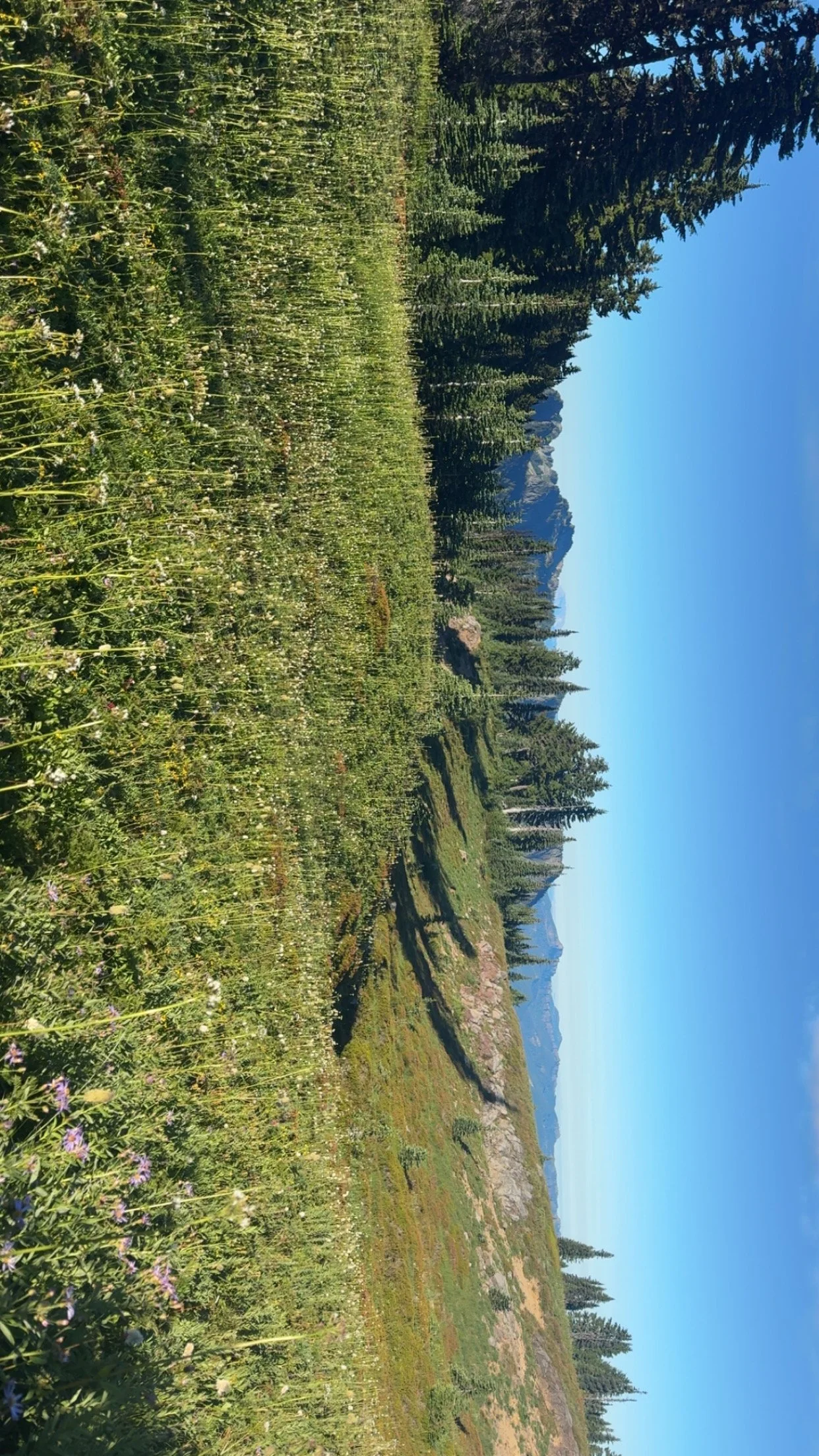
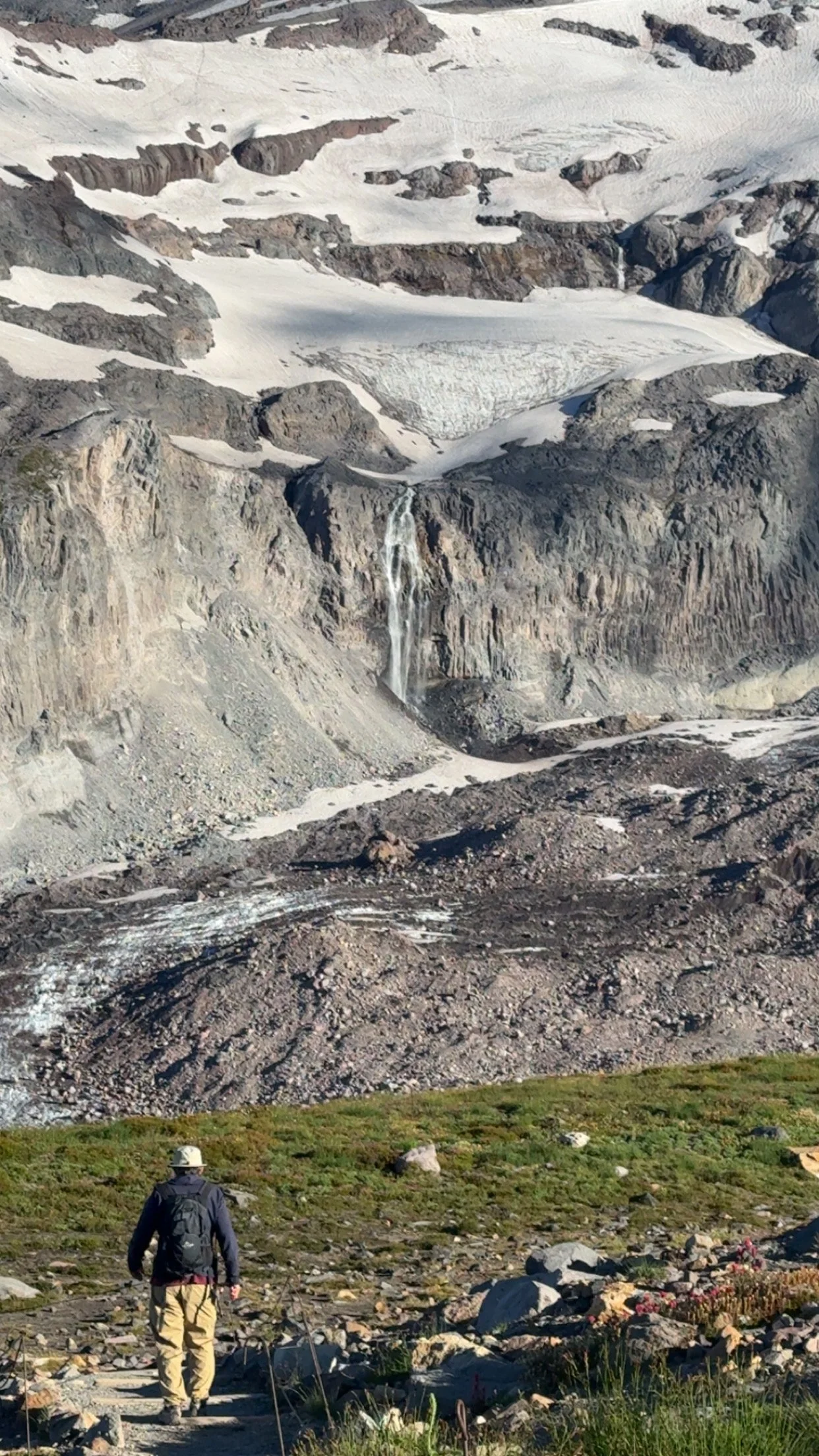
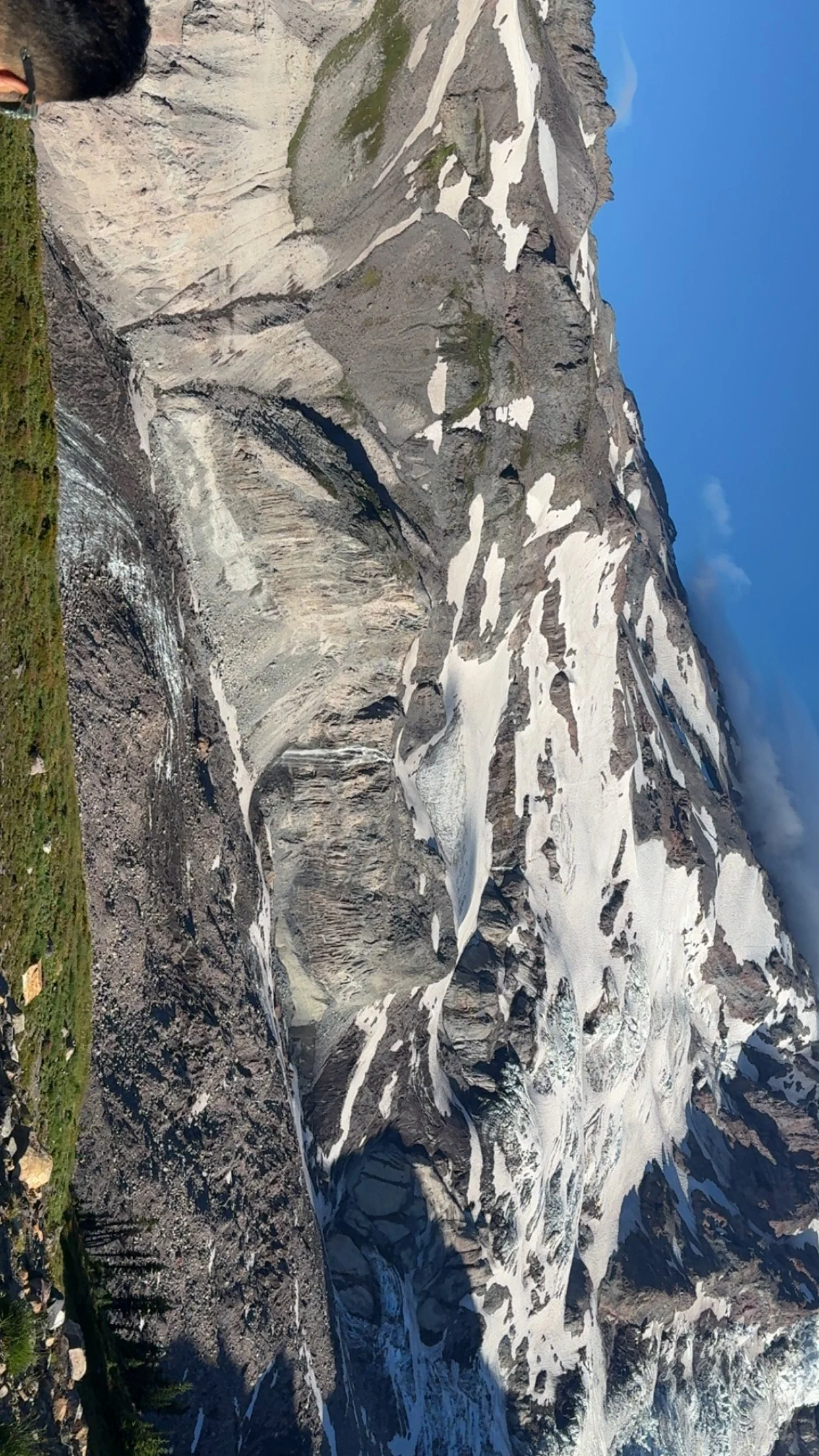
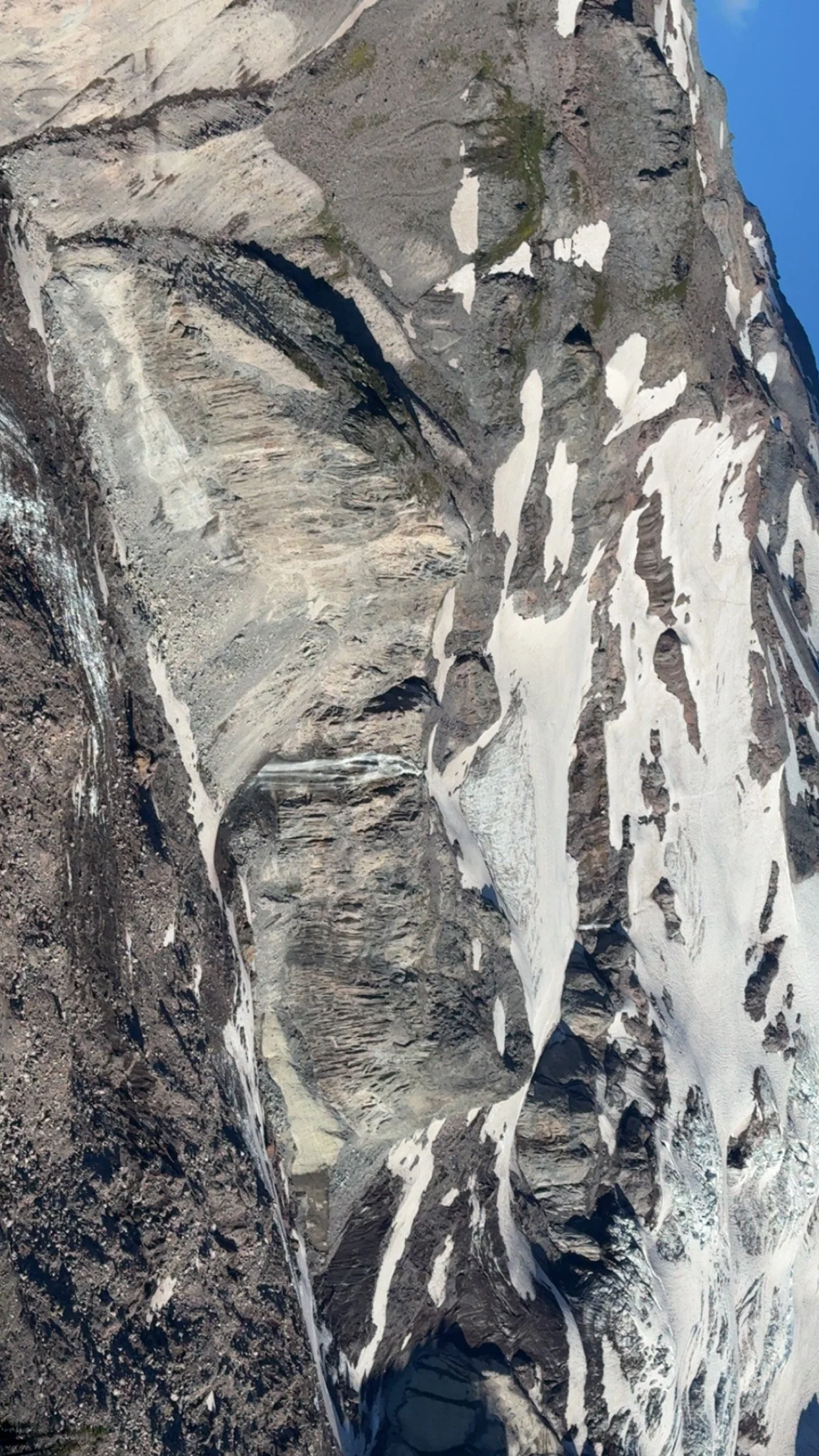
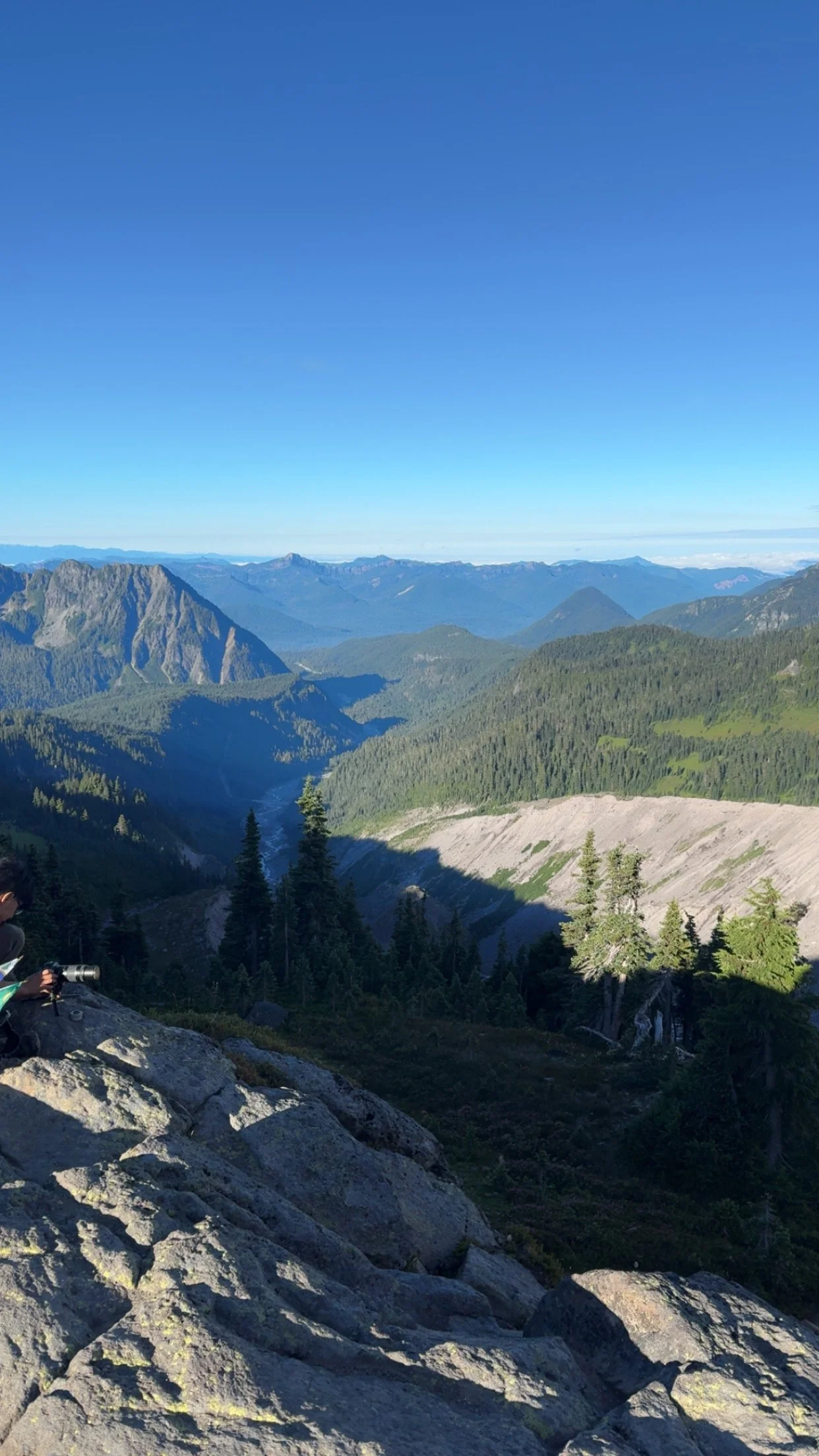
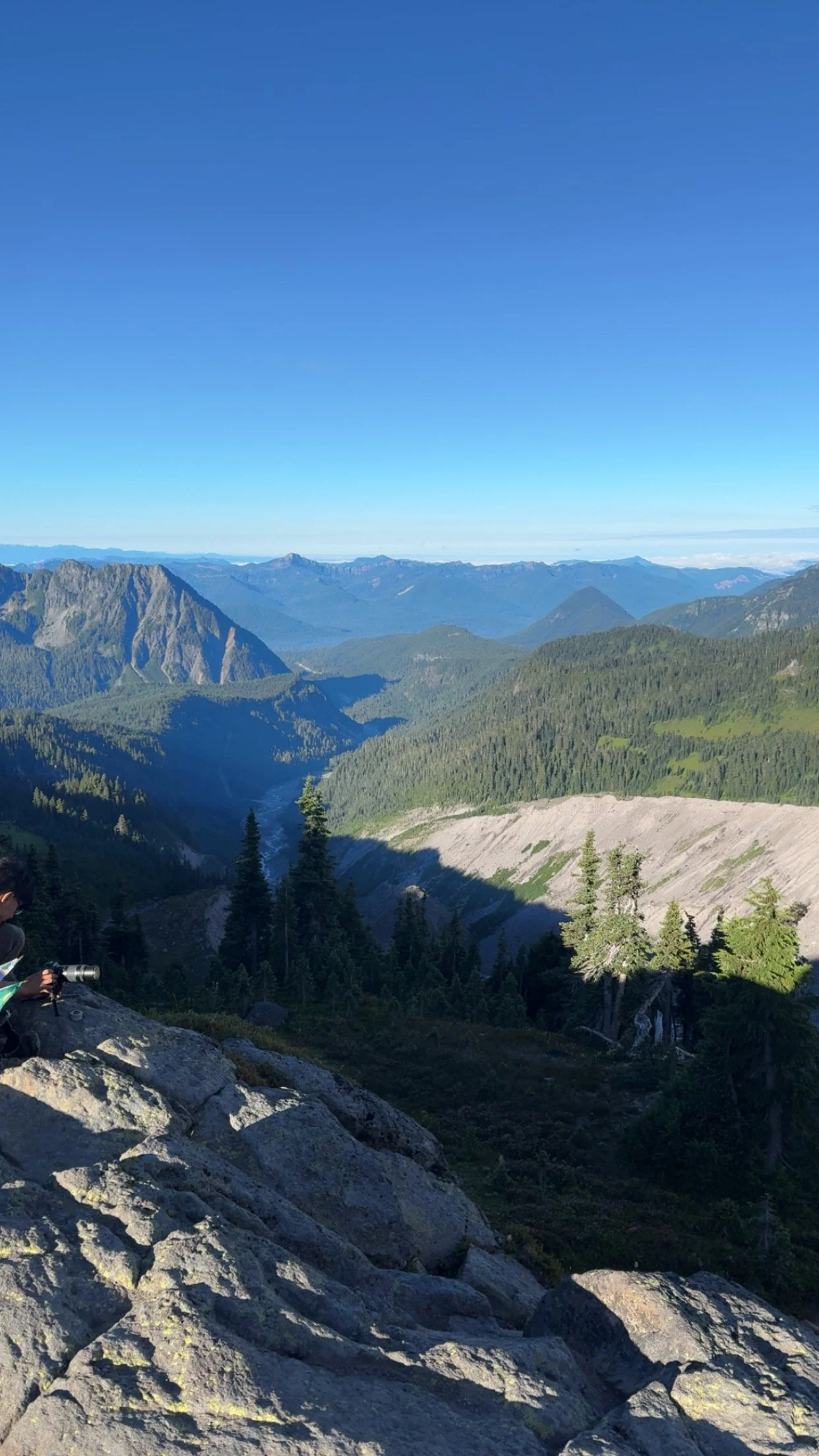
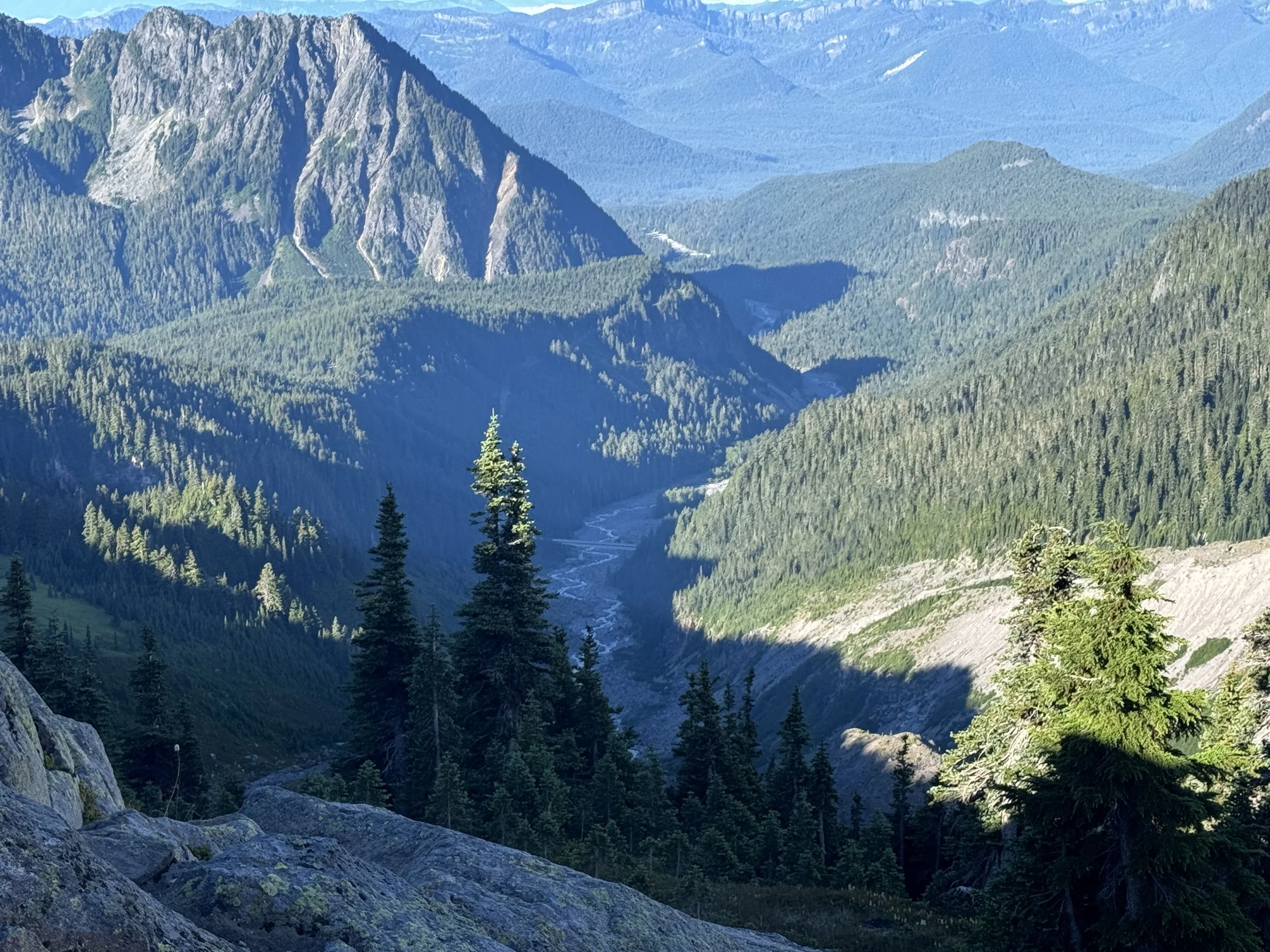
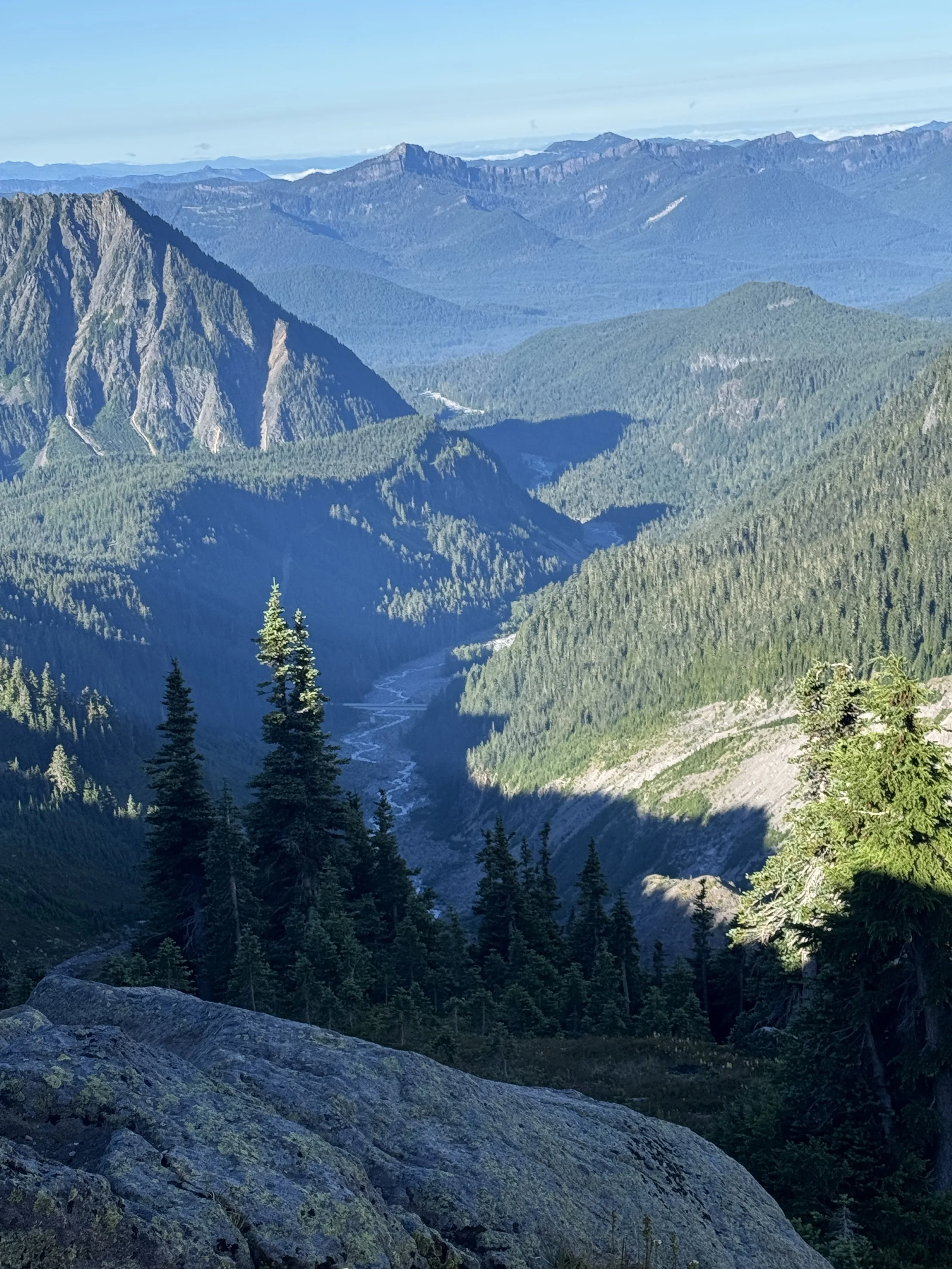
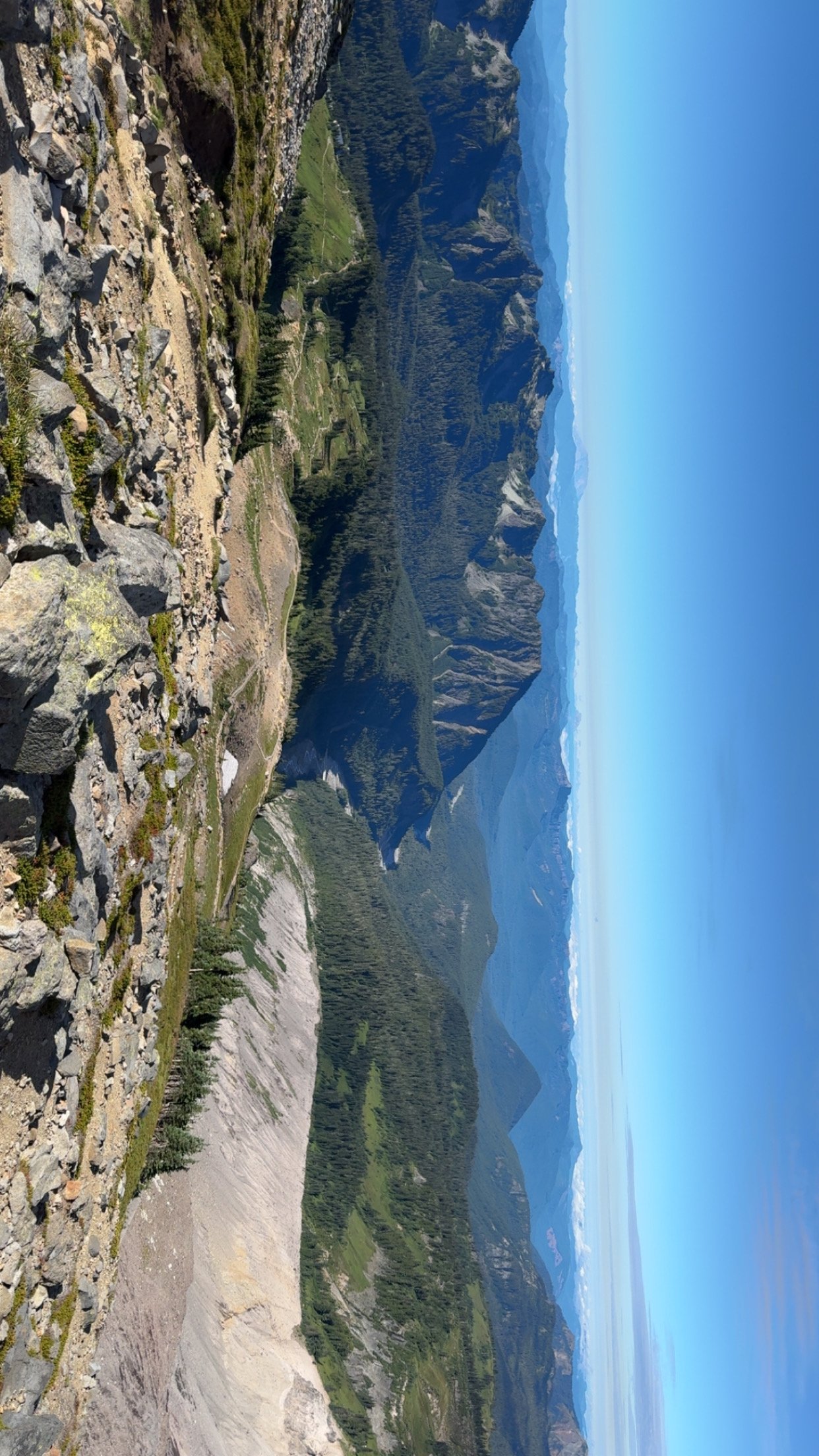
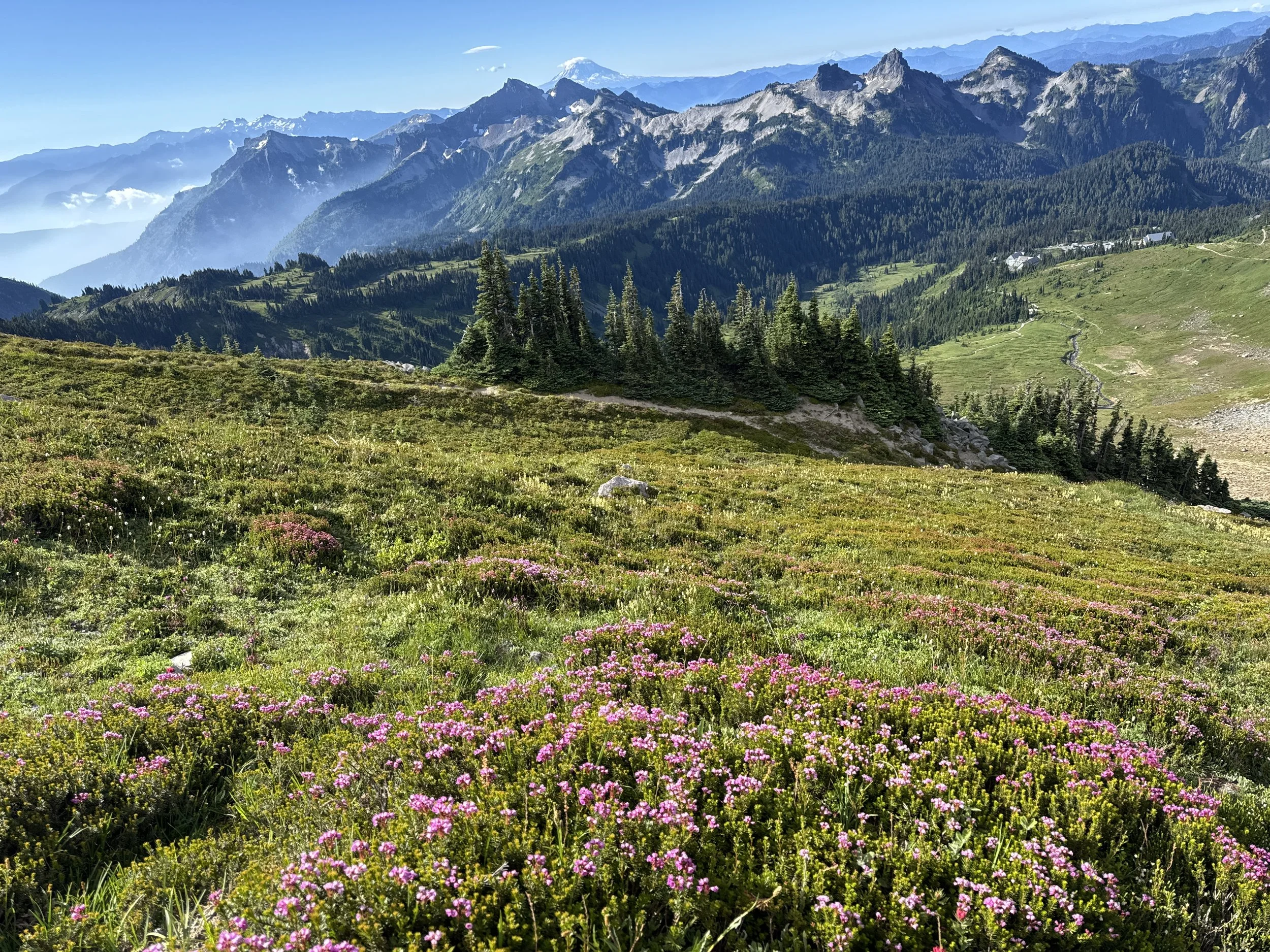
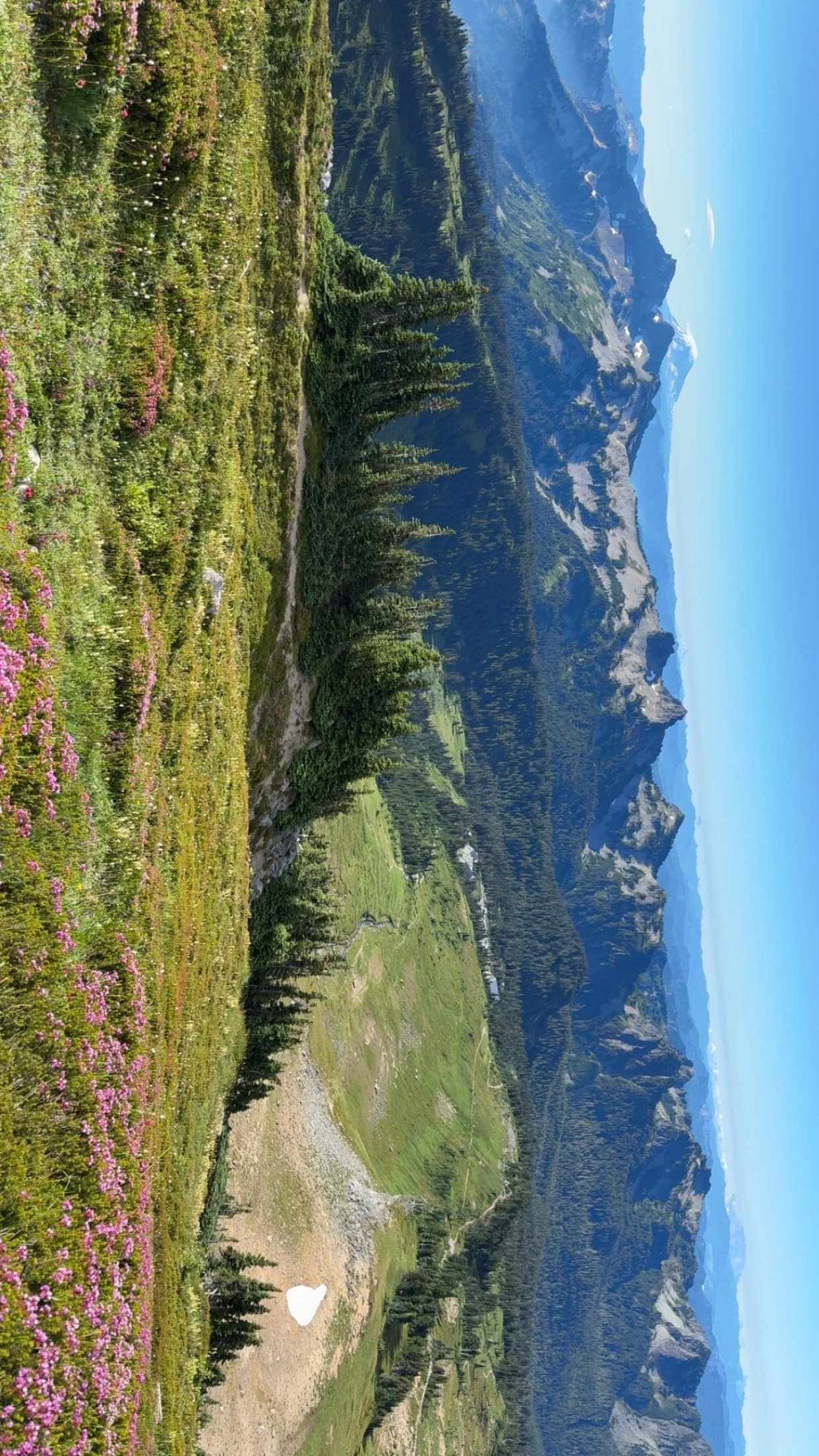
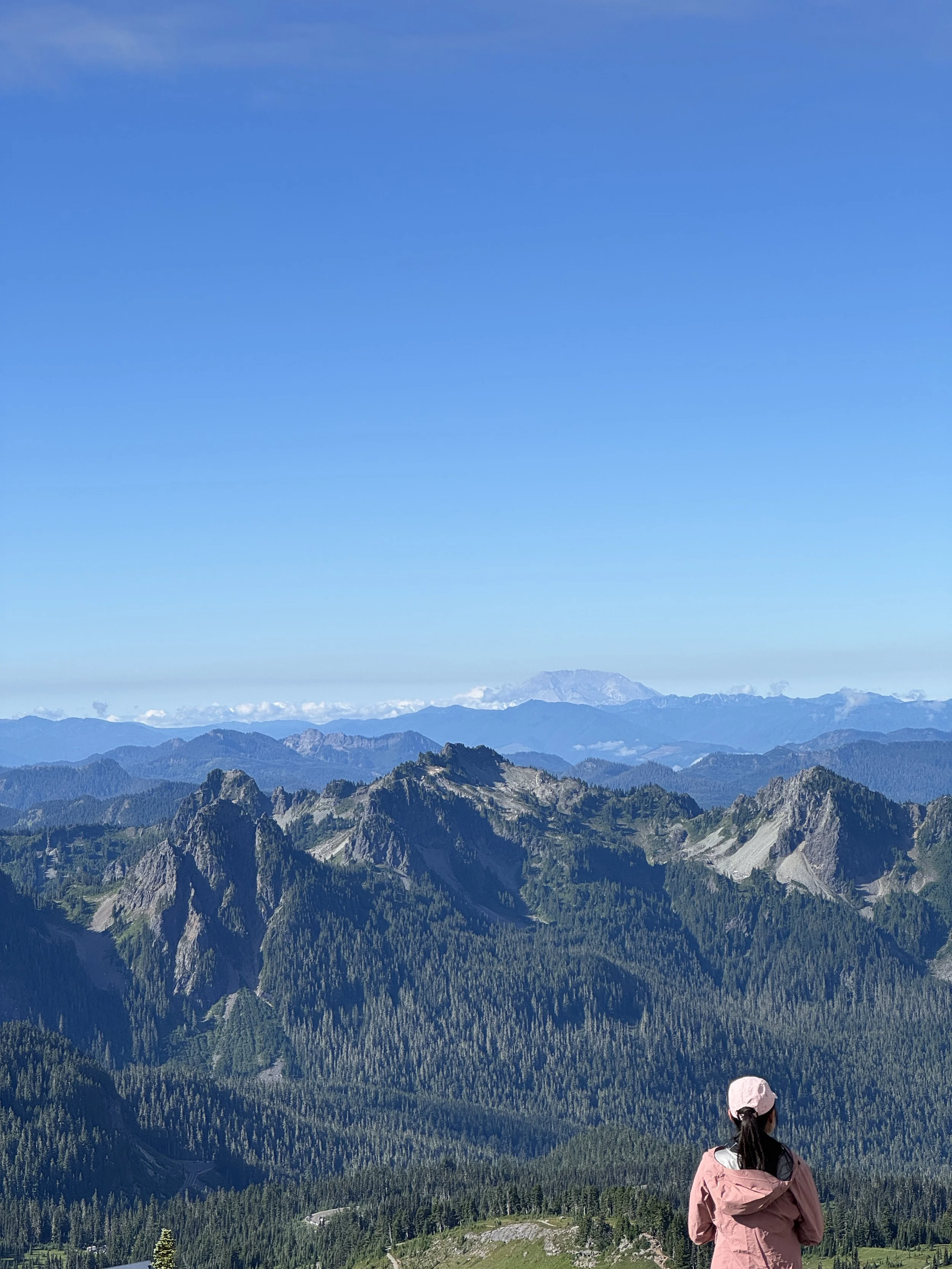
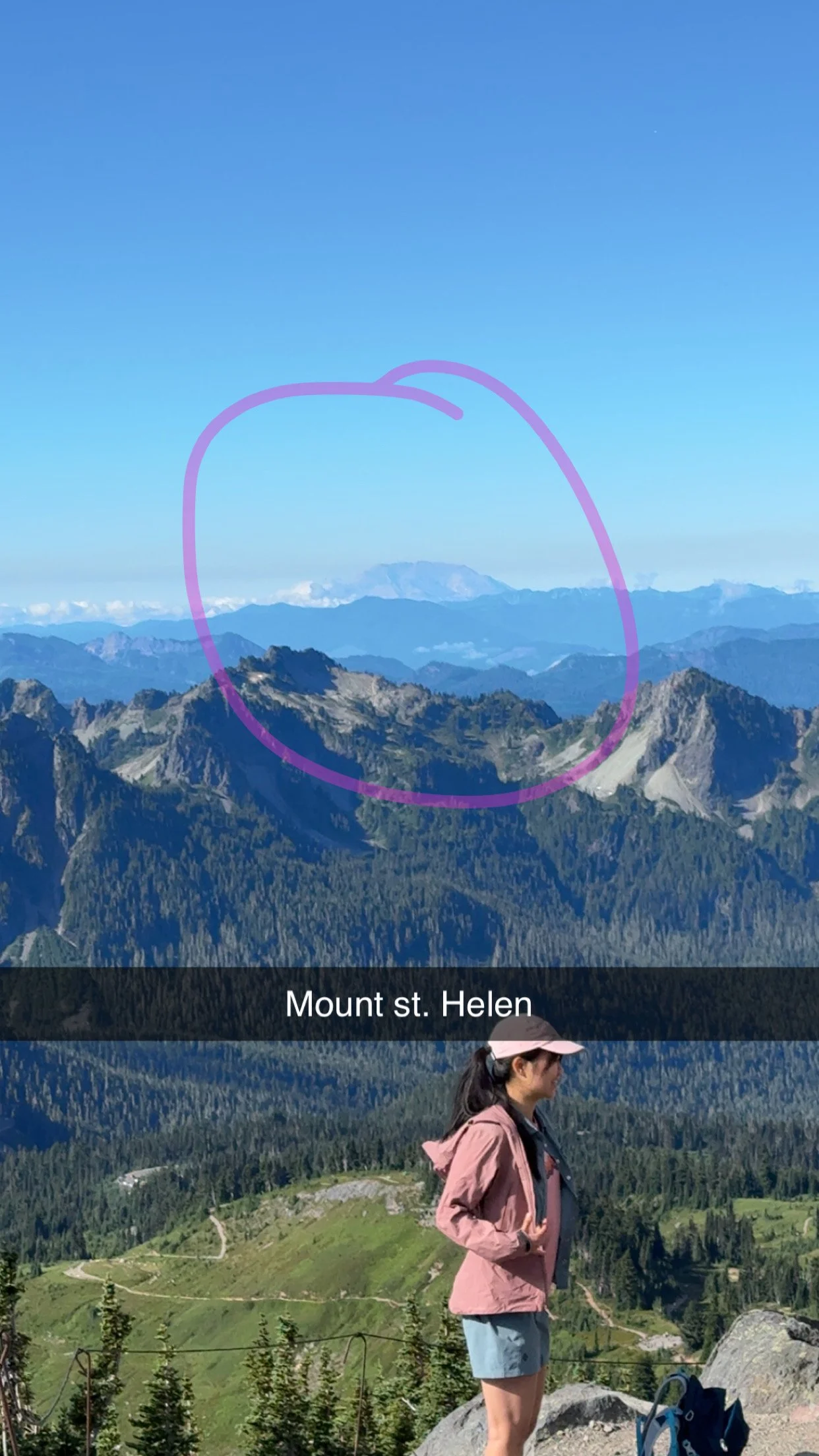
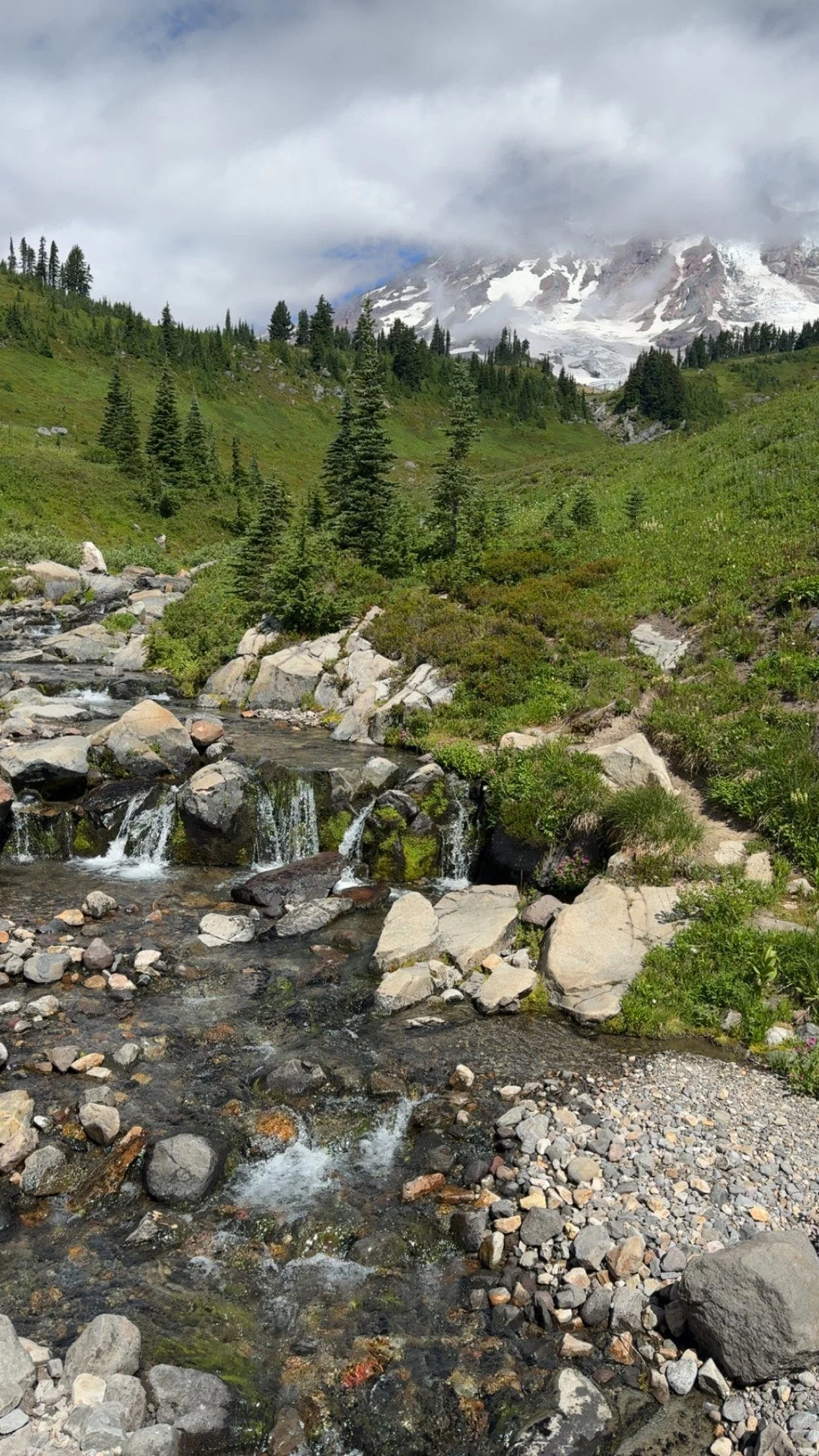
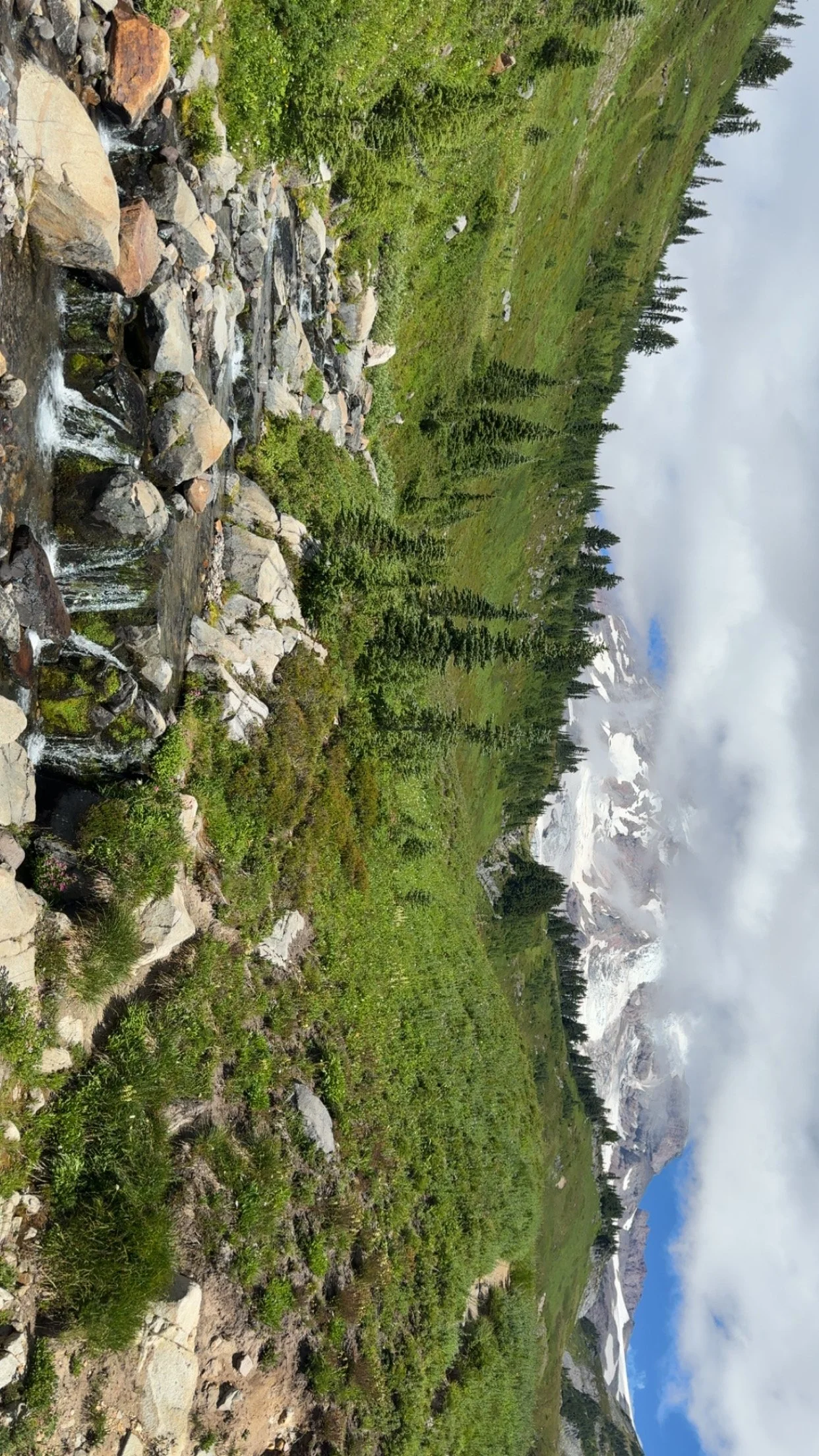
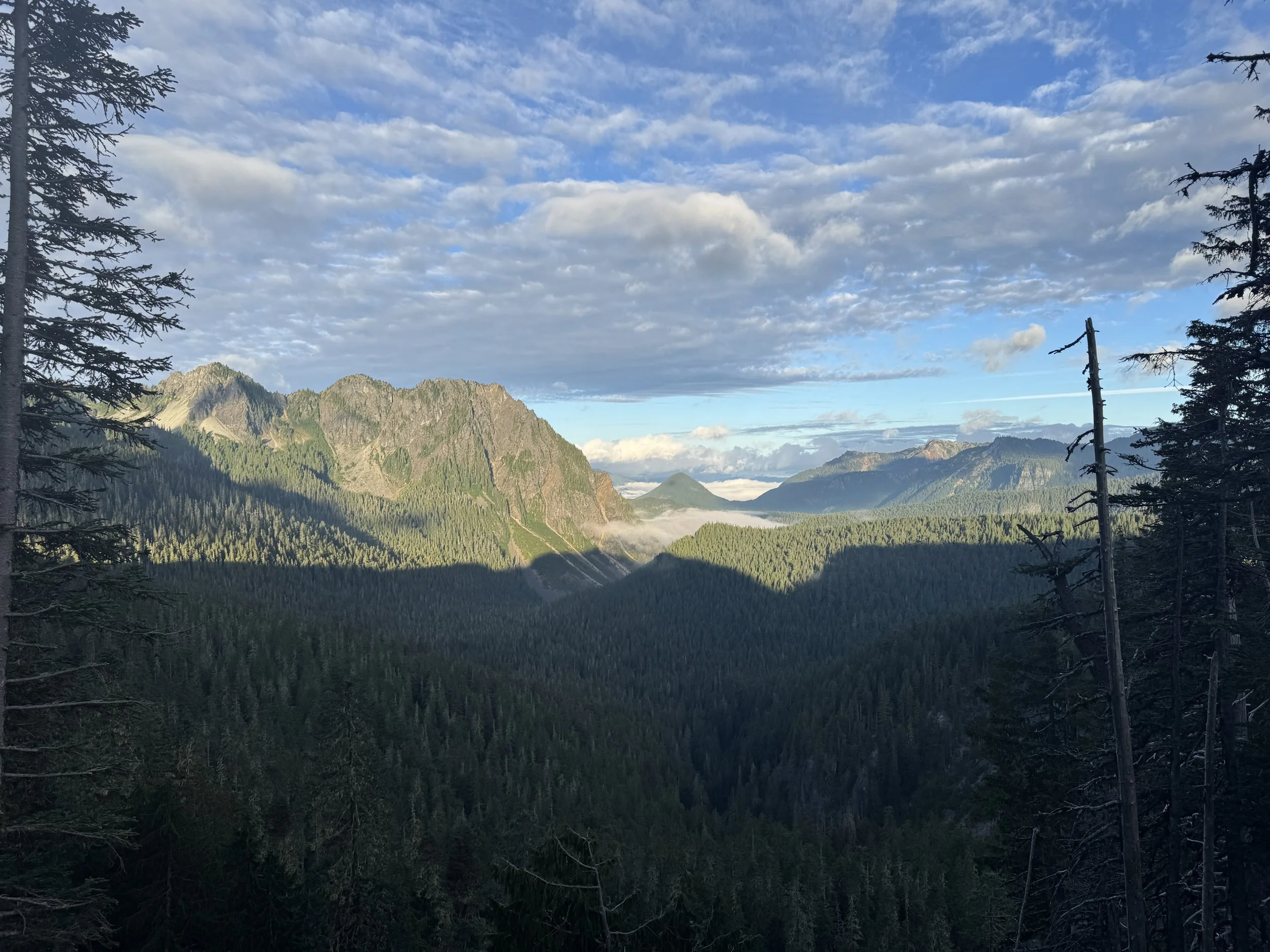
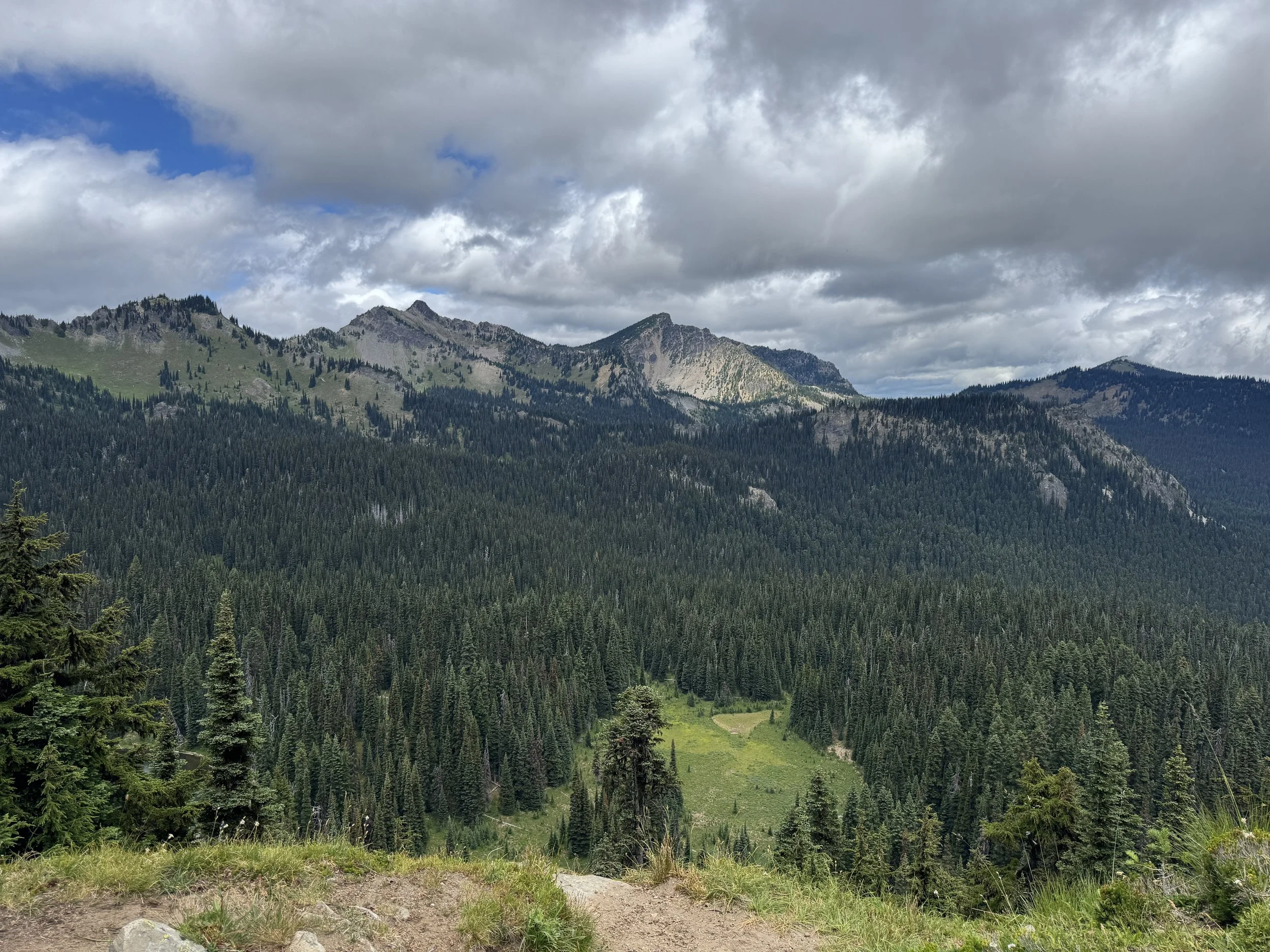
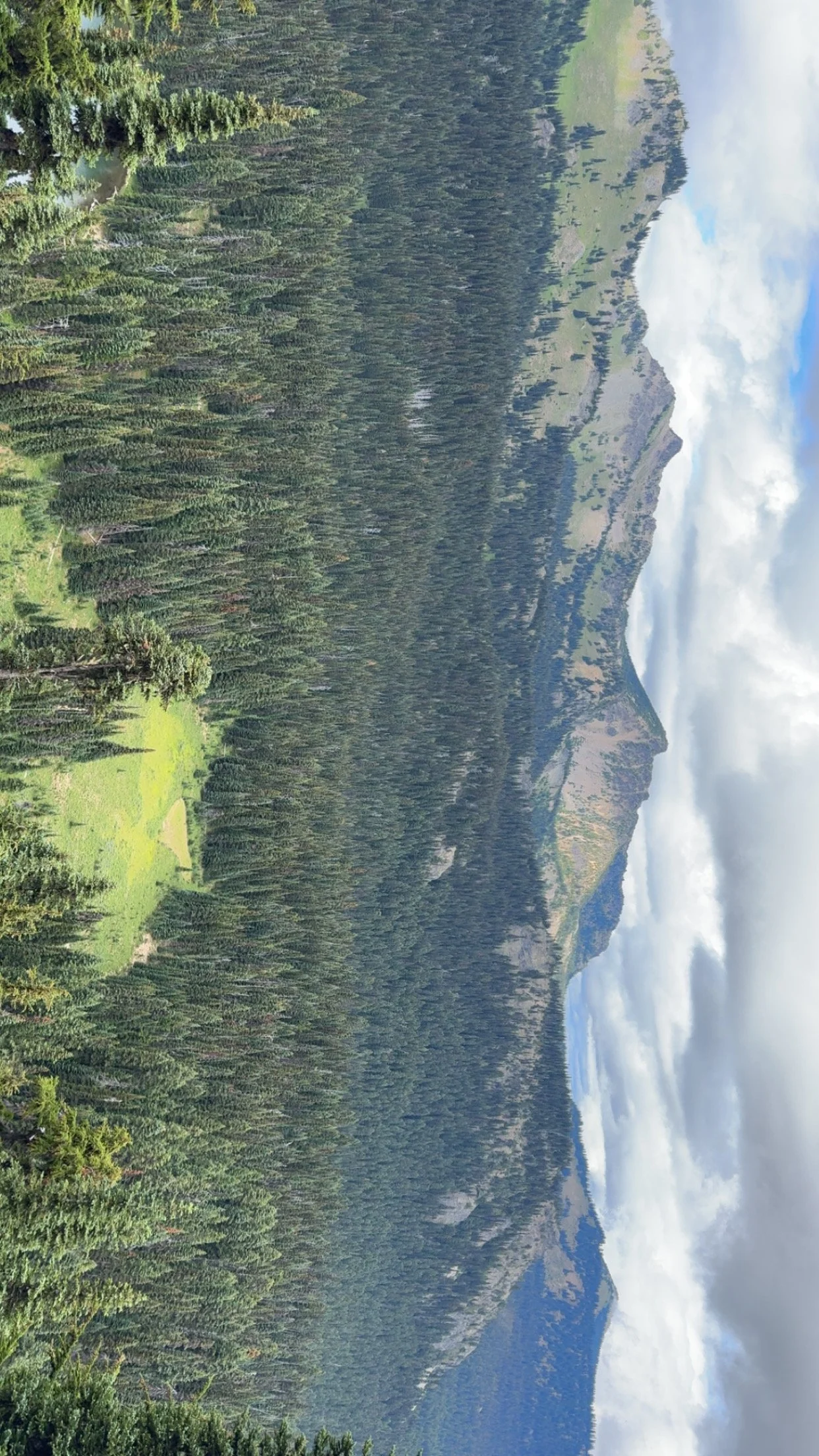
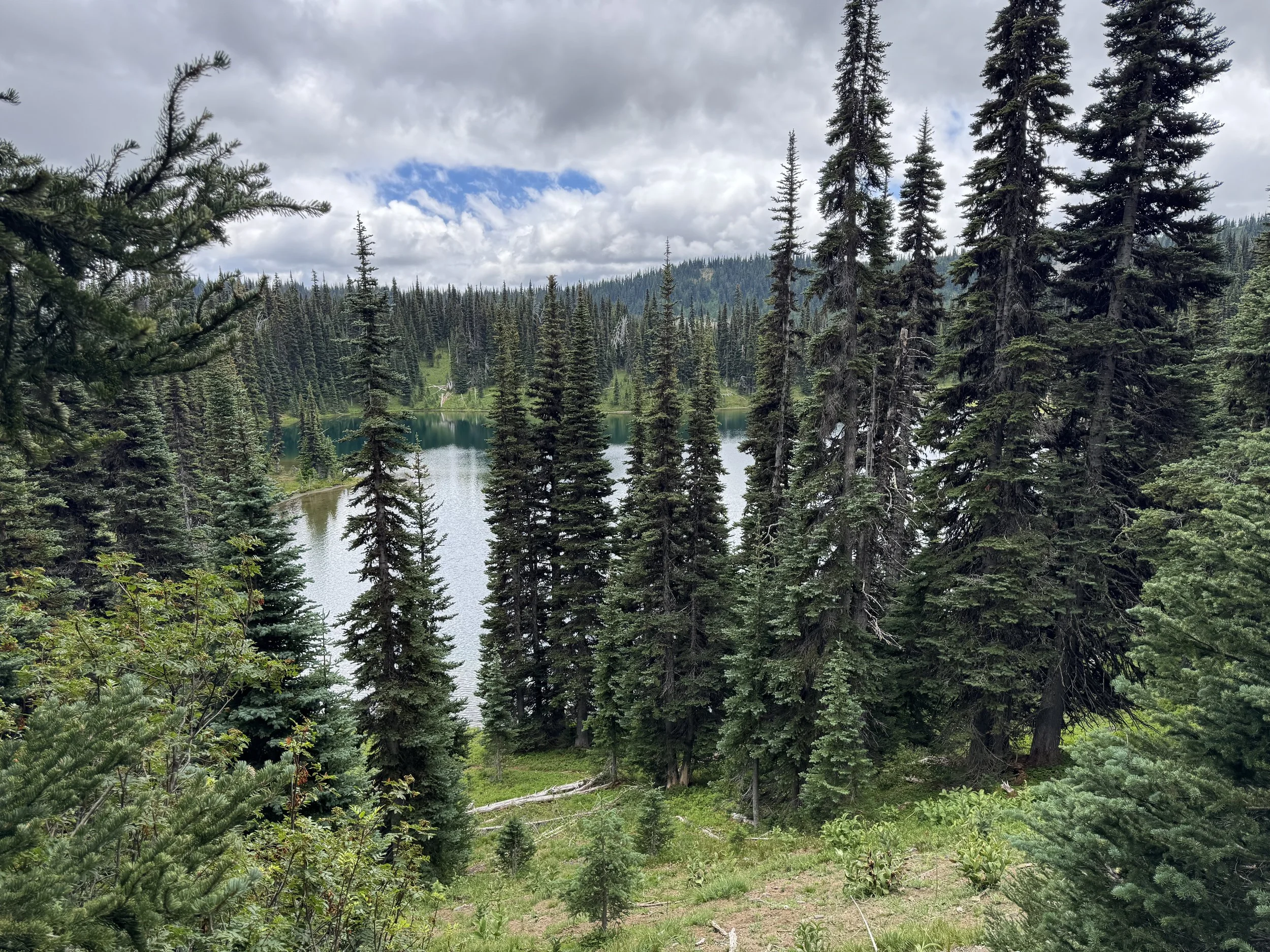
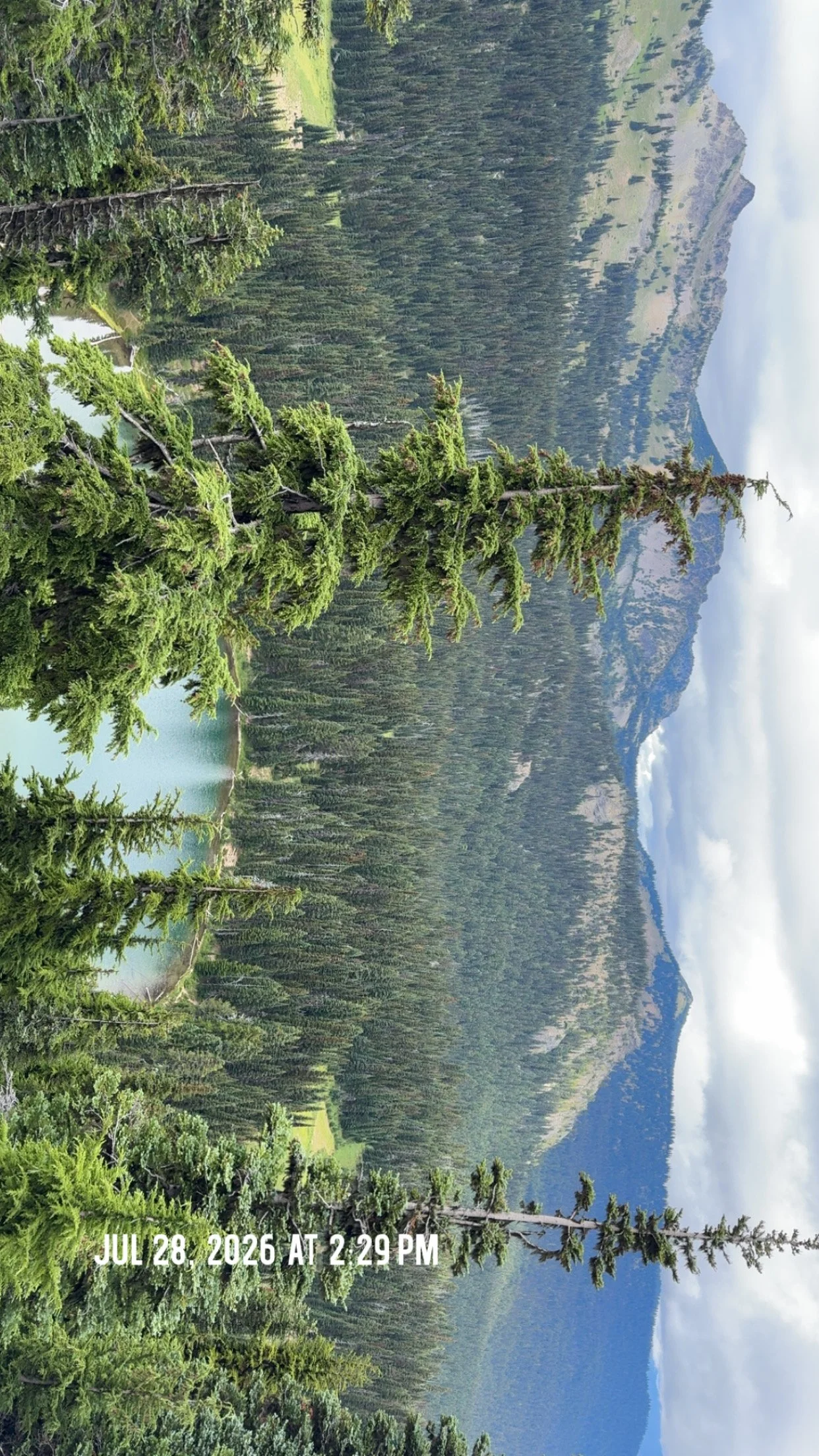
The views were what stayed with us most. Rainier dominated everything, but the surrounding peaks, ridges, valleys, meadow paths, rocky sections, and lingering snow made the hike feel even bigger. The climb was manageable but demanding enough to make every overlook feel earned, and the higher we went, the more the park opened below us and the more serious the mountain felt.
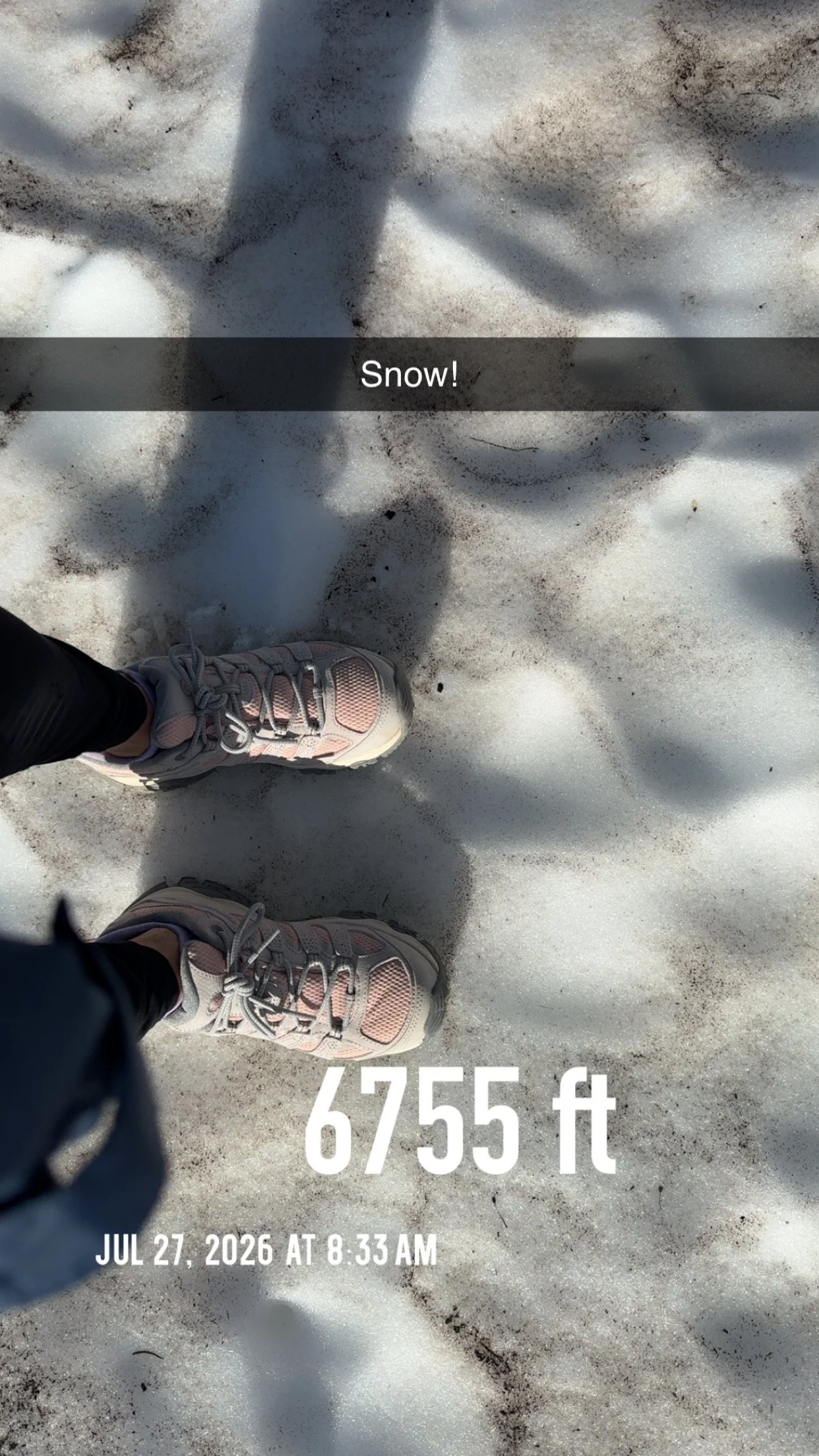
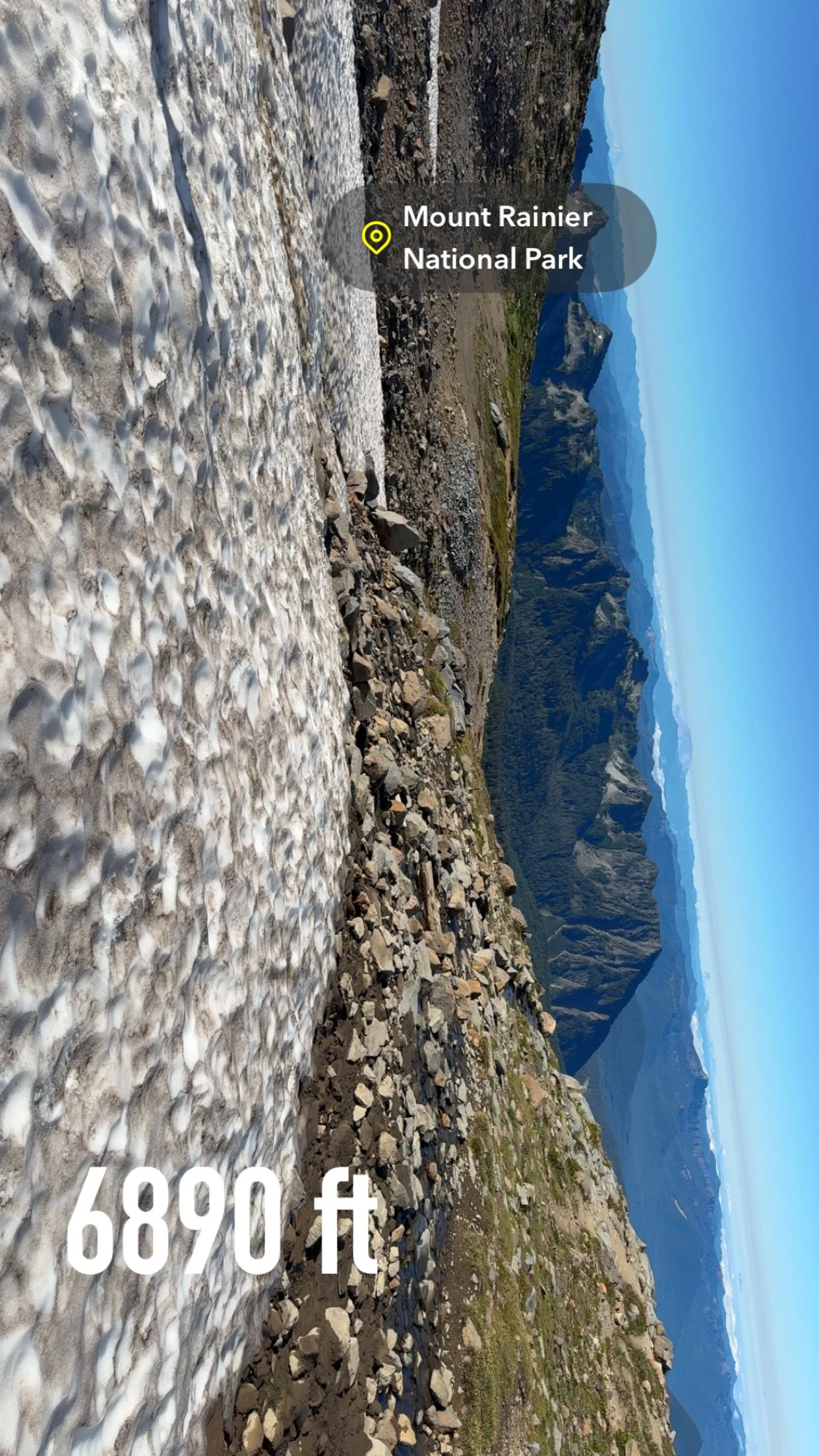
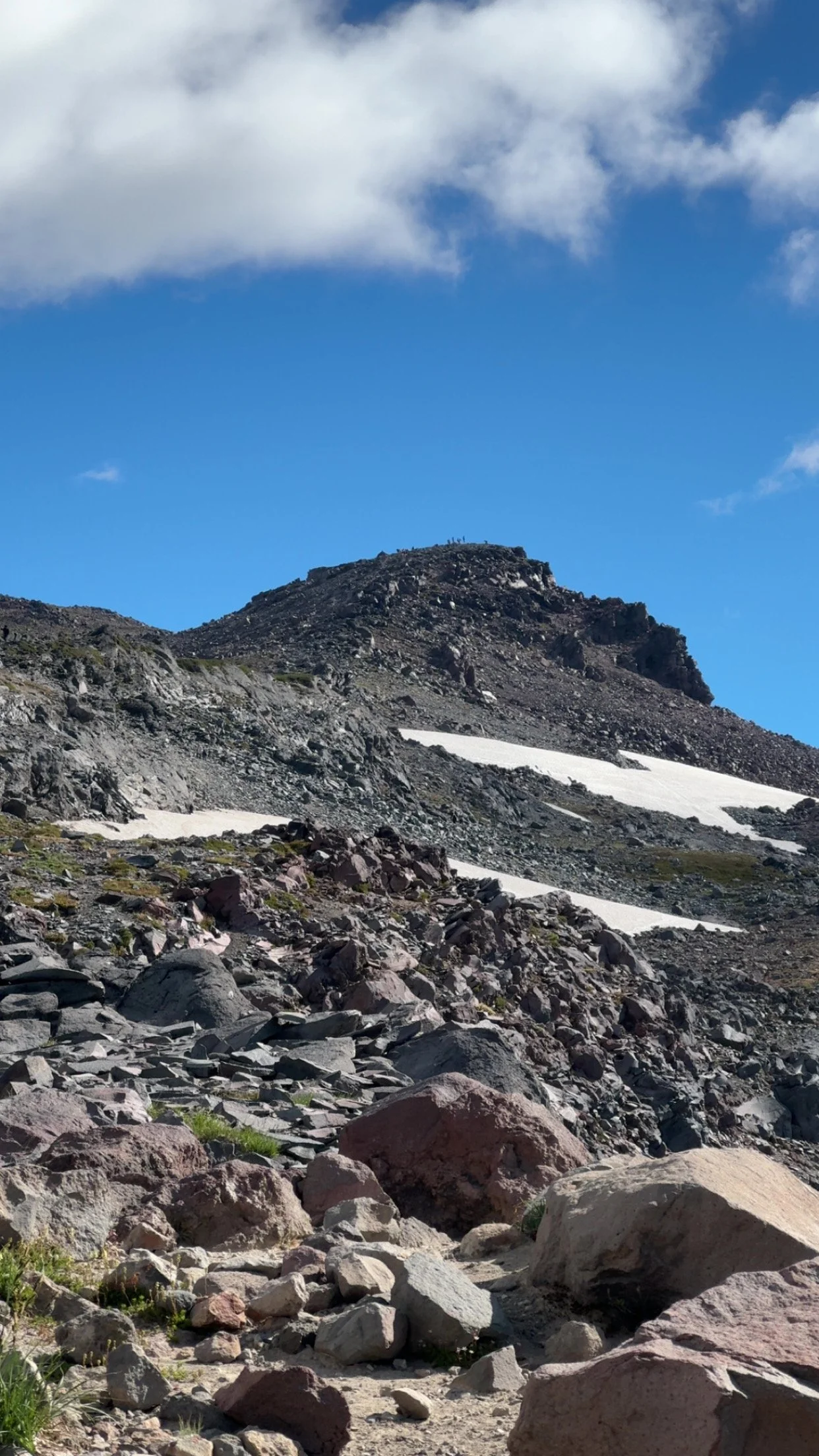
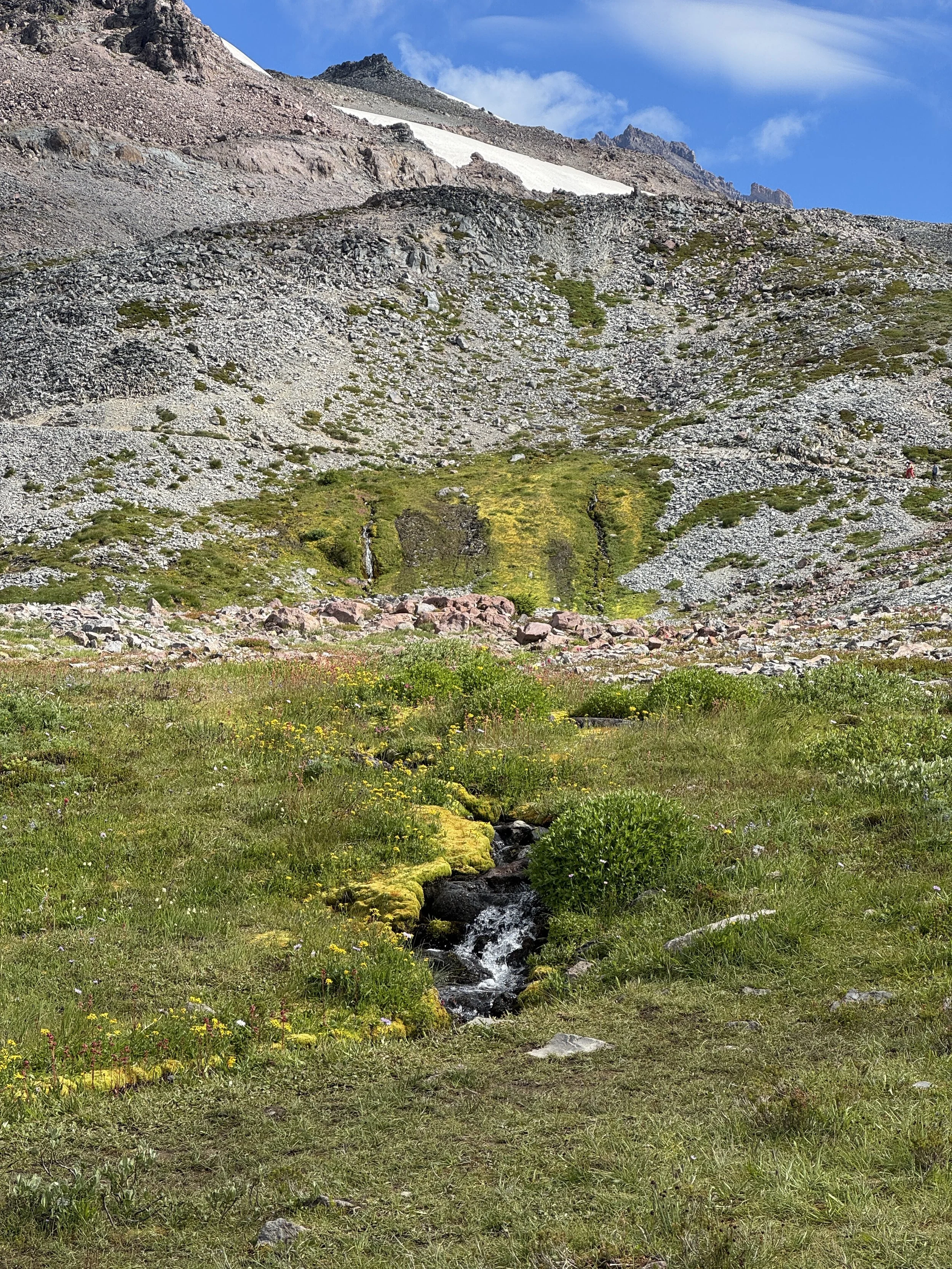
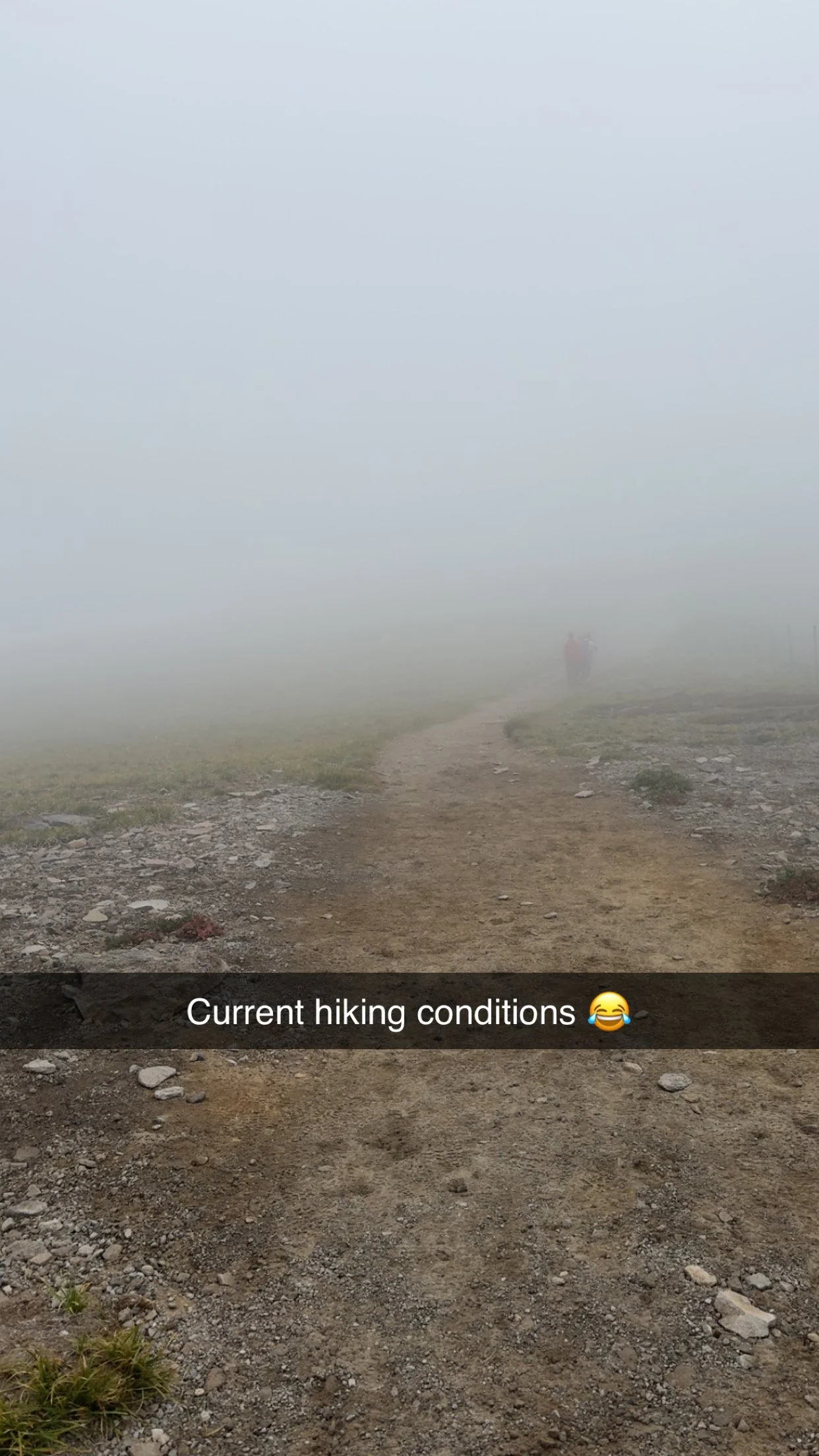
After spending time on Skyline, we pushed part of the way toward Camp Muir, following the route that climbs beyond the regular hiking feel and into terrain that deserves much more respect. This was the part of the day we thought of as the “danger zone”—not because it was dramatic in a movie-trailer sense, but because the margin for error felt smaller. Snowfields stretched ahead, the route felt less defined, and the mountain’s weather and scale became impossible to ignore. We did not need to reach Camp Muir to feel the seriousness of that climb; going partway was enough to understand why preparation, judgment, and a willingness to turn around matter so much here.
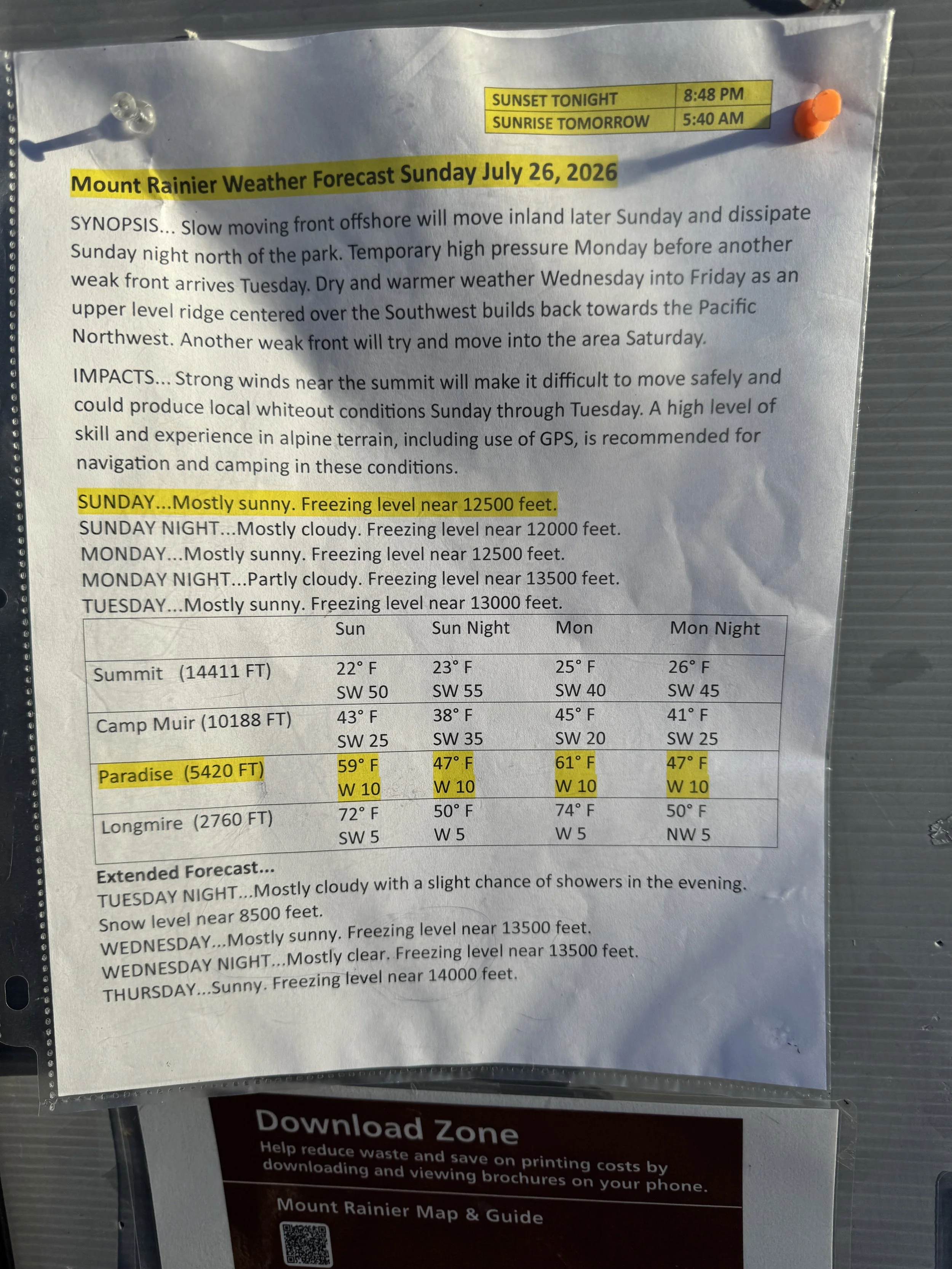
One of the biggest lessons from our Mount Rainier hike was that the best decision is not always to keep going. Above Paradise, conditions can shift quickly, snow can hide hazards, and the route toward Camp Muir moves into a more exposed environment than a typical day hike. We treated our turnaround point as part of the plan, not as a failure. That mindset made the day better: we could enjoy the views, feel the challenge, and still respect the mountain enough to leave safely.
For a hike like this, we were glad to think carefully about the basics: water, extra snacks, layers for wind, rain, and changing temperatures, navigation, sun protection, a first aid kit, emergency supplies, and sturdy footwear suitable for mud, rock, or lingering snow. Those items may sound ordinary, but on a mountain where conditions can change quickly, they matter.
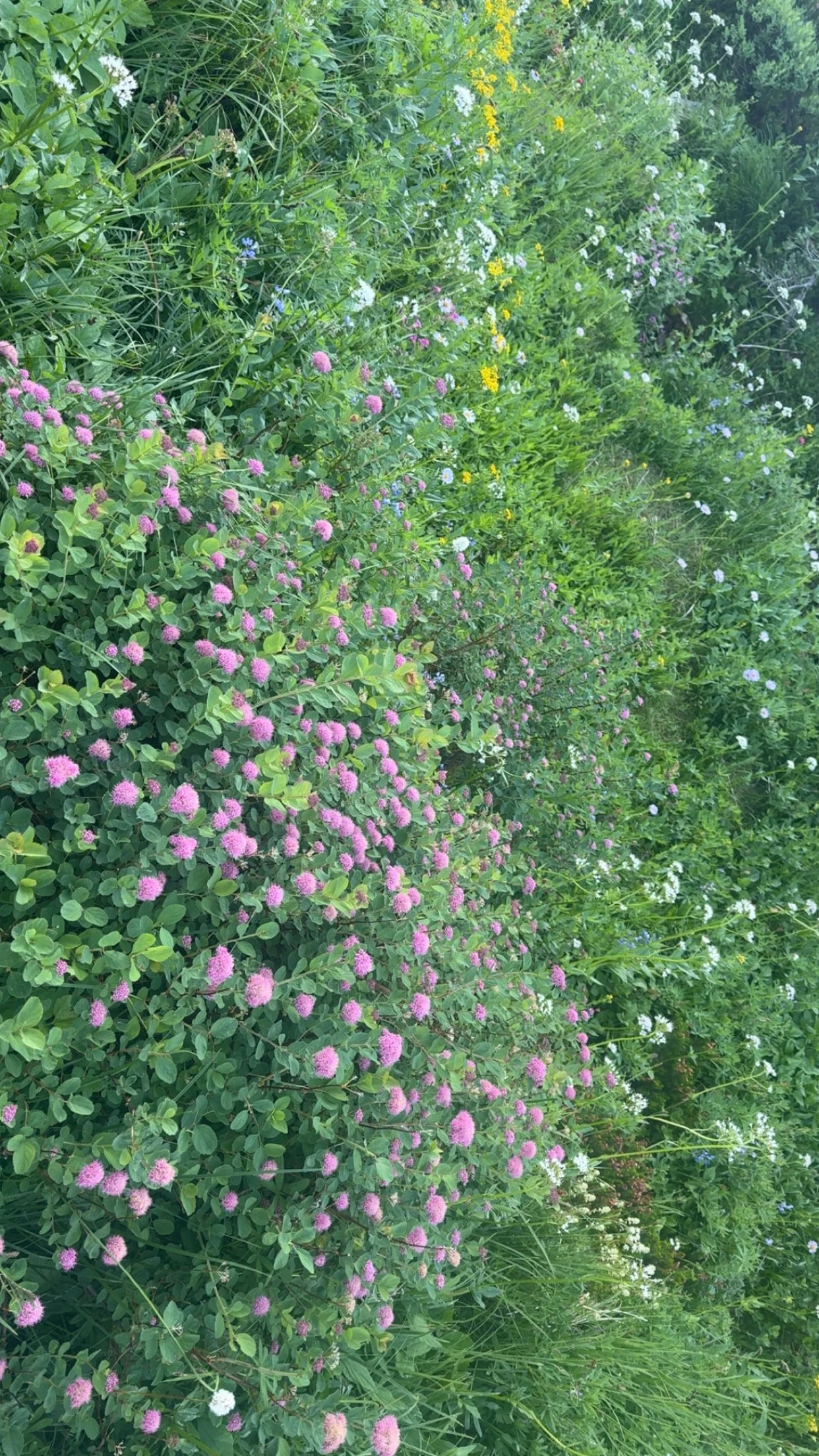
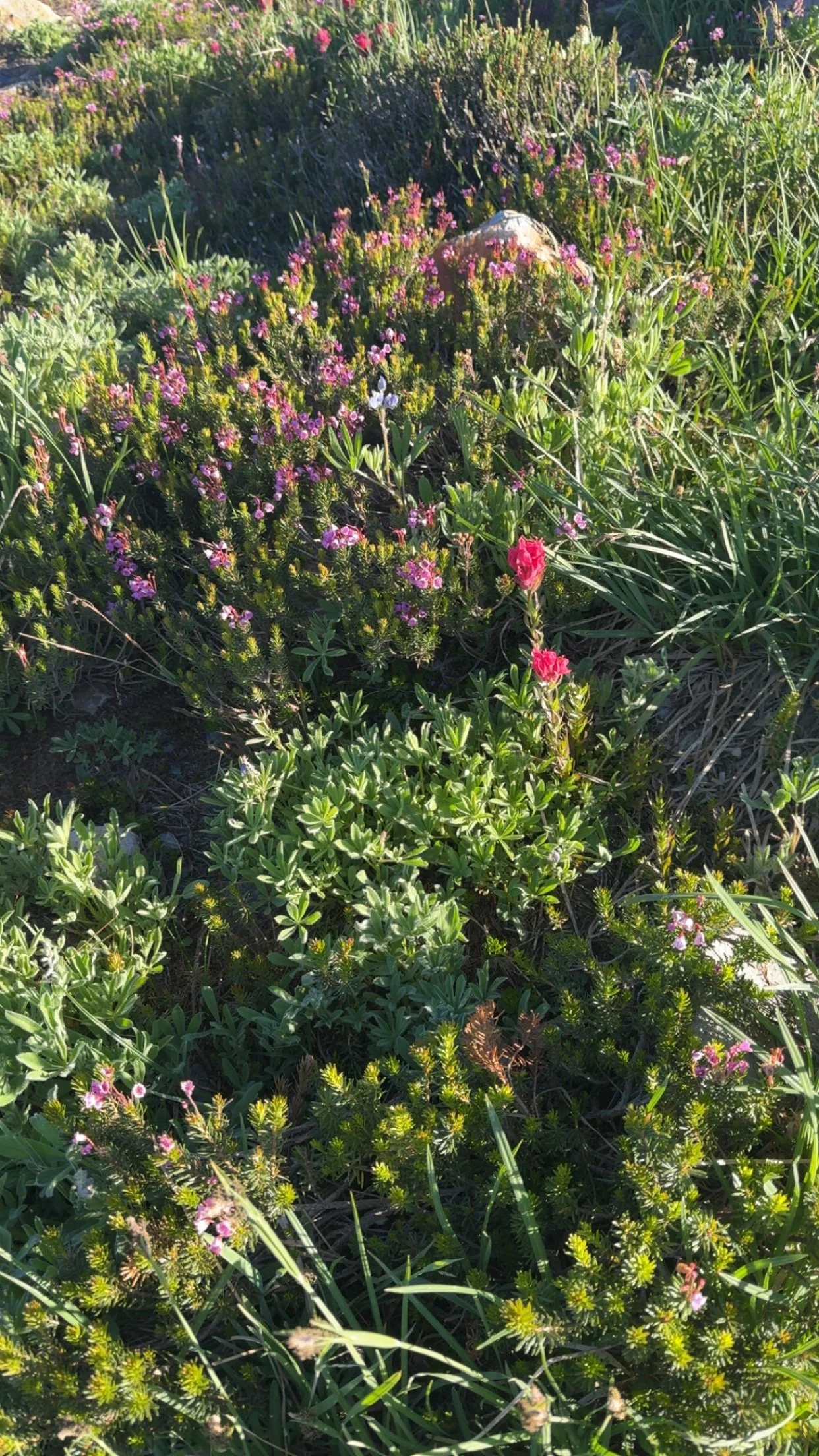
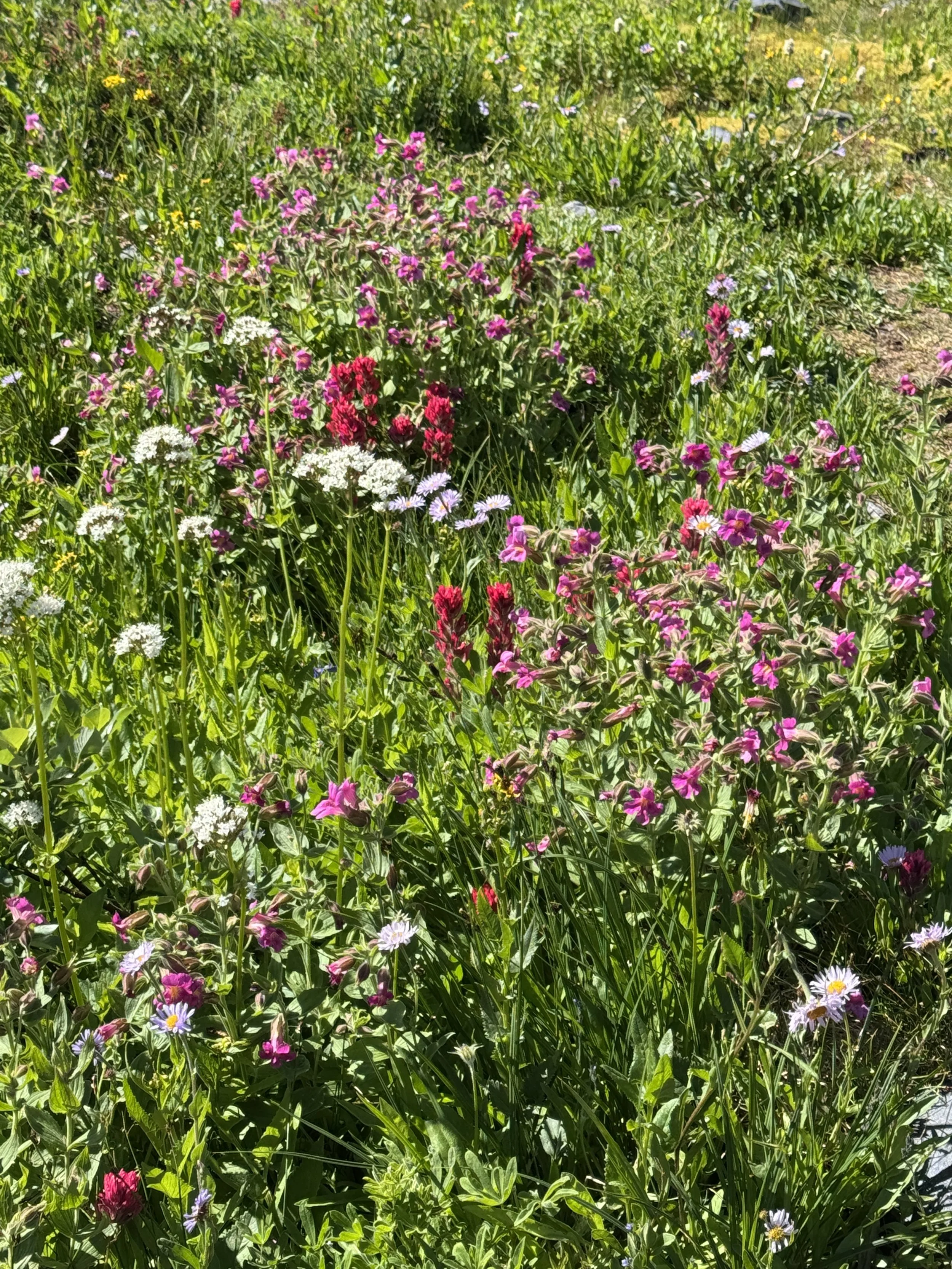
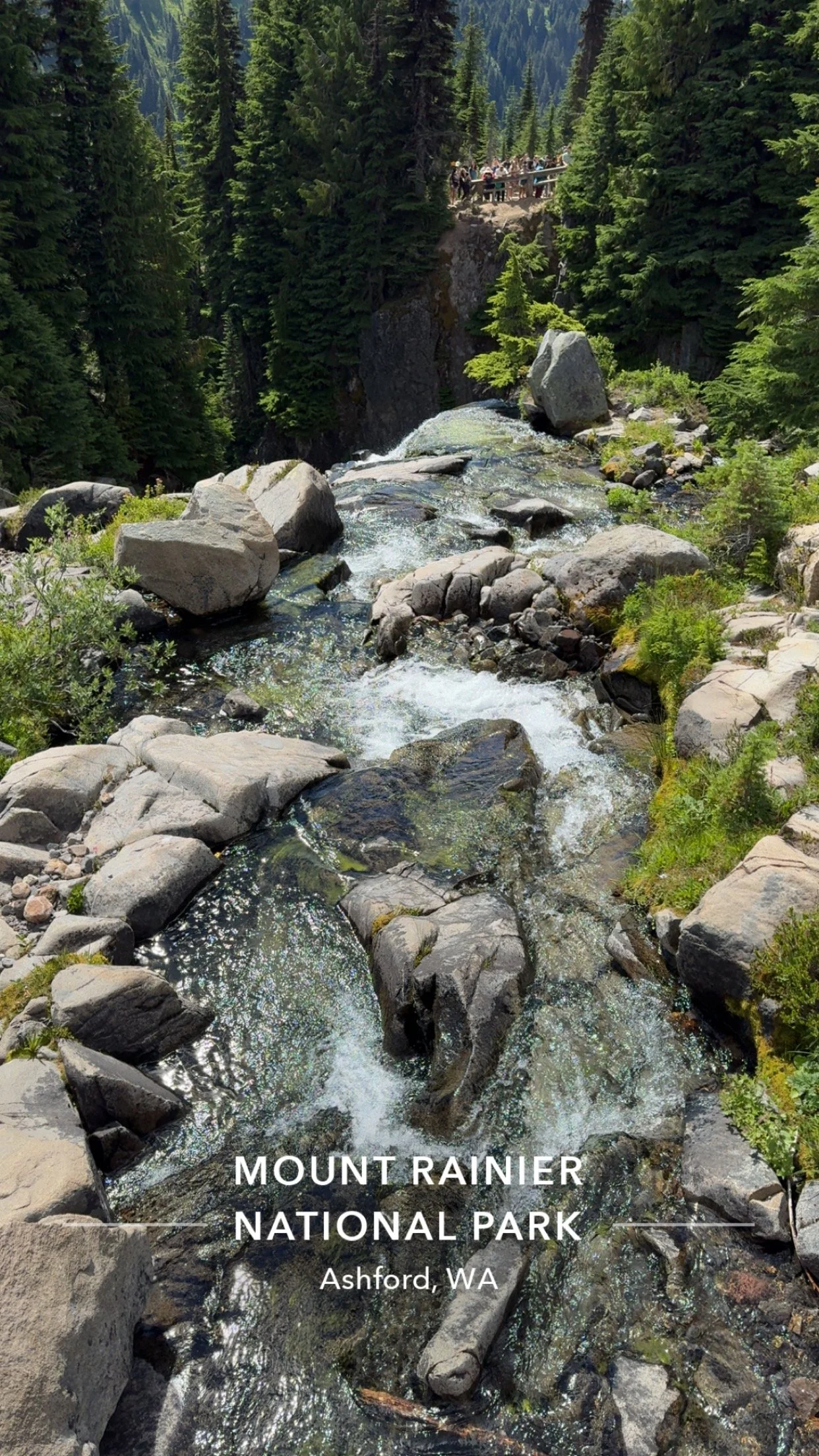
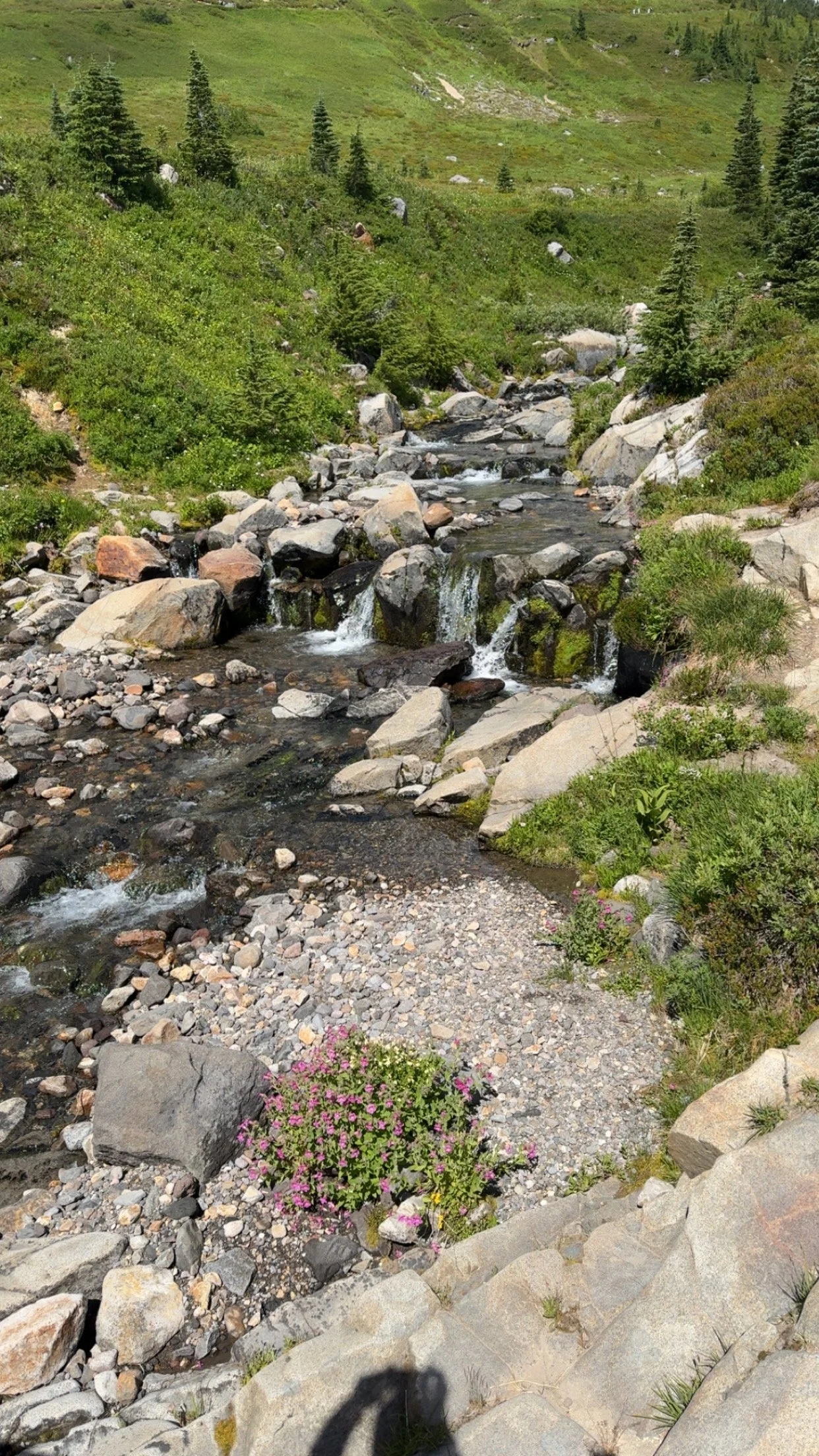
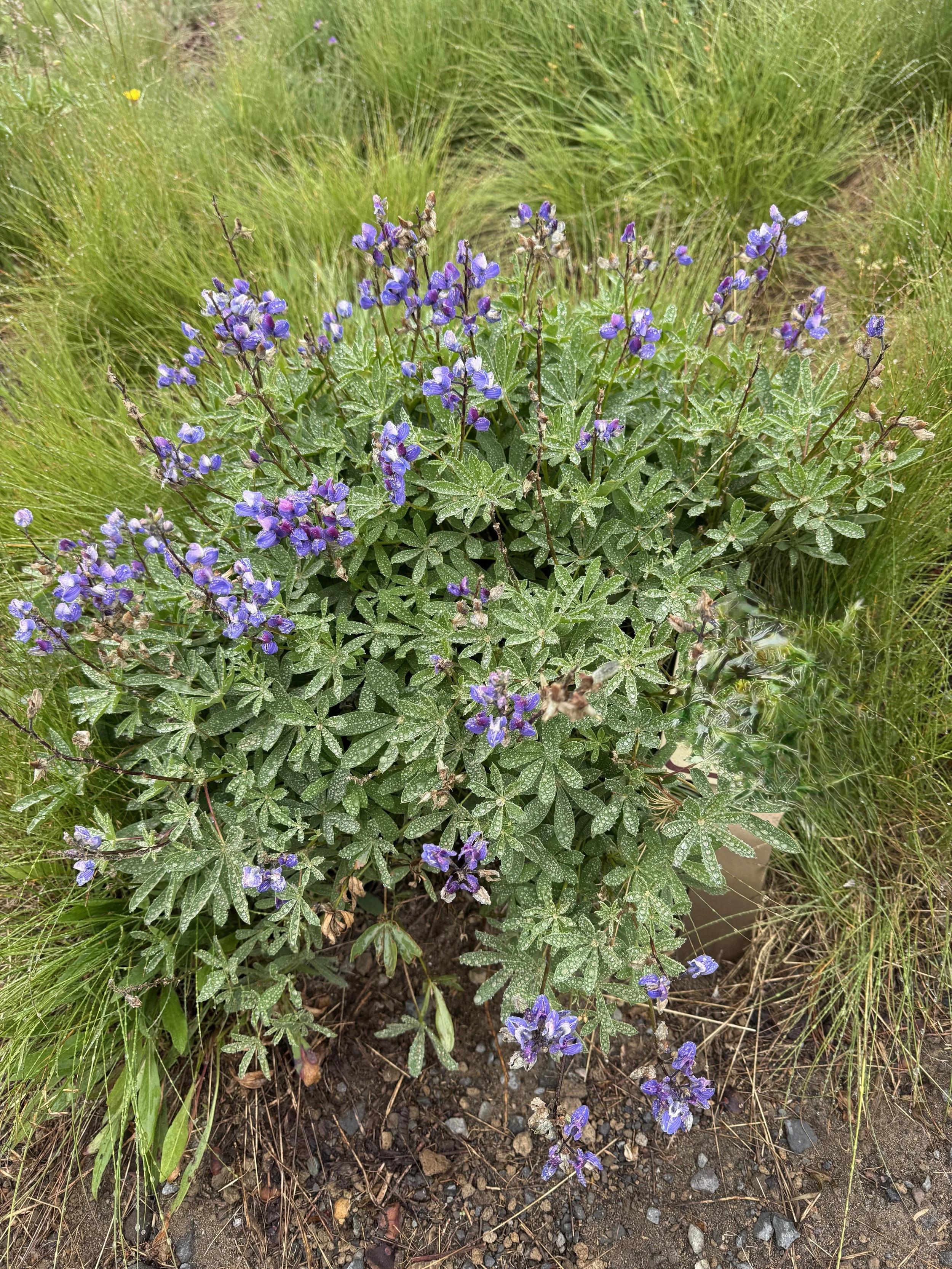
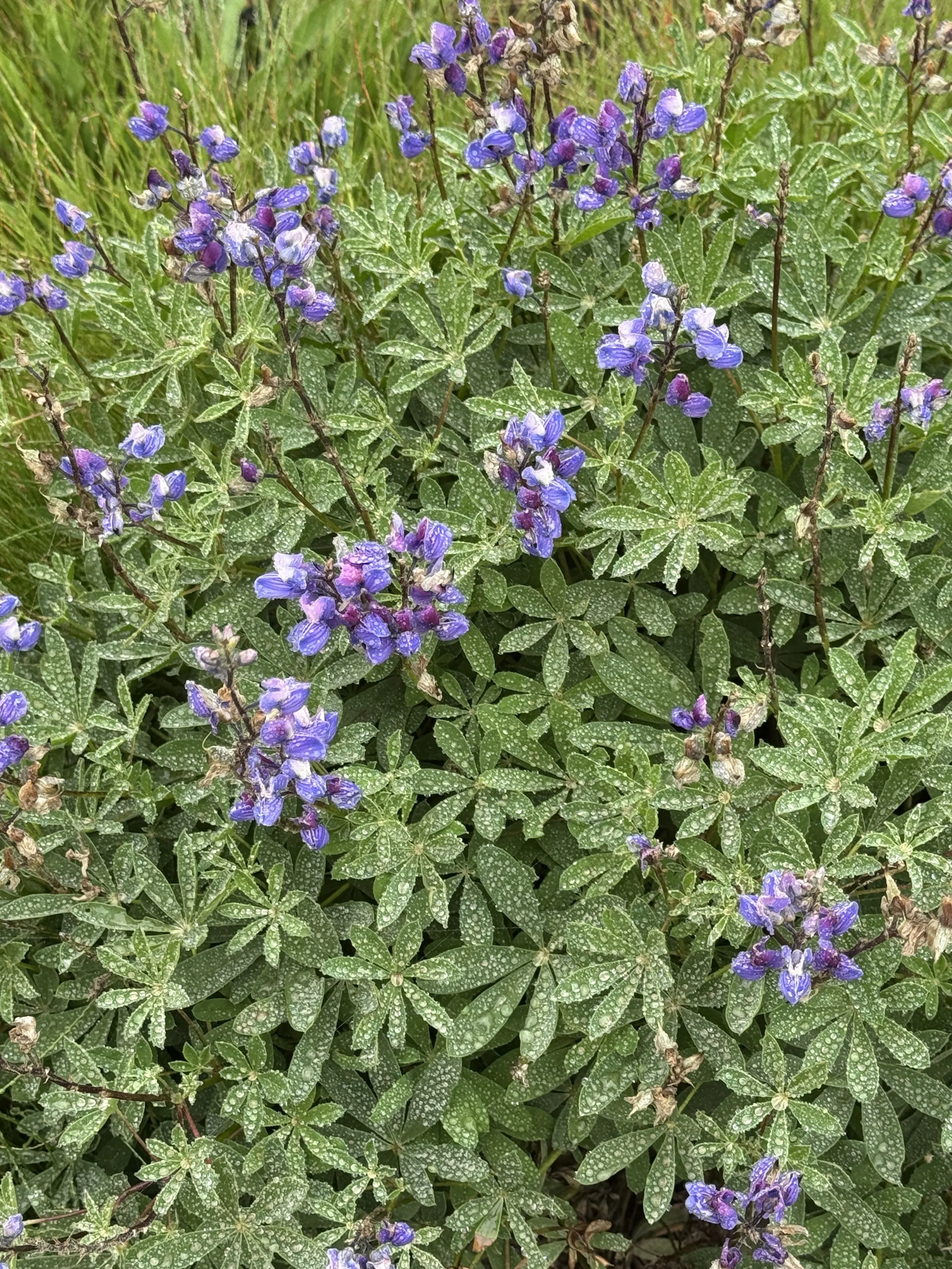
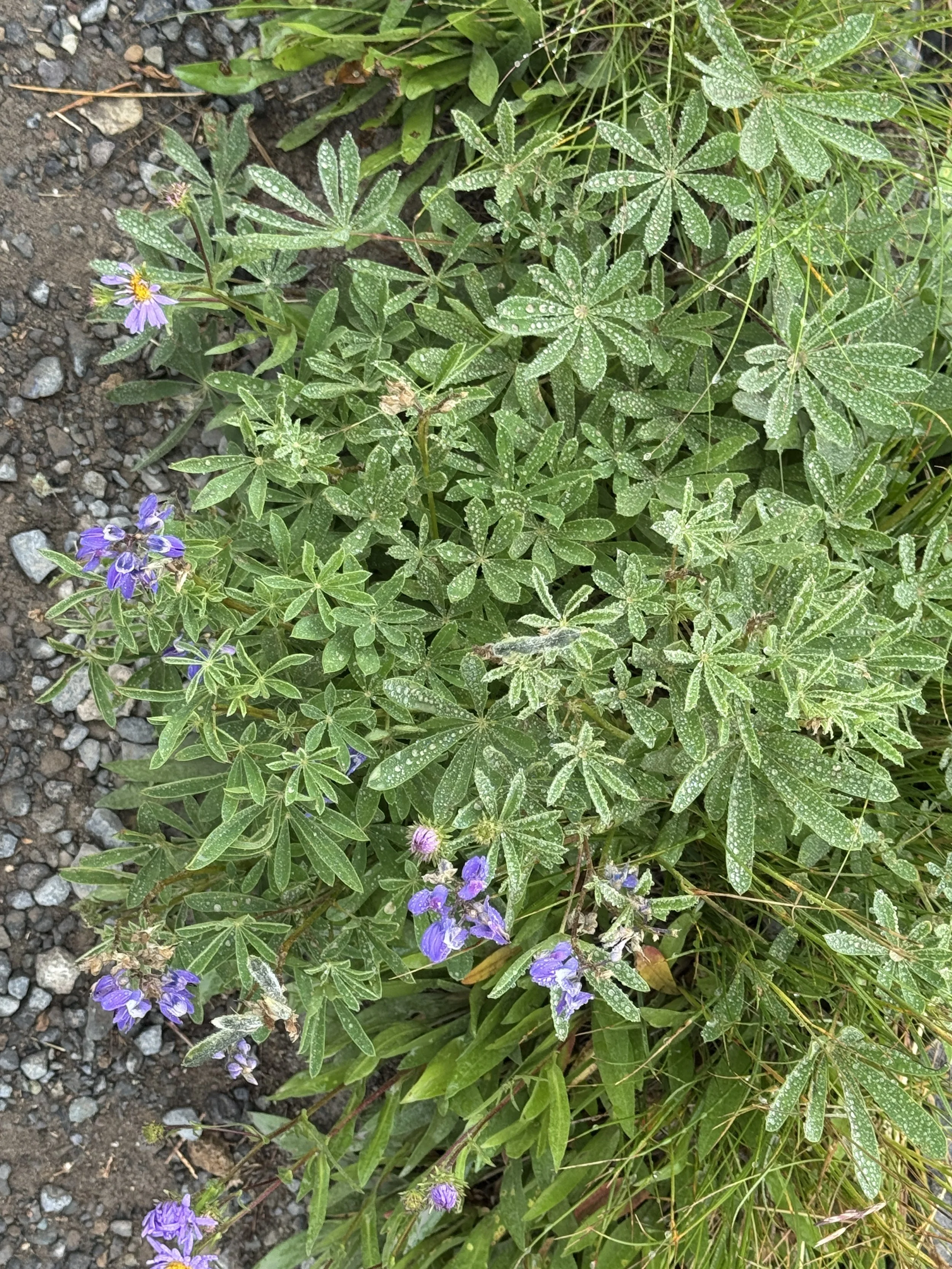
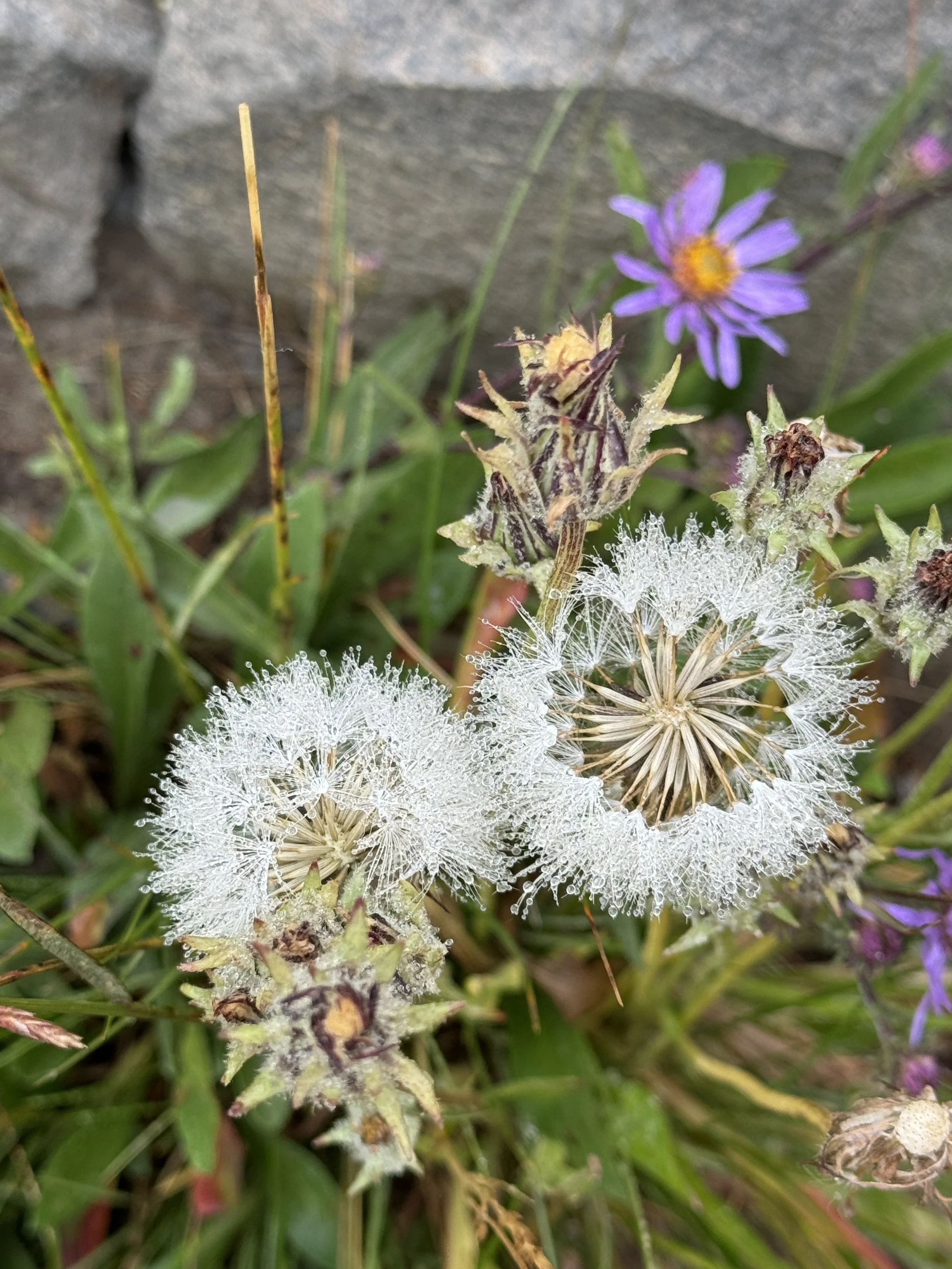
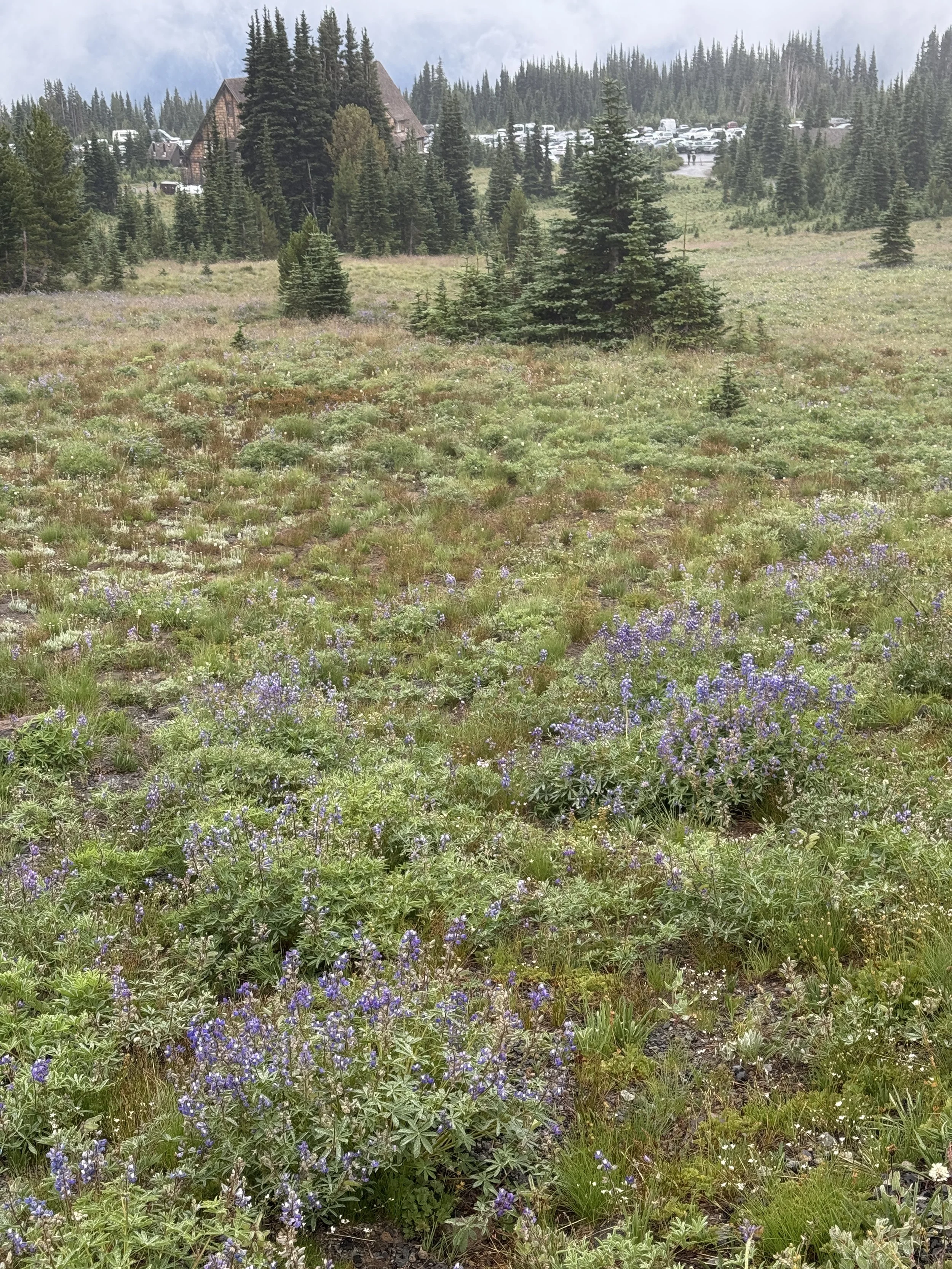
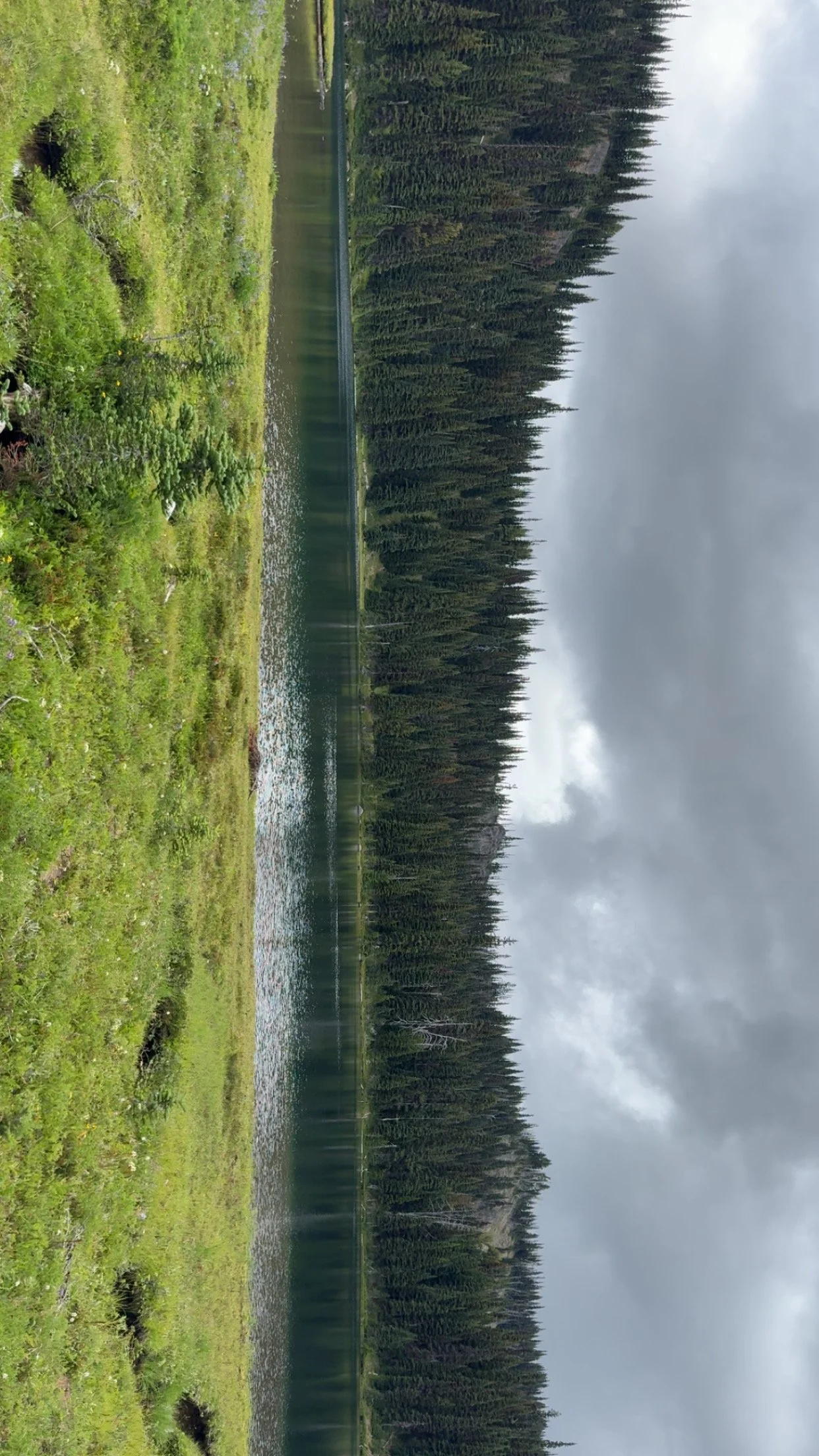
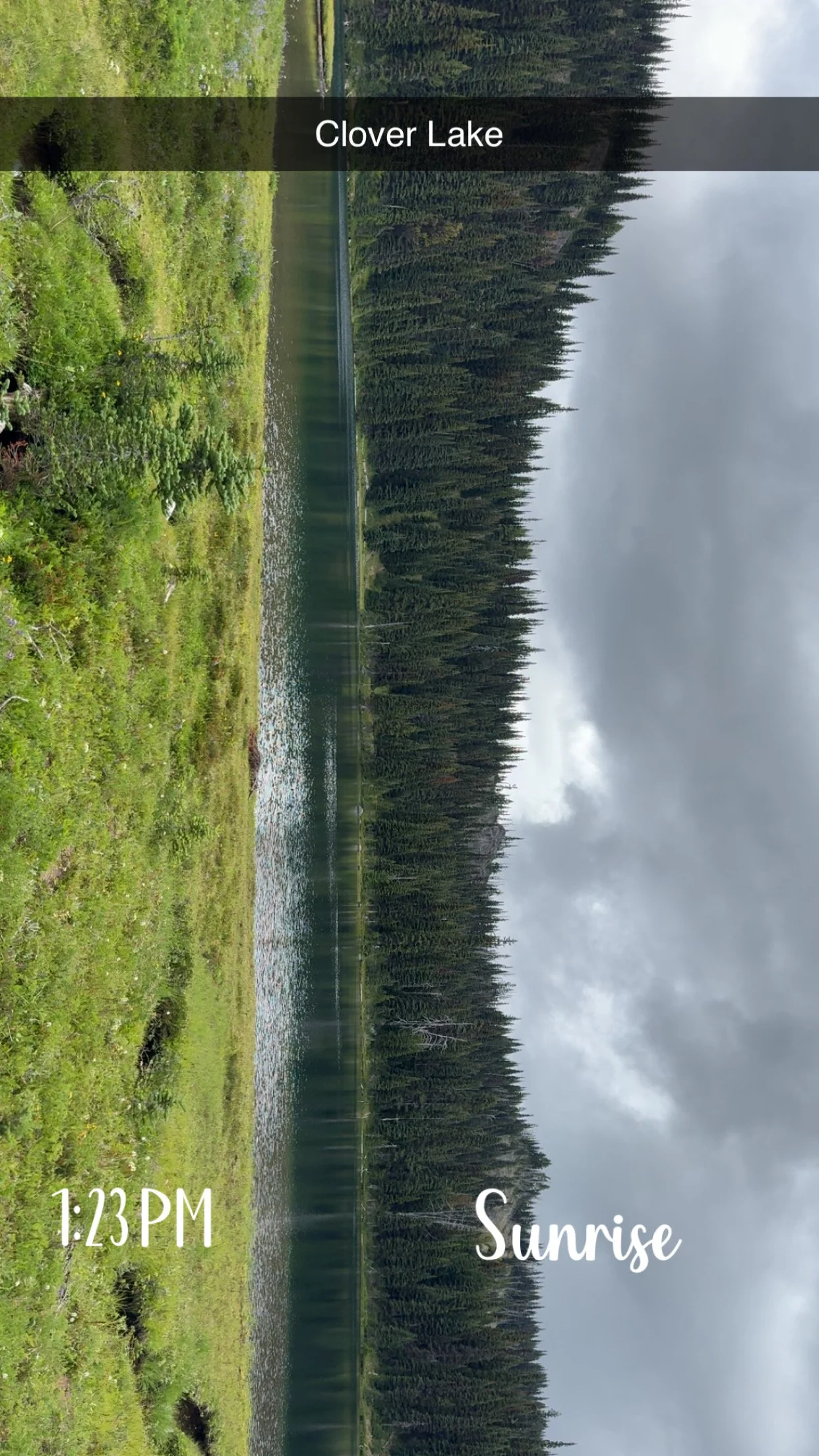
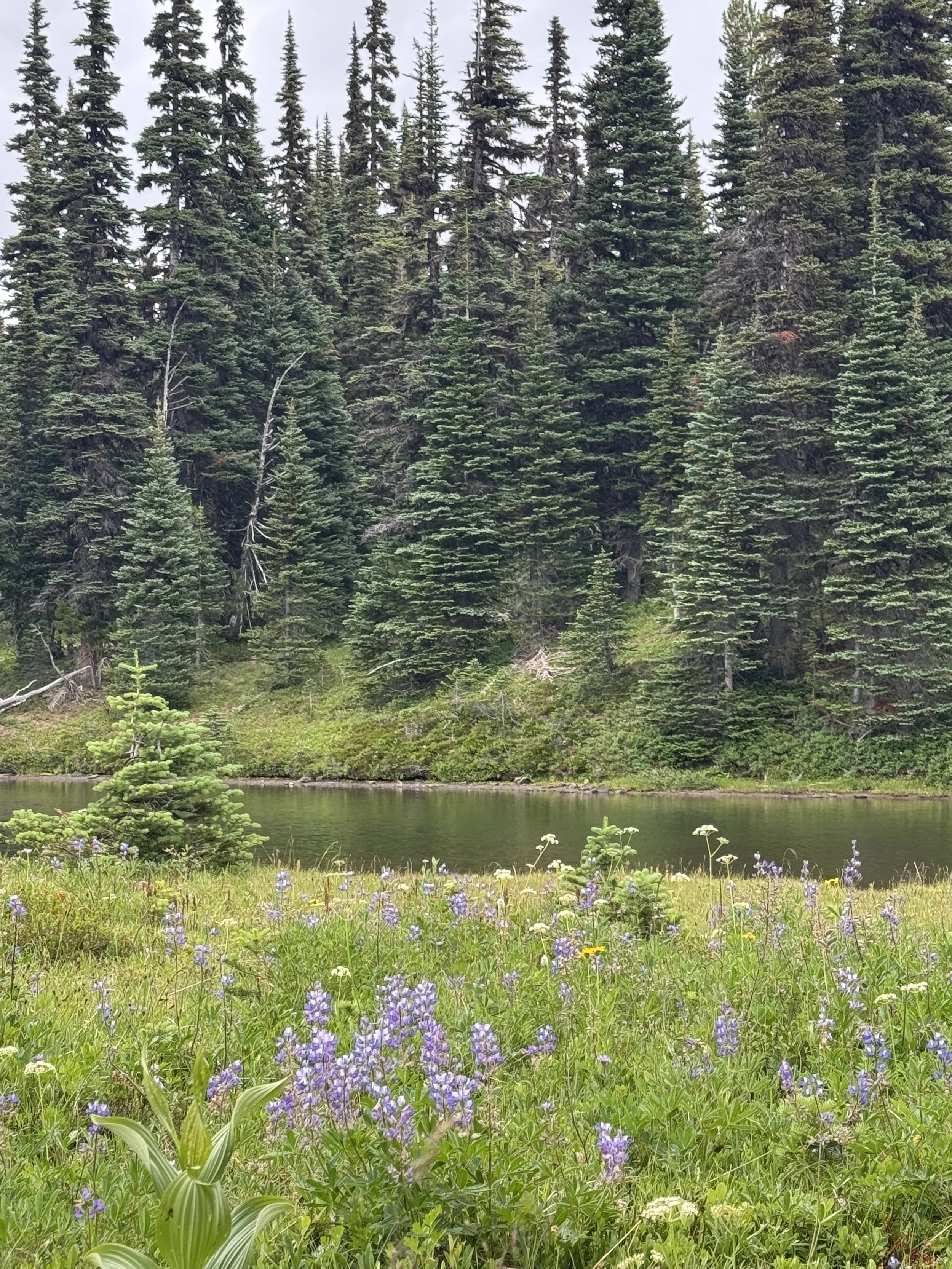
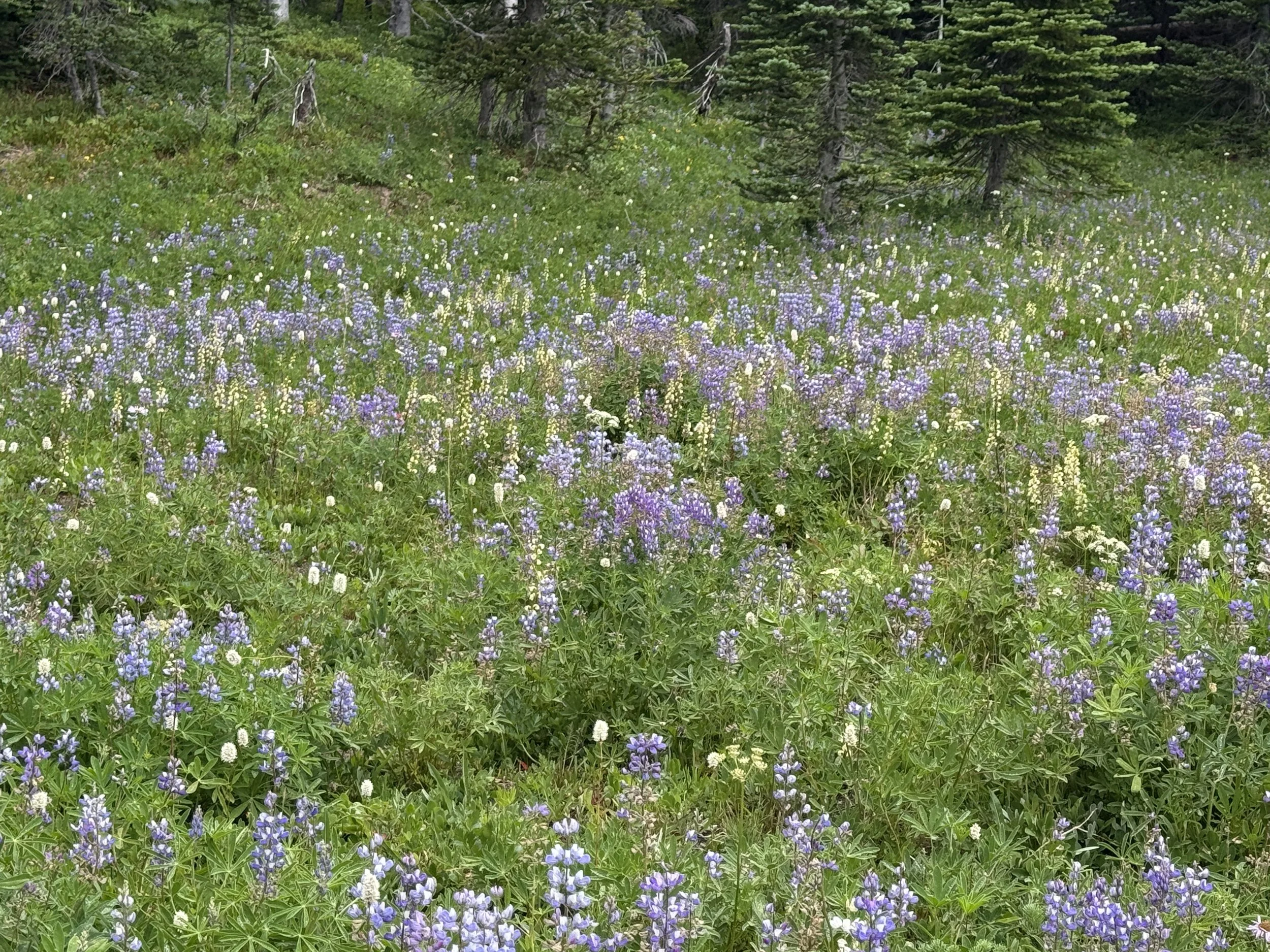
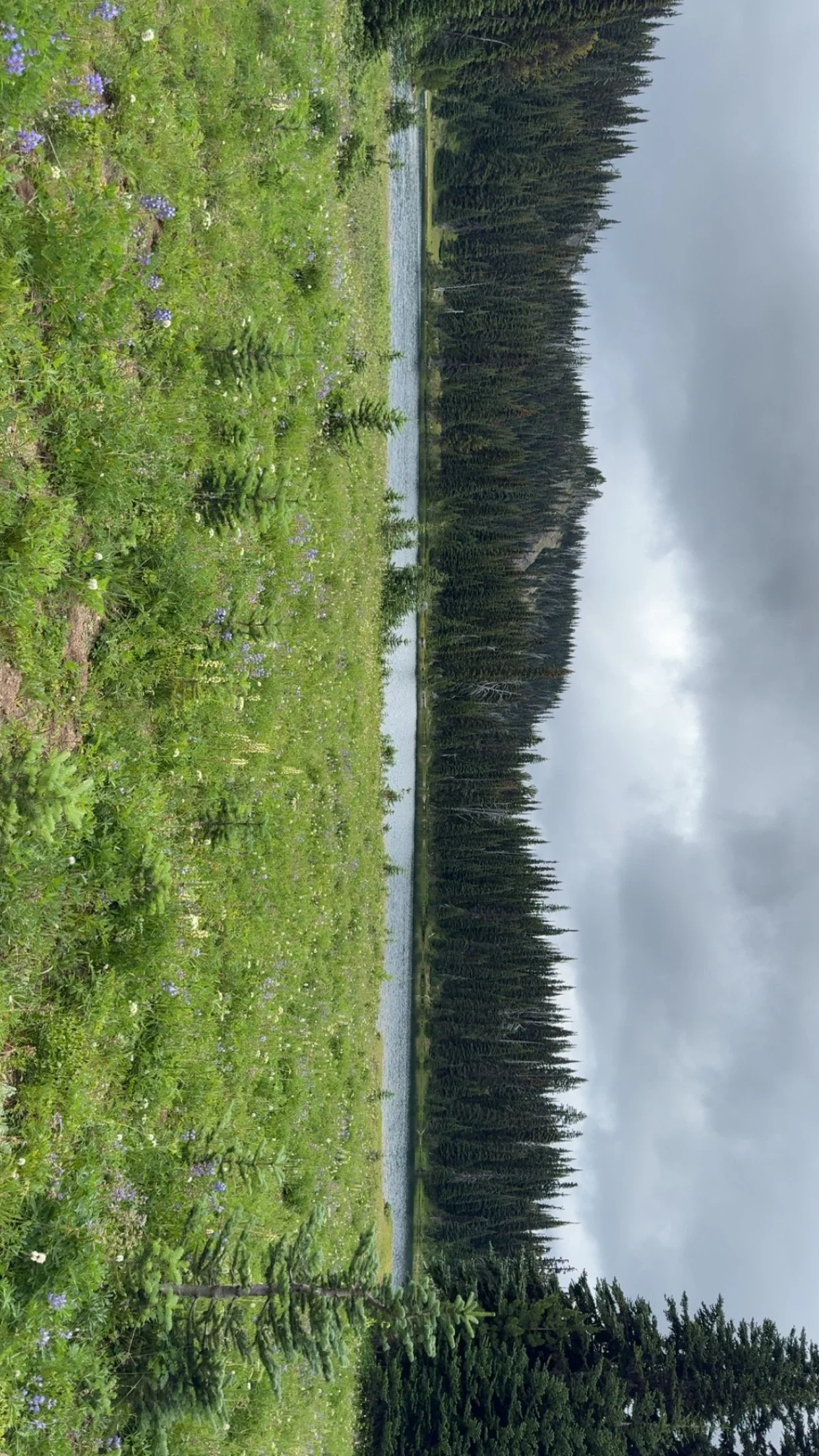
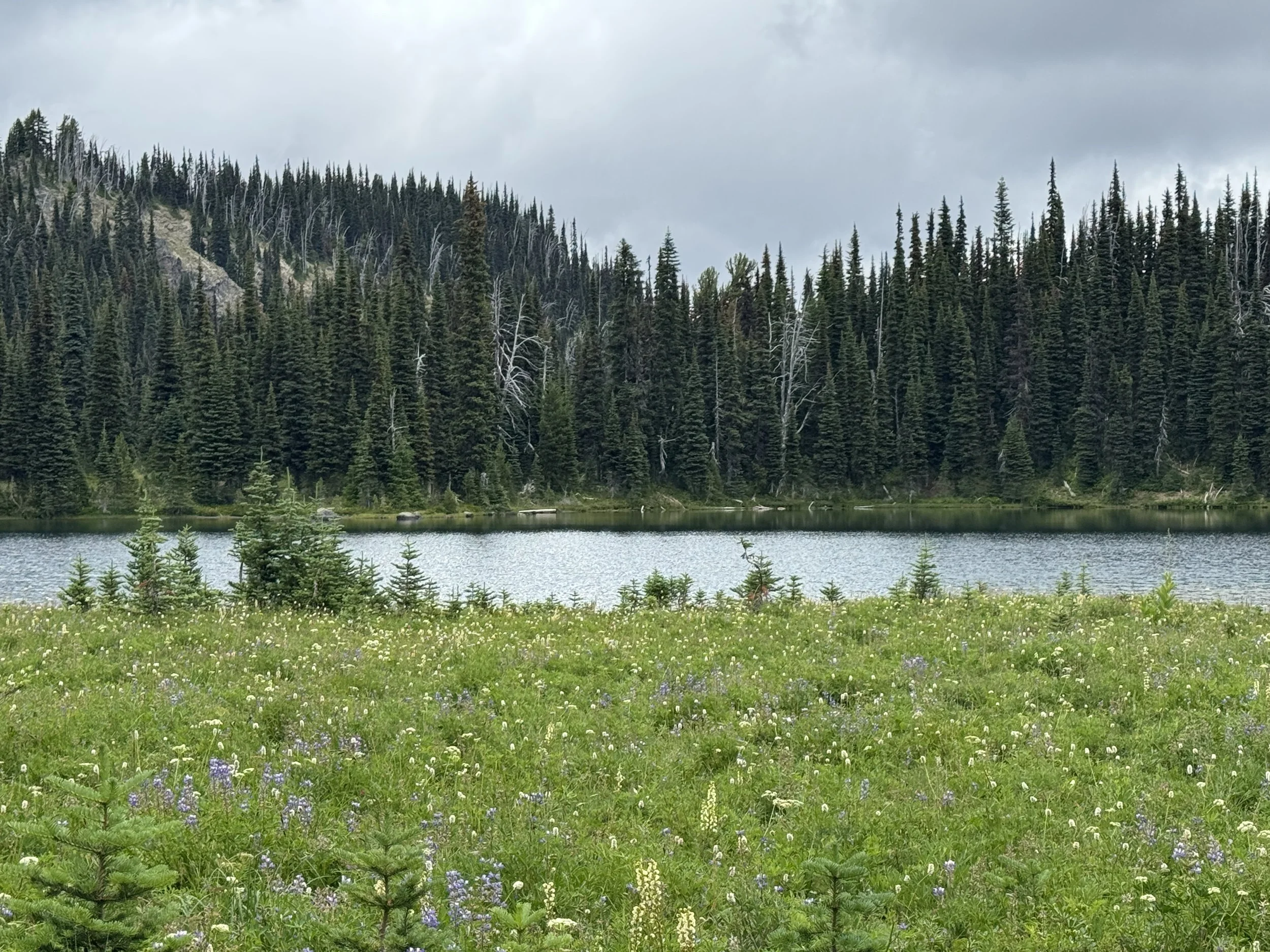
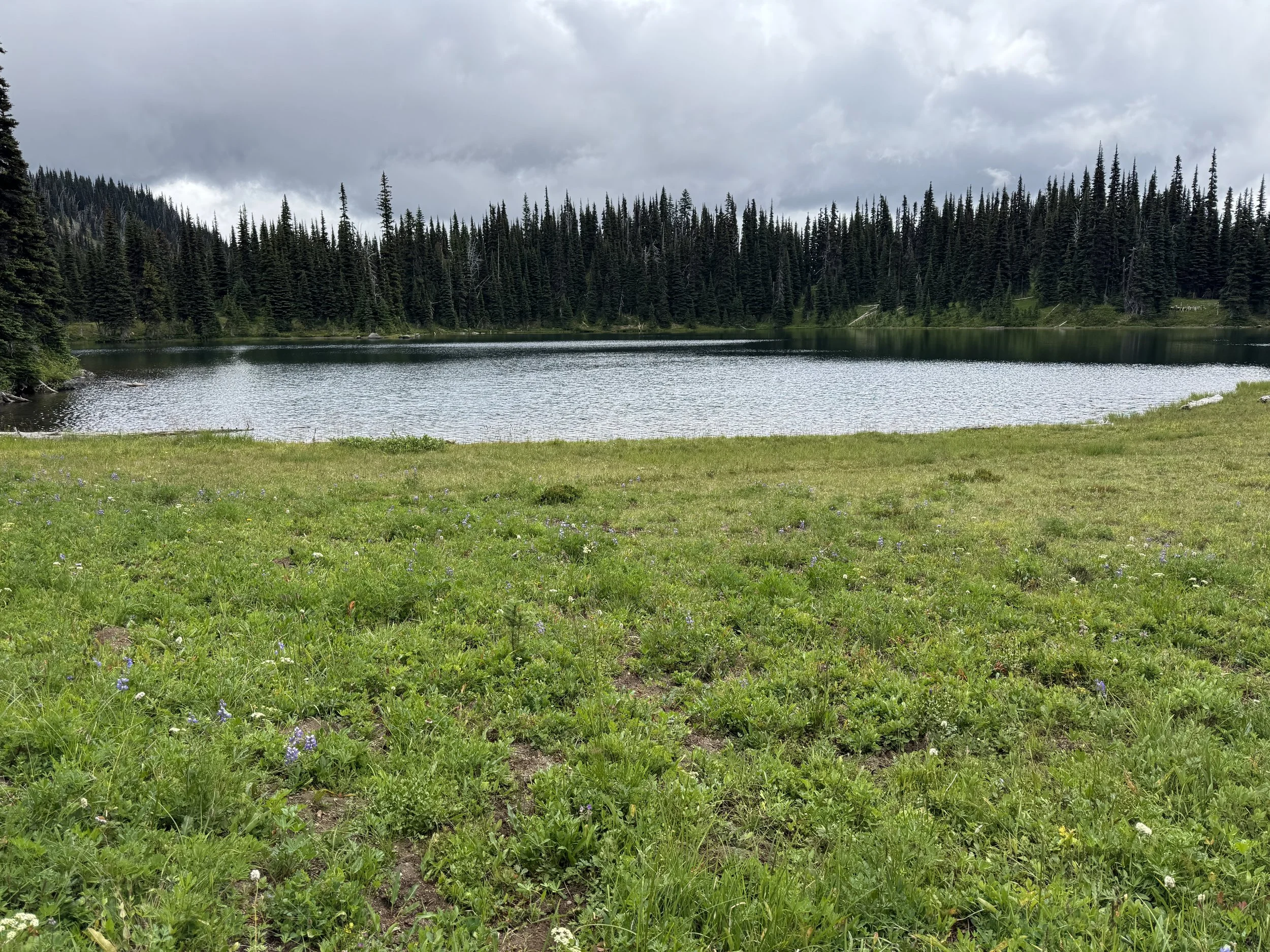
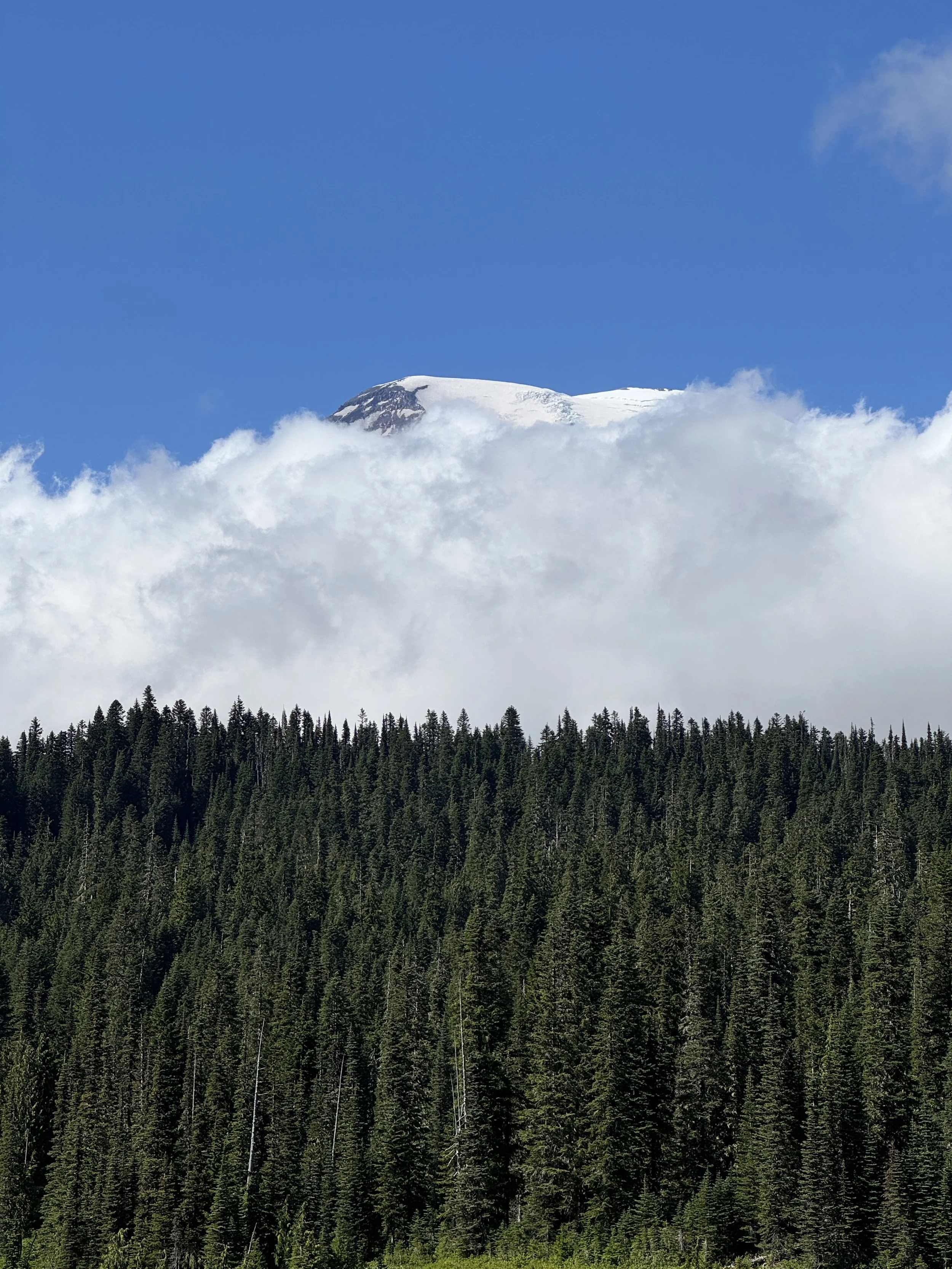
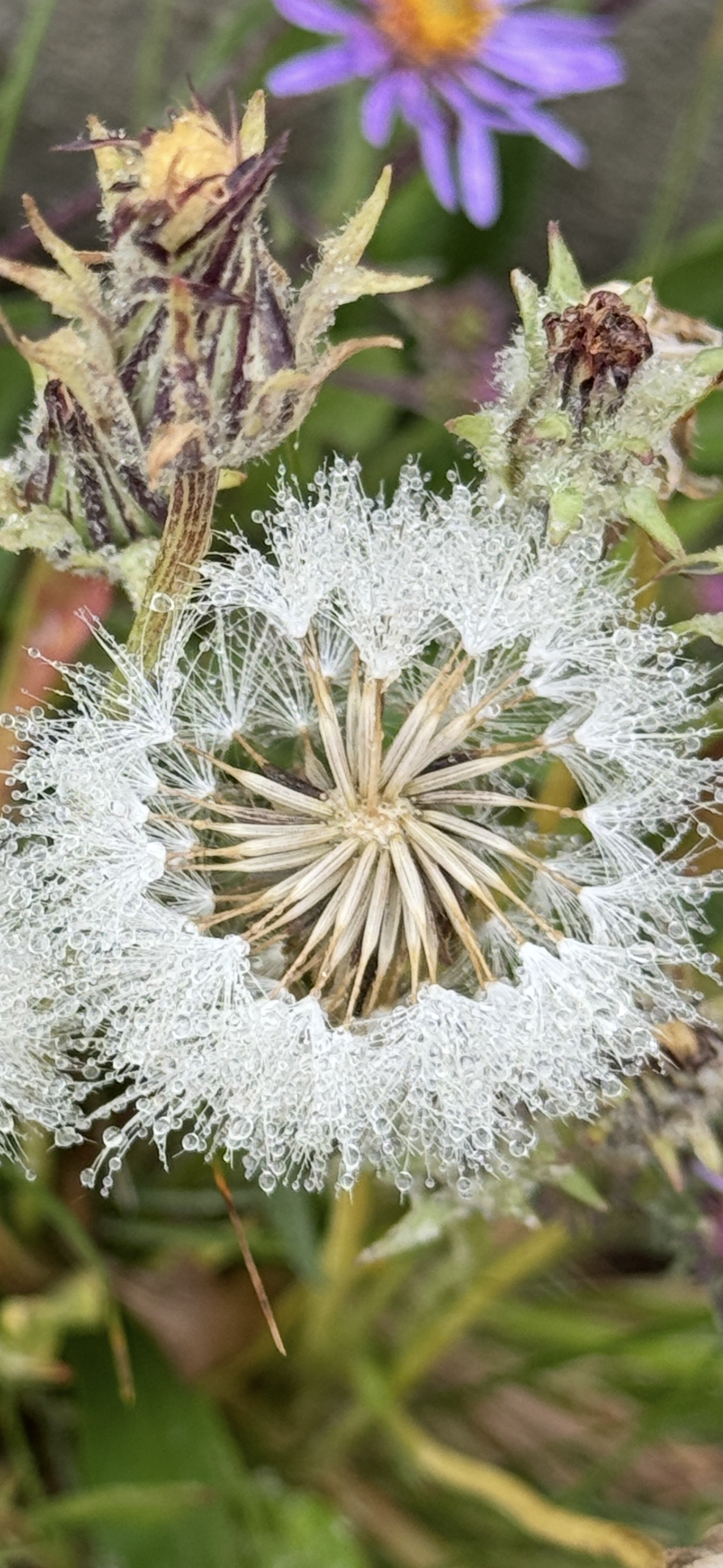
The meadows at Mount Rainier are beautiful because they are fragile. Stay on signed trails, even when snow or mud makes the path less convenient, because stepping off trail can crush plants that survive only a short growing season. Give wildlife plenty of distance, pack out everything you bring in, and build your itinerary around patience rather than speed. The best Rainier hikes are not just about reaching a viewpoint; they are about noticing the sound of meltwater, the scent of fir trees, and the way the mountain appears and disappears behind passing clouds.
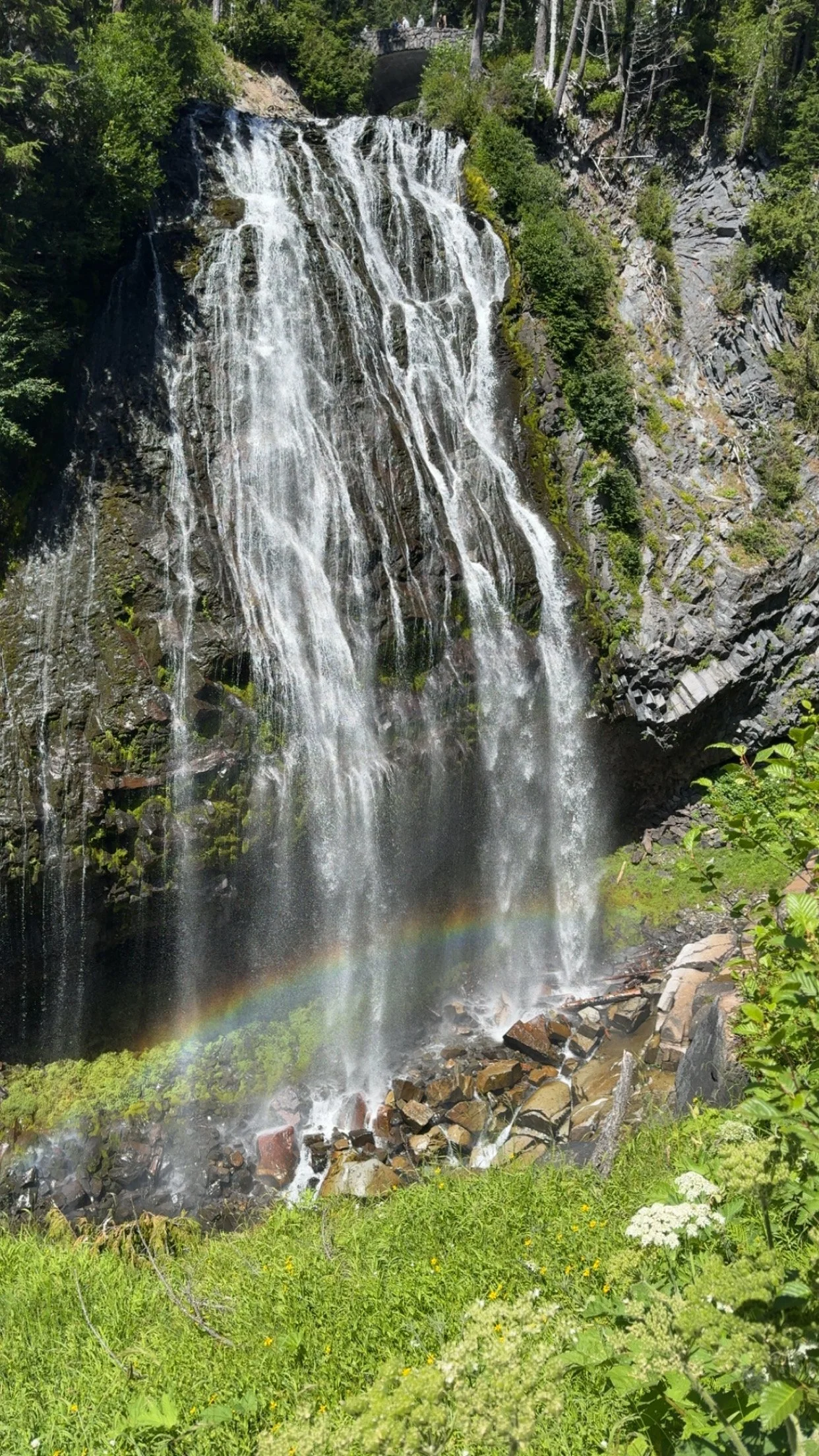
Hiking in Mount Rainier National Park rewards preparation, flexibility, and curiosity. Start early, choose a route that matches your group’s ability, and leave room for the unexpected: a sudden clearing in the clouds, a meadow full of late-season blooms, or a waterfall louder than expected. If we plan carefully and tread lightly, Rainier will give us a hiking day that feels much bigger than the miles on the map.